Leave Your Message

China Top 100kW Inverter Manufacturers for Buyers

China’s Top 100kW Inverter Manufacturers for Buyers is a practical starting point for comparing suppliers, not a substitute for technical checks. A 100kW Inverter can serve commercial rooftops, factories, and distributed solar projects. Yet similar nameplate ratings do not guarantee similar performance. Cooling design, protection features, monitoring access, and service support can matter just as much as price.

The market context is strong. IRENA’s Renewable Capacity Statistics 2024 reports that global renewable power capacity grew by 473 GW in 2023. Solar photovoltaic power accounted for 346 GW of that increase. These figures show rapid deployment, but they do not isolate demand for 100kW equipment. The International Energy Agency’s Renewables 2023 report also highlights solar’s expanding role. IEA Executive Director Fatih Birol called solar “the new king of electricity.” The quote captures the momentum, though not every buyer’s local conditions.

A useful supplier comparison should connect claims to documents and testable details. Check rated output, maximum efficiency, operating temperature range, ingress protection, warranty terms, and grid-support functions. Ask for applicable certification records and references from installations with similar climates and loads. Look closely at service response times. A polished brochure is not field evidence. Buyers should also confirm whether quoted performance depends on optional accessories or specific operating conditions. The inconvenient truth: supplier rankings can hide differences in after-sales support. This guide helps buyers assess China-based manufacturers with clearer questions, while recognizing that final selection depends on project design, site conditions, and verified documentation.
China Top 100kW Inverter Manufacturers for Buyers

Understanding 100kW Inverters and Their Role in Power Systems

A 100kW inverter converts direct current from solar panels or batteries into usable alternating current. In a solar installation, it helps match variable panel output to a building’s electrical system. The 100kW figure describes maximum power at a moment, not stored energy over a day. A 100kW unit running at full output for one hour would deliver about 100kWh, subject to operating conditions. Check the units. This distinction matters when estimating production or comparing equipment.

The inverter also manages voltage and frequency, and may provide monitoring and protective functions. Engineers typically review DC input limits, efficiency curves, power factor settings, and expected grid conditions. Cable routes and ventilation matter too; long runs can increase losses, while dust or heat can affect performance. Heat matters. A neat datasheet cannot capture every site condition. In practice, roof layouts, shading, and uneven panel strings often complicate the design.

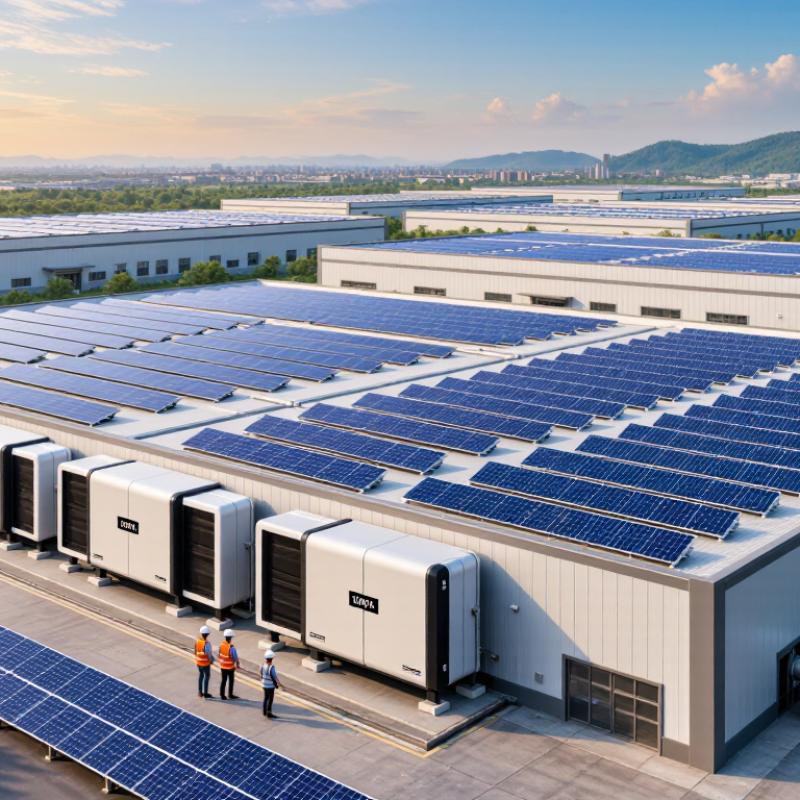
For a factory with daytime machinery, a 100kW inverter may help align solar generation with on-site demand. Its actual contribution depends on panel capacity, sunlight, load patterns, and system configuration. Monitoring daily output can reveal issues such as unexpected clipping or a cooling fan that runs unusually often. Capacity selection is not always tidy. A careful assessment should use measured load data and realistic environmental assumptions, rather than choosing a rating from peak demand alone.
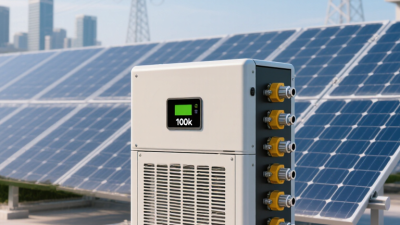
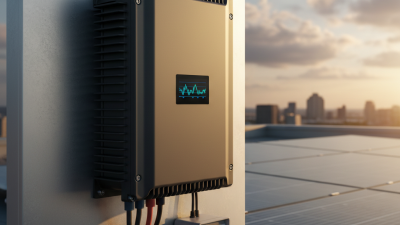
Key Applications and Specifications Buyers Should Compare

A 100 kW inverter may suit factory rooftops, warehouses, and commercial solar plants, but the site matters. The IEA’s Renewables 2024 report says global solar PV capacity additions reached about 420 GW in 2023. That growth makes careful equipment matching more important, not less. A shaded roof with several orientations needs different string design from an open industrial site.

Compare maximum DC voltage, MPPT range, input current, and recommended DC-to-AC ratio against the module layout. Check efficiency curves at partial load, not only peak efficiency.

For hot plant rooms, review cooling requirements and derating data; for exposed sites, confirm the enclosure rating. Also compare grid-support functions, protection features, monitoring detail, warranty terms, and local service response.

A neat datasheet can still hide a poor site fit. Details matter.

Tips: Ask suppliers for a sample yield simulation using your site’s weather, shading, and load data. Verify every quoted specification against the current datasheet and installation conditions. Don’t compare price alone.

How China’s 100kW Inverter Manufacturing Market Is Organized

China’s 100kW inverter manufacturing market is organized around capabilities, not just product labels. Some factories focus on power electronics and assembly, while specialist suppliers provide switching devices, cooling parts, control boards, and enclosures. A finished unit may pass through several production stages before shipment. This structure gives buyers options, but it can make supplier roles less clear.

Manufacturers also differ in how much engineering they handle in-house. A buyer should ask who designs the control system, performs thermal testing, and checks output under changing loads. Request test records, component specifications, and details on inspection procedures. Look closely at the enclosure, wiring layout, and cooling design; these details affect maintenance in real installations. Brochures can mislead. A factory visit or live production video may help, though neither replaces independent checks. It is worth asking how the supplier handles faults and spare parts after delivery. Answers can be vague. That is a useful signal to investigate further, not a reason to assume every supplier works the same way. Some market descriptions blur manufacturers, trading firms, and integrators, so verify which company actually builds and tests the inverter.

China Top 100kW Inverter Manufacturers for Buyers - How China’s 100kW Inverter Manufacturing Market Is Organized
Market Layer Typical Product Scope Relevance to a 100kW Requirement Buyer Checks
Grid-tied PV inverter manufacturers Three-phase string inverters that convert photovoltaic array DC power into grid-synchronized AC power. A 100kW-class unit is commonly specified by its rated AC active power. Available DC voltage, MPPT count, and output-voltage options vary by model. Confirm rated AC power, permitted DC input range, MPPT and string limits, grid-code certificates, protection functions, and operating-temperature limits.
OEM and ODM production partners Factories producing inverter products to a customer’s design, specification, or private-label requirements. May suit buyers seeking customized enclosures, communications, documentation, or product branding; the supplier’s role and responsibility should be clearly defined. Ask who owns the design, firmware, certification, quality records, warranty obligations, and after-sales support. Verify that certificates cover the exact model and factory.
Integrated inverter and power-electronics suppliers Suppliers with in-house product engineering and manufacturing capabilities for power-conversion equipment. Potentially useful for projects requiring coordinated hardware, monitoring, grid-support functions, or engineering changes. Review production quality controls, component traceability, test procedures, software-update policy, and documented change management.
Commercial and industrial solution providers Packaged solutions that may combine PV inverters with monitoring, protection equipment, communications, or project-engineering services. Can simplify system integration, but the package may include equipment from multiple manufacturers and does not necessarily mean the inverter is made by the solution provider. Request a bill of materials, equipment-origin details, interface diagrams, commissioning scope, and a clear allocation of warranty and service responsibilities.
Energy-storage inverter and PCS suppliers Battery power-conversion systems (PCS) and hybrid equipment designed to manage bidirectional power flow between batteries and AC systems. A 100kW PCS is not automatically equivalent to a 100kW grid-tied PV inverter. Confirm whether the requirement is PV conversion, battery charging and discharging, or both. Check continuous charge and discharge ratings, battery voltage range, grid-forming or grid-following functions, system compatibility, and applicable certifications.
Export and project supply channels Direct factory sales, export departments, distributors, and engineering or procurement contractors. The sales channel affects lead time, local technical support, spare-parts access, and who handles warranty claims. Verify the contracting entity, delivery terms, local service arrangements, spare-parts commitments, warranty conditions, and responsibility for import compliance.
AC output and system sizing Three-phase inverter output is designed for the site’s grid voltage and frequency; 400V and 480V are common three-phase system voltages in different markets. At 100kW and unity power factor, ideal line current is approximately 144A at 400V or 120A at 480V. Actual current and equipment ratings depend on power factor, efficiency, and the product design. Match inverter output voltage and frequency to the grid, and have qualified designers size cables, breakers, transformers, and protection for the actual installation conditions.
Buyer note: This is a non-ranked market-structure guide, not a list of named or independently verified manufacturers. Product specifications and certification requirements vary by model and destination market; confirm all technical and commercial details with the supplier before purchase.

Evaluating Chinese Manufacturers for Quality and Compliance

Evaluating a Chinese manufacturer of 100 kW inverters takes more than comparing prices or reading a product sheet. Ask for rated-power curves, efficiency test conditions, and operating-temperature limits. Check whether the documents match the exact model and hardware revision being quoted. A neat certificate is useful, but it does not explain how the unit performs under heat, dust, or fluctuating loads.

Quality checks should be specific. Request test records for insulation, temperature rise, protection functions, and full-load operation. Confirm that serial numbers can be traced to production and inspection records. If possible, review a sample unit or arrange an independent factory inspection. Small details count. Look at cable terminals, cooling paths, enclosure seals, and the clarity of installation instructions. A single audit is not proof; samples may be unusually well prepared.

Compliance depends on the destination market and the installation type. Ask which safety and grid-interconnection requirements the exact model has been assessed against, then verify certificates with the issuing organization where possible. Confirm labeling, manuals, and test reports are consistent, and clarify who handles updates when specifications change. Response time matters, too. Keep written records of technical questions and warranty commitments. The process can feel repetitive, and paperwork may still leave gaps; flag those gaps before production, rather than assuming they will be resolved after delivery.

China 100 kW Inverter Manufacturers: A Buyer’s Technical Check

The chart shows the theoretical three-phase AC line current for a 100 kW inverter at selected line-to-line voltages, assuming unity power factor.

Calculated using I = P ÷ (√3 × V × PF): approximately 144.3 A at 400 V, 139.1 A at 415 V, and 120.3 A at 480 V. Actual nameplate current depends on the inverter’s rated voltage, power factor, and design. When comparing manufacturers, verify the datasheet ratings and request applicable safety, grid-connection, and EMC compliance documentation for the target market.

A Step-by-Step Guide to Selecting and Sourcing a Manufacturer

Choosing a 100kW inverter manufacturer starts with your project’s actual operating conditions. Record the DC voltage range, expected output, site temperature, altitude, and grid connection requirements. A unit rated at 100kW may not deliver that output continuously in a hot, poorly ventilated equipment room. Check the datasheet for derating curves, cooling method, enclosure rating, efficiency, and protection functions. Ask how the manufacturer verifies these figures, not just whether they appear in a brochure.

Tips: Request a current datasheet, test reports, warranty terms, and a list of included accessories. Confirm the factory can support remote troubleshooting and provide replacement parts. Small details matter.

Before ordering, compare the proposed inverter configuration with your system design and destination-market requirements. Ask for written confirmation of compatible voltage ranges and communication protocols, such as Modbus, if your monitoring system uses them. Review a sample inspection record or arrange a production audit when the order is significant. No guesswork. I would not treat a quick video call as proof of manufacturing quality; it can show useful details, but it cannot replace documented checks. Clarify lead time, packaging, commissioning support, and how faults are handled. A precise quotation and clear technical answers are often more useful than the lowest price.