Leave Your Message

Top Deye Solar Inverter Suppliers in China

China’s Deye Solar Inverter supply network includes manufacturers, authorized distributors, and export-focused trading companies. Their offers can look similar on a product page. The details matter. Buyers should compare model specifications, warranty terms, technical support, production capacity, and documentation—not price alone.

Deye founder and chairman Zhang Hejun is a relevant industry figure, but no verified quotation from him was provided for this introduction. Rather than invent one, here is a clearly labeled editorial takeaway: “A reliable inverter choice depends on verified specifications, suitable system design, and support after delivery.” That principle helps frame this guide to Top Deye Solar Inverter Suppliers in China. It is not a statement attributed to Zhang.

Look for concrete evidence. Ask suppliers to confirm the exact model, operating range, communication options, and warranty process in writing. Check whether their answers match current product documents. A supplier’s response time can also reveal how support may work after a shipment arrives. Small details count.

Not every supplier will fit every project. Some buyers need export experience; others need local technical assistance or particular product configurations. The comparison is not perfectly tidy, and supplier claims still require checking. This guide offers a practical starting point, not an endorsement. Verify important details directly before placing an order.

Top Deye Solar Inverter Suppliers in China

Overview of Deye Solar Inverters and Their Applications

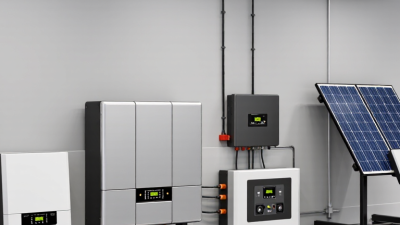
Solar inverters turn photovoltaic panel output into usable alternating current for homes, businesses, and the grid. Their role depends on system design. String units suit many rooftops, while microinverters can manage output panel by panel. Hybrid models coordinate solar generation, batteries, and grid power. Each choice affects monitoring, installation, and maintenance.

IRENA’s Renewable Capacity Statistics 2024 reports that global solar capacity reached 1,419 GW in 2023, adding 345.5 GW that year. That rapid growth puts greater focus on reliable conversion and system matching. A home with evening demand may benefit from battery-ready equipment; a warehouse with broad, unshaded roofs may favor a different layout. Real roofs are messy. Shade, heat, cable runs, and future expansion all matter.

For off-grid sites, inverters must work with storage and changing loads, such as pumps or refrigeration. Grid-connected systems instead need equipment configured for local network requirements and safe shutdown. Installers should check voltage ranges, peak power, battery compatibility, and monitoring functions before selection. Datasheets help, but they do not show every site condition. That gap deserves attention.
How Deye’s Supplier Network Works in China

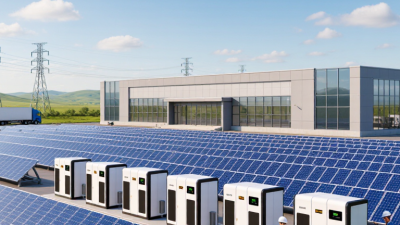
In China, an inverter supplier network usually links manufacturers, regional distributors, project integrators, and service teams. The route is not always direct. A factory may sell through a provincial distributor, while larger solar projects buy through an engineering partner. This structure moves equipment from production sites to installation locations, including inland cities where delivery times can vary.

Supplier checks should go beyond price. Buyers can request a dated quotation, model-specific datasheets, serial-number verification, warranty terms, and written after-sales contacts. Confirm that the proposed unit matches local grid settings and the project’s battery configuration. Packaging matters too: inspect corner protectors, labels, and moisture barriers when goods arrive. Small details reveal a lot.

Reliable suppliers often coordinate stock forecasts, transport, commissioning guidance, and replacement parts. Yet availability can change quickly during peak installation seasons, and a polished catalog is not proof of inventory. Ask for current stock evidence and a clear delivery schedule. I would still leave room for doubt: paperwork can look complete, while response times after payment tell a different story. Keep records.

Top Deye Solar Inverter Suppliers in China - How Deye’s Supplier Network Works in China

This table describes common supplier-network functions in China’s solar-inverter industry. It is an industry-level overview, not a verified supplier roster or a statement of any specific company’s contractual arrangements.

Supplier Network Layer Typical Products or Services Role in Inverter Production Common Quality and Compliance Checks Supply-Chain Considerations
Electronic component suppliers Semiconductors, capacitors, resistors, control components, connectors, and printed circuit boards Provide the electronic parts used in power conversion, control, monitoring, and protection circuits. Incoming inspection, traceability records, electrical testing, and verification against approved component specifications Lead times and component availability can vary; designs may require qualified alternatives when parts are constrained.
Power-conversion component suppliers Power modules, magnetic components, transformers, inductors, and thermal-management parts Support energy conversion, isolation where applicable, heat dissipation, and stable operation under rated conditions. Electrical performance checks, thermal testing, dimensional inspection, and review of material or process documentation Compatibility with the inverter design and consistent performance across production batches are important.
Enclosure and mechanical-part suppliers Metal or polymer enclosures, mounting parts, seals, brackets, and cable-management components Protect internal assemblies and support installation, ventilation, and environmental resistance. Dimensional checks, coating or corrosion-resistance inspection, ingress-protection testing, and fit verification Material choice and enclosure design affect durability, weight, assembly time, and shipping requirements.
Battery and energy-storage interface suppliers Battery-interface components, communication hardware, protection devices, and compatible system accessories Enable communication and electrical integration between an inverter and applicable storage systems. Interface-protocol validation, protection-function testing, electrical safety checks, and system-level compatibility testing Compatibility depends on documented voltage ranges, communication protocols, and installation requirements.
Contract manufacturing and assembly partners Electronics assembly, wiring, mechanical assembly, and production-line services Convert sourced components into finished or partially finished inverter assemblies under defined production controls. Work-in-process inspections, solder-joint checks, assembly records, functional tests, and production audits Production capacity, process consistency, workforce training, and change control influence delivery reliability.
Testing and certification services Electrical safety, performance, electromagnetic compatibility, and environmental testing Assess whether products meet applicable technical requirements for intended markets and use cases. Testing against relevant standards, calibration records, test reports, and documented corrective actions Applicable standards vary by market, product configuration, and installation context; certification must be verified for each product.
Packaging and logistics providers Protective packaging, warehousing, domestic transport, export handling, and freight coordination Move finished products and components between production sites, distribution points, and customers. Packaging inspections, shipment documentation, handling controls, and checks for transport damage Shipping schedules depend on inventory, transport capacity, customs procedures, and destination requirements.
Supplier coordination and oversight Supplier qualification, purchasing coordination, production planning, and corrective-action follow-up Connect component sourcing, manufacturing schedules, quality controls, and delivery planning. Supplier assessments, specification control, lot traceability, performance reviews, and issue-resolution records Clear specifications, forecast sharing, and documented change management help reduce supply and quality risks.

Leading Deye Solar Inverter Suppliers in China

Leading Deye Solar Inverter Suppliers in China

China’s leading solar inverter suppliers are distinguished by more than product availability. Buyers should check model-specific datasheets, factory test procedures, warranty terms, and spare-parts access. A supplier should explain how an inverter handles voltage variation, heat, and grid interruptions in the intended installation. Ask for test records, not just a polished brochure.

Details matter.

Market growth makes careful sourcing more important.

SolarPower Europe’s Global Market Outlook 2024 reported about 447 GW of new solar capacity worldwide in 2023. IEA PVPS’s Trends in Photovoltaic Applications 2024 estimated global cumulative capacity had passed 1.6 TW. These figures indicate a large, expanding market, but they do not verify any supplier’s performance.

Request references for comparable systems and confirm that quoted specifications match the exact model. Check production dates, packaging, communication protocols, and the process for handling faults. A clear answer should include realistic response times and named technical responsibilities, not vague assurances.

One caveat: a factory visit can show processes, yet it cannot replace independent testing or long-term field data. Some buyers overlook that. A signed sample approval and documented inspection plan can reduce misunderstandings before shipment.

How to Compare Suppliers by Product Range and Credentials

When comparing Chinese solar inverter suppliers, start with the product range, not a polished catalog. Check whether each supplier offers the model your project needs: single-phase or three-phase, hybrid or grid-tied, and the right power band. Request current datasheets, operating-temperature limits, efficiency curves, and compatible battery voltage ranges. Small details matter. A neat comparison table can expose gaps quickly.

Then check the evidence behind each claim. Request business registration details, factory or assembly-site information, quality-management certificates, and test reports matching the quoted model. Confirm each document’s scope, issue date, and issuing organization; a logo on a PDF is not enough. Ask for serial-number traceability and a sample warranty document. For export projects, clarify who handles technical questions, spare parts, and warranty shipping. Get expected response times in writing.

Use a scorecard for model availability, documentation, lead time, support, and total landed cost. Compare identical configurations, including monitoring devices and communication accessories. A low quote may omit these. The widest product range is not automatically the strongest; it may conceal limited stock or inconsistent documentation. Supplier replies can sound confident while leaving a specification unclear. Mark the gap and ask again instead of guessing. A video call can help verify labeling and packaging, but it cannot replace independent testing or clear contractual terms.

Comparing Solar Inverter Suppliers: Product Range & Credentials

A practical checklist for comparing suppliers. Counts show the items in each checklist, not supplier ratings or claims.

Product-family checks: grid-tied string, hybrid, off-grid, and microinverter products. Documentation checks: ISO 9001, ISO 14001, IEC 62109, IEC 62116, and IEC 61727. Ask suppliers for current, applicable certificates and test reports; the standards required depend on the product and target market.

Purchasing, Warranty, and After-Sales Support Considerations

When comparing Chinese suppliers of solar inverters, look beyond the quoted unit price. Confirm the exact model, rated output, grid compatibility, included accessories, and firmware version in writing. Ask for product traceability documents and sample test records before placing a large order. Details matter. A low price can lose its appeal when a shipment arrives with unclear specifications or missing parts.

Read the warranty terms carefully. Check when coverage begins, which components are included, and whether labor, freight, and replacement shipping are covered. Ask who handles a claim: the supplier, the manufacturer, or both. Request a written process with expected response times and the documents required, such as serial-number photos and fault logs. Do not assume “standard warranty” means the same thing across suppliers. It often does not.

After-sales support deserves the same scrutiny as product quality. Ask whether technicians can review monitoring data remotely, and whether common spare parts are available locally or must be shipped from China. Test the support channel with a practical question before committing. A polished brochure proves little. References from buyers with similar systems can reveal how issues were handled in real conditions. I would still leave room for delays; even a capable supplier cannot make every repair immediate. Secure clear terms, named contacts, and escalation steps in the purchase agreement.