Leave Your Message

Top 10 Deye 10kW Hybrid Inverter Buying Questions?

Solar power is moving from a niche technology into a central part of modern electricity systems. The International Energy Agency’s Renewables 2024 report expects global renewable capacity to expand by nearly 5,500 GW between 2024 and 2030. Solar photovoltaic systems are expected to provide most of that growth. SolarPower Europe also reported approximately 447 GW of new solar capacity worldwide in 2023, showing why flexible energy storage matters.

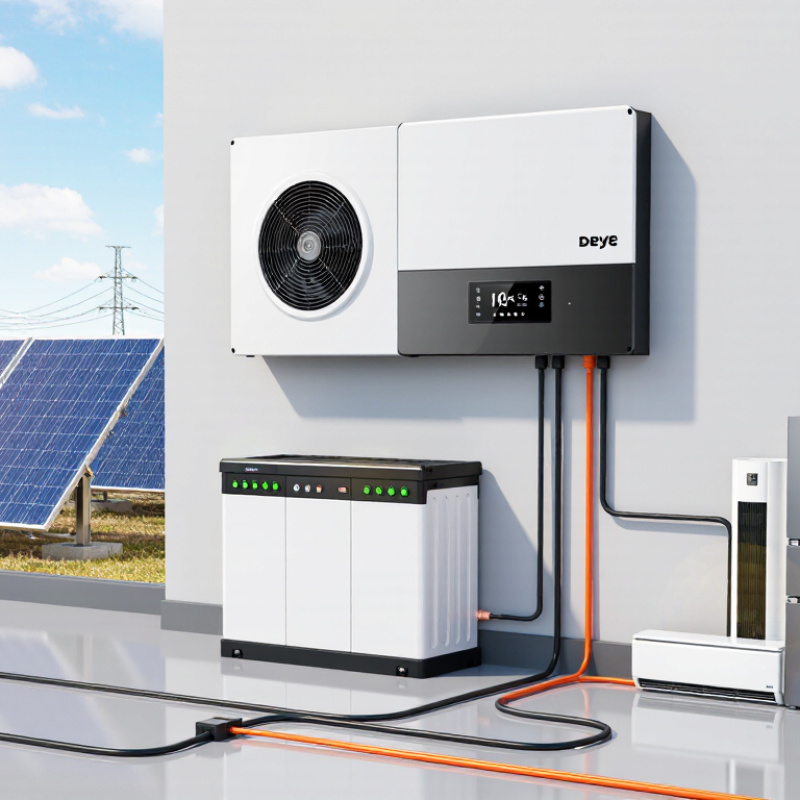
A Deye 10kw Hybrid Inverter can connect solar panels, batteries, household loads, and the utility grid in one energy-management system. However, the 10kW rating does not guarantee the same performance in every home. Battery voltage, peak loads, backup wiring, cooling conditions, and local grid requirements can change the result. Small details matter.

Fatih Birol, Executive Director of the International Energy Agency, said, “Solar PV is going to dominate the growth of global electricity capacity over the next five years.” His observation explains the growing interest in hybrid inverter technology, but it does not remove the need for careful product evaluation.

This guide examines the top ten buying questions before selecting a Deye 10kw Hybrid Inverter. It considers efficiency, battery compatibility, backup capability, monitoring, installation limits, warranty support, and long-term operating costs. Some assumptions may fail. A large inverter can still be poorly matched to a small battery or an oversized solar array. The best decision depends on measured household demand, not attractive specifications alone. Truthfully, buying quickly is easier. Buying correctly requires more questions.
Top 10 Deye 10kW Hybrid Inverter Buying Questions?

What Is the Deye 10kW Hybrid Inverter and Who Should Buy It?

A 10 kW hybrid inverter manages solar production, battery charging, household loads, and grid exchange in one control system. It can convert rooftop direct current into usable alternating current while reserving stored energy for evening demand or outages. That capacity suits larger homes, small workshops, farms, and businesses with steady daytime consumption. Not every home needs it.

The International Energy Agency reported nearly 510 GW of new solar capacity worldwide in 2023, showing how quickly distributed generation is expanding. A 10 kW unit can support several appliances, but actual performance depends on battery size, roof orientation, shading, and local electrical limits. The U.S. National Renewable Energy Laboratory also stresses that battery storage value changes with load profiles and tariff structures.

Buyers should compare surge output, backup circuits, monitoring quality, warranty support, and installation requirements. A refrigerator, pump, and heat pump may start together; that moment matters more than the headline rating. I have seen specifications look impressive until nighttime consumption exposed an undersized battery. That is the uncomfortable part. A careful load audit remains more reliable than online reviews.
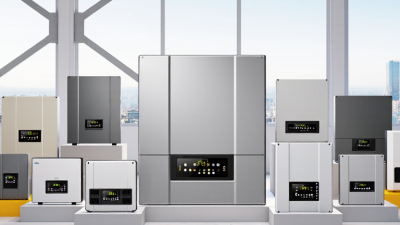
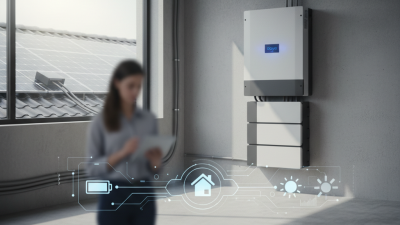
How Do Its Power Ratings, Battery Options, and Solar Inputs Compare?

A 10 kW hybrid inverter does not always deliver 10 kW continuously. Buyers should check rated AC output, surge capacity, phase configuration, and temperature derating. A 10 kW rating may fall near 8–9 kW in a hot, enclosed installation. That detail matters when starting pumps, compressors, or workshop tools.

Battery compatibility requires more than checking voltage. A 48-volt battery delivering 10 kW needs roughly 208 amps before efficiency losses. Cables, fuses, and battery-management communication must support that current. NREL’s Storage Futures Study commonly models lithium-ion round-trip efficiency around 85–95%. Real results depend on temperature, charging speed, and state of charge. Bigger is not always better.

Solar inputs deserve equal attention. Check the number of MPPT trackers, maximum PV voltage, operating voltage range, and input current per tracker. The IEA PVPS Trends 2024 report recorded more than 400 GW of new solar capacity globally in 2023, showing why higher-density rooftop arrays are becoming common. A practical example: two roof faces may need separate MPPTs, not one oversized string. Installers sometimes focus on total PV watts and miss current limits. That mistake can reduce harvest during bright midday hours. The specification sheet may also describe peak efficiency, not seasonal efficiency. Read both.

Top 10 10 kW Hybrid Inverter Buying Questions: Power Ratings, Battery Options, and Solar Inputs
No. Buying Question Key Technical Answer What to Compare Before Purchase
1 Does a 10 kW rating mean the inverter can supply 10 kW continuously? Usually, the number refers to the inverter's continuous AC output under specified operating conditions. The actual usable output can be limited by ambient temperature, grid configuration, installation method, and regional certification requirements. Short-term surge capacity is a separate specification. Continuous AC output
Rated temperature
Overload duration
Surge capability
2 How much battery power is needed to deliver 10 kW? Battery current depends on battery voltage. At 10 kW, an approximately 51.2 V battery system would theoretically supply about 195 A before conversion losses; a higher-voltage battery system would require less current. In practice, battery, cable, fuse, and inverter limits must all be observed. Battery voltage range
Maximum charge and discharge current
Battery continuous power rating
Cable and protection requirements
3 Which battery chemistry is suitable? Lithium iron phosphate (LFP) batteries are commonly selected for stationary storage because they offer good cycle life, thermal stability, and usable depth of discharge. Lead-acid batteries can also be supported by some systems, but they generally require lower usable depth of discharge and careful charging settings. LFP or lead-acid compatibility
Battery communication protocol
Approved battery list
Warranty and operating temperature
4 What battery capacity is appropriate for a 10 kW hybrid inverter? Capacity depends on the desired runtime rather than the inverter's power rating alone. For example, a 10 kWh nominal battery may provide roughly one hour at a 10 kW load before efficiency losses and reserve limits are considered. A larger battery is needed for longer backup or reduced discharge stress. Required backup duration
Average and peak loads
Usable energy percentage
Round-trip efficiency
5 How many solar panels can the inverter accept? The answer is determined by the maximum PV input power, maximum PV voltage, maximum input current, and the number of independent MPPT trackers. Panel quantity must be calculated from the panel's voltage and current at the lowest and highest expected temperatures, not from wattage alone. Maximum PV input power
Maximum PV voltage
Maximum short-circuit current
Number of MPPT channels
6 Why do the solar input and AC output ratings differ? A hybrid inverter may accept more PV power than its AC output rating because solar production varies throughout the day. This practice, called DC oversizing, can improve energy harvest during low-light periods, although excess midday generation may be clipped when the AC output limit is reached. PV-to-AC sizing ratio
Clipping behavior
MPPT operating range
Local installation rules
7 Can the inverter work with single-phase or three-phase supplies? Configuration depends on the specific model and its certification. Some hybrid inverters are designed for single-phase systems, while others support coordinated multi-unit operation or three-phase arrangements. Phase balancing, neutral requirements, and export-control settings must be confirmed before installation. Single-phase or three-phase design
Parallel operation
Phase imbalance limits
Grid-code certification
8 What backup loads can a 10 kW hybrid inverter run? It can generally support combined loads up to its permitted continuous output, but motors, pumps, compressors, and refrigeration equipment may require a high starting current. Critical-load circuits are usually separated from nonessential loads to keep peak demand within the inverter and battery limits. Motor-starting surge
Essential-load panel design
Transfer time
Generator compatibility
9 What efficiency figures should be checked? Look at maximum efficiency, European or weighted efficiency, battery charge and discharge efficiency, and standby consumption. Maximum efficiency is achieved only under particular conditions; weighted efficiency is often more useful for estimating typical daily performance. Maximum efficiency
Weighted efficiency
Battery conversion losses
Night-time standby consumption
10 Which safety and installation specifications matter most? Important specifications include protection against overvoltage, overcurrent, short circuit, islanding, overheating, and residual current faults. The system should also have suitable disconnects, surge protection, grounding, ventilation, and clear operating limits for temperature, humidity, and enclosure location. Anti-islanding protection
Surge protection requirements
Ingress-protection rating
Operating temperature range
Installer and grid approval

Which Home Loads Can the Inverter Run During Grid Outages?

Top 10 10kW Hybrid Inverter Buying Questions: Which Home Loads Can It Run During Grid Outages?

A 10kW hybrid inverter can support essential household circuits during an outage. Suitable loads often include refrigerators, lighting, internet equipment, security systems, televisions, and gas-furnace controls. A refrigerator may draw 100–800 watts while running, but its compressor can demand several times more during startup. The U.S. Department of Energy highlights similar variation across household appliances. Therefore, continuous power is only half the calculation.

High-demand equipment needs closer attention. A heat pump, electric water heater, induction cooker, well pump, or central air conditioner may exceed the inverter’s continuous rating or surge capacity. The U.S. Energy Information Administration reported average residential electricity use near 886 kWh monthly in 2022. That figure does not reveal short, powerful surges. A 10kW inverter may run several appliances together, but not every large appliance simultaneously. Real homes are messier than spreadsheets.

Tips: Ask an electrician to measure starting watts and running watts. Build a backed-up loads panel, rather than connecting the entire house automatically. Keep battery capacity in mind; a 10kW inverter cannot operate without sufficient stored energy. For example, a 5kW load could consume roughly 5kWh in one hour, before conversion losses. Check local installation requirements and verify neutral-ground switching. I would not promise whole-home backup without a load study.

What Installation, Compatibility, and Safety Factors Should Buyers Check?

Top 10 Hybrid Inverter Buying Questions

A reliable purchase begins with the installation site, not the product brochure. Ask whether the main panel can accept the inverter’s output and whether local regulations require certified electrical work. Check wall strength, working clearance, weather exposure, and cable routes. A shaded, damp corner may shorten service life.
Confirm compatibility with the battery’s voltage range, communication protocol, and maximum charge current. The battery management system must communicate correctly with the inverter. Also compare solar string voltage with each MPPT’s operating limits. Too many panels in one string can create dangerous voltage. Too few may reduce performance. Measure the roof layout carefully.
Review backup capacity, not just the 10kW headline. Can the system start pumps, refrigerators, or workshop tools? Motor loads may need extra surge capacity. Ask about transfer time, supported grid types, grounding, surge protection, and emergency shutdown. Verify the enclosure rating for the installation environment. Ventilation matters.
I have seen buyers overlook neutral wiring and battery disconnect access. Small details become expensive later. An experienced installer should provide a single-line diagram, protection plan, and commissioning record. Check testing procedures, monitoring access, firmware support, and warranty terms in writing. Safety labels should remain visible after installation.
Do not assume every battery or generator will work. Compatibility lists can change. Request current technical documents before paying. A final inspection by a qualified professional is worth the delay, even when the design seems simple.

How Do Price, Warranty, Efficiency, and After-Sales Support Affect Value?

Top 10 10 kW Hybrid Inverter Buying Questions

Price is only the first number to inspect. A 10 kW hybrid inverter may cost less, yet require expensive installation changes or battery upgrades. Ask about usable output, surge capacity, standby consumption, and included protection devices. Fraunhofer ISE’s Photovoltaics Report 2024 notes that leading inverters can exceed 98% peak efficiency. However, peak efficiency is not household efficiency. Daily performance depends on low-load losses, temperature, and battery conversion.

Warranty terms can change the purchase value significantly. Check whether coverage lasts five, ten, or more years. Also confirm labor, shipping, replacement procedures, and battery compatibility. NREL research commonly reports photovoltaic module degradation near 0.5% annually, making long-term inverter reliability important for maintaining system economics. A warranty extension may look expensive today. It can be sensible insurance.

After-sales support is often underestimated. Ask for a written response-time target, local technician coverage, firmware procedures, and spare-part availability. The IEA’s Renewables 2024 report recorded 473 GW of global renewable capacity additions in 2023, showing how quickly service networks may become crowded. That growth does not guarantee fast support. I would compare three quotes using total cost over ten years, not purchase price alone. My judgment may still be imperfect, especially where installer quality is unknown.