Leave Your Message
Choosing a Solis Inverter in 2026 requires more than comparing prices and headline efficiency figures. A suitable model must match your roof, energy habits, battery plans, and local grid requirements. A compact home may need a different solution from a workshop with motors, refrigeration, or afternoon shading. The right decision begins with measured demand, not optimistic assumptions.
Pay close attention to system size, maximum input current, operating voltage, monitoring features, and backup capability. Check whether the inverter supports your chosen panels and battery without complicated restrictions. Installation quality matters just as much. Cable length, ventilation, roof temperature, and protection devices can influence long-term performance. Ask a qualified installer to confirm these details in writing. Small oversights become expensive later.
A reliable Solis Inverter should also offer clear warranty terms, accessible technical support, and software that shows useful operating data. Look for practical information, such as daily yield, fault history, and battery behavior, rather than attractive graphics alone. Independent reviews and installer experience can reveal weaknesses that product brochures overlook. No model is perfect. Even a well-designed system may underperform when shading, export limits, or poor settings are ignored. This guide compares the decisions that matter in 2026, while recognizing that household needs differ. The best choice is not always the newest model. It is the one that remains safe, compatible, understandable, and financially sensible throughout its working life.
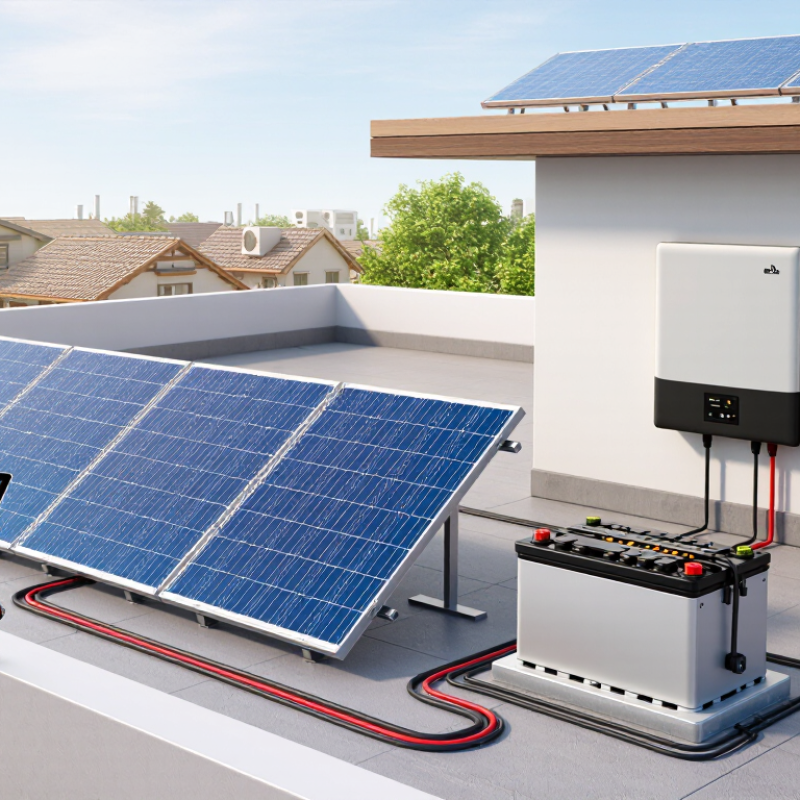
Choosing the right solar inverter begins with understanding its type, not its advertised power. A grid-tied inverter suits homes with stable utility access and no battery storage. A hybrid inverter manages solar panels, batteries, and the grid together. An off-grid model requires careful battery sizing and backup planning. The wrong type can leave useful energy unused.
Core features deserve close inspection. Check the maximum DC voltage, MPPT range, and number of tracking channels. These details affect performance when panels face different directions or receive partial shade. Efficiency matters, but it is not the whole story. A slightly lower rated model may perform better with a cooler enclosure and wider operating range. Look for clear monitoring data, simple fault codes, and suitable ingress protection for the installation site.
Safety and compatibility come before convenience. Confirm battery communication protocols, backup output limits, and local electrical requirements. A qualified installer should measure cable distance, rooftop temperature, and expected household loads. I once focused too heavily on peak efficiency and overlooked nighttime demand. That mistake changed the equipment recommendation. Real homes are untidy. Kettles, pumps, and sudden cloud cover can expose weak planning. Choose an inverter that matches daily behavior, future storage plans, and the actual conditions around the system.
| Inverter Type | Typical Application | Main Operating Principle | Key Advantages | Important Limitations | Best Selection Condition |
|---|---|---|---|---|---|
| Single-Phase String Inverter | Small residential systems | Several solar modules are connected in strings and converted by one centralized unit. | Lower cost, simple installation, easy maintenance, and strong suitability for uniform roofs. | A shaded or poorly performing module can reduce the output of its string. | The roof has limited shading and similar panel orientations. |
| Three-Phase String Inverter | Large homes, farms, and commercial buildings | Converts DC power from multiple solar strings into balanced three-phase AC power. | Suitable for higher loads, improved phase balancing, and longer cable runs in many installations. | Requires a compatible three-phase electrical connection and qualified commissioning. | The building has three-phase service or substantial commercial loads. |
| Hybrid Inverter | Solar-plus-storage and backup-power systems | Manages solar generation, battery charging and discharging, loads, and grid interaction. | Supports energy storage, self-consumption, time-of-use operation, and backup functions when properly configured. | Higher purchase cost and greater system complexity; battery compatibility must be verified. | Backup power, peak-demand reduction, or increased solar self-consumption is required. |
| Microinverter System | Roofs with multiple orientations or partial shading | Each module, or a small group of modules, has its own power-conversion unit. | Module-level optimization, flexible design, and easier system expansion. | More electronic devices are installed on the roof, and the initial cost can be higher. | The array has frequent shading, different roof directions, or module-level monitoring needs. |
| Central Inverter | Utility-scale solar plants | Combines power from many high-voltage DC strings into large-capacity AC output. | High power density, centralized maintenance, and efficient plant-level control. | A centralized failure can affect a large section of the plant, and the design requires specialized infrastructure. | The project is large, the site layout is consistent, and professional plant engineering is available. |
| Off-Grid Inverter | Remote buildings without a reliable utility connection | Creates a local AC supply using solar generation and batteries without depending on the public grid. | Independent operation and compatibility with energy-management strategies for isolated systems. | Requires careful battery sizing and cannot normally export power to a utility grid. | The site has no grid connection or is designed to operate independently. |
| Feature | What to Check | Why It Matters | Practical Evaluation |
|---|---|---|---|
| Maximum Efficiency | Peak efficiency and weighted efficiency under relevant operating conditions | Higher efficiency can reduce conversion losses over the system’s operating life. | Compare certified efficiency data rather than relying only on a headline percentage. |
| MPPT Configuration | Number of independent maximum power point trackers and allowable input current | Independent tracking helps manage strings with different orientations, tilt angles, or shading patterns. | Use separate trackers for materially different roof sections whenever the design requires it. |
| DC Oversizing Ratio | Permitted DC-to-AC ratio and clipping behavior | A properly sized DC array can improve annual energy yield during low-light periods. | Follow the installation manual, local rules, and the inverter’s voltage and current limits. |
| Battery Compatibility | Battery voltage range, supported chemistry, communication protocol, and charge-discharge power | Compatibility affects safety, usable capacity, backup performance, and warranty validity. | Confirm the complete approved battery list before purchasing a hybrid system. |
| Backup Capability | Automatic transfer time, backup output rating, phase arrangement, and start-up capability | Not every grid-connected inverter can provide power during an outage. | Check whether essential loads require a dedicated backup circuit or additional equipment. |
| Safety Protection | Ground-fault detection, surge protection, anti-islanding, arc-fault protection, and rapid shutdown where required | Protection features reduce electrical risks and support compliance with local installation codes. | Verify local regulatory requirements and the exact protection functions included. |
| Monitoring and Communication | Wi-Fi, Ethernet, cellular, RS485, Modbus, local display, and module-level monitoring options | Reliable data access simplifies fault diagnosis and performance management. | Choose communication hardware suited to the site’s internet coverage and monitoring needs. |
| Environmental Rating | Ingress protection, operating temperature, humidity tolerance, altitude, and cooling method | Harsh weather and poor ventilation can affect reliability and available output. | Install the unit according to clearance, shade, ventilation, and temperature requirements. |
| Grid Compliance | Permitted voltage, frequency, export control, power-factor control, and required certifications | A technically suitable inverter may still be unusable if it is not approved for the local grid. | Obtain utility approval and verify the applicable certification before installation. |
| Serviceability and Warranty | Warranty duration, replacement process, installer support, spare parts, and software support | Long-term service access can be as important as the initial purchase price. | Compare total ownership cost, response times, and local technical support. |