Who Are the Top On Grid Inverter Manufacturers in China?
China’s solar industry has built a deep bench of On Grid Inverter manufacturers, from global suppliers to fast-growing specialists. Names often considered include Huawei, Sungrow, Ginlong Solis, Growatt, GoodWe, and Sineng Electric. A brand name alone, however, cannot tell buyers how a product will perform on a hot rooftop or in a dusty factory.
Professor Frede Blaabjerg, a leading power-electronics researcher, has highlighted the importance of power electronics for integrating renewable energy. A concise paraphrase of that idea is: “Power electronics makes renewable integration workable.” That principle matters in everyday operation. An inverter must synchronize with grid voltage and frequency, convert solar output efficiently, and respond reliably when conditions change. Small details count. Cooling design, monitoring quality, service access, and warranty terms can shape years of ownership.
This article compares manufacturers through practical criteria, not marketing claims alone. It considers product range, efficiency data, safety features, certifications for target markets, support networks, and evidence of deployment. String and central inverters serve different project sizes; neither is automatically the better choice. Buyers should also check whether published performance figures match their climate and installation conditions. Rankings can shift, and public data does not always reveal field reliability. That uncertainty deserves attention. The sections ahead identify leading Chinese suppliers and explain what to verify before choosing one.
How On-Grid Inverters Connect Solar Systems to the Utility Grid
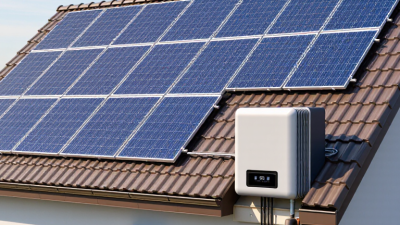
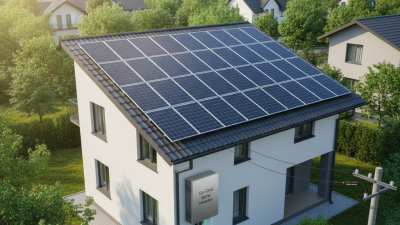
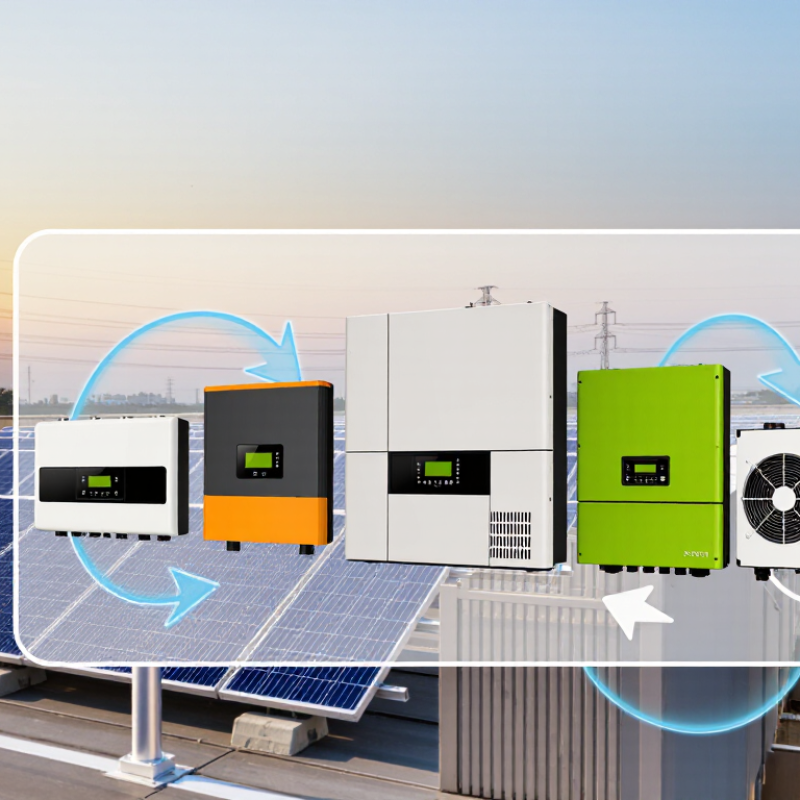
An on-grid inverter is the working bridge between solar panels and the utility network. Panels produce direct current, while household circuits use alternating current. The inverter converts that power and continuously checks the grid’s voltage, frequency, and phase. It must match them closely before electricity flows outward. A mismatch matters.
The scale is growing quickly. IRENA’s Renewable Capacity Statistics 2024 reports that solar capacity reached about 1,419 GW worldwide by the end of 2023, after roughly 346 GW was added that year. Each grid-connected system needs careful coordination, from rooftop wiring to the local distribution line. Inverters also stop exporting power when grid supply fails, helping prevent unsafe backfeed during outages.
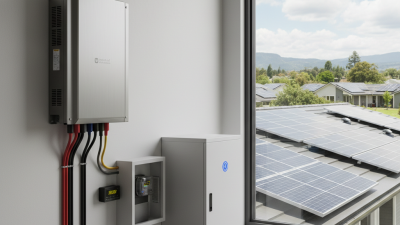
In a typical installation, a technician checks wiring, protective devices, and the inverter’s grid settings before commissioning. During operation, the unit adjusts output as sunlight shifts behind passing clouds. A utility meter records imported and exported energy, though local arrangements vary. The neat diagram can hide real-world complications: voltage may rise on a lightly loaded street, or cloud cover may change output within minutes. Grid support is not automatic; settings and system design matter. IRENA’s figures show expansion, but they do not mean every feeder can accept unlimited solar at once.
What Makes a Chinese Inverter Manufacturer a Market Leader
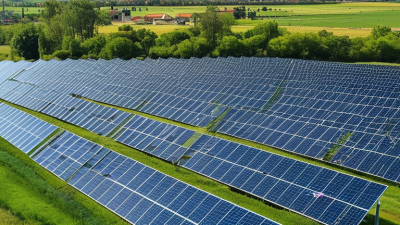
A market leader is not defined by shipment volume alone. It must turn factory scale into dependable performance across varied grids, climates, and project sizes. China’s National Energy Administration reported 277.17 GW of new solar capacity in 2024, roughly 28% above 2023. This rapid growth, documented in the NEA’s 2024 power industry statistics, raises expectations for inverter quality and delivery.
Technical depth shows in details: stable output during voltage fluctuations, clear fault logs, and cooling systems suited to dusty, hot sites. The IEA PVPS Trends in Photovoltaic Applications 2024 report tracks solar’s accelerating global deployment, making grid compatibility and reliable service increasingly important. Buyers should examine independent test results, warranty terms, spare-parts access, and response times—not just rated efficiency.
Field experience matters. A unit may perform well in a laboratory yet struggle through repeated heat cycles or weak-grid conditions. Manufacturers that publish transparent reliability data and support commissioning teams earn stronger trust. Still, no single metric captures long-term performance; public data can be uneven, and that deserves scrutiny. Scale matters. But it is not enough.
Who Are the Top On-Grid Inverter Manufacturers in China? — What Makes a Manufacturer a Market Leader?
China’s expanding solar market creates growing demand for reliable on-grid inverters. The chart shows the country’s installed solar PV capacity, providing market context rather than ranking individual manufacturers.
Source: China National Energy Administration (NEA). Year-end installed solar PV capacity; figures are rounded to one decimal place.
Profiles of China’s Leading On-Grid Inverter Manufacturers
China’s on-grid inverter manufacturers serve a fast-growing solar market. The IEA PVPS report Trends in Photovoltaic Applications 2024 estimates global solar capacity exceeded 1.6 terawatts by the end of 2023. China’s National Energy Administration reported 216.88 gigawatts of newly installed solar capacity that year. These figures explain the pressure on manufacturers to deliver reliable equipment at scale. Scale matters.
Profiles differ by product focus. Large, diversified suppliers typically offer residential string inverters alongside utility-scale systems, with broad service networks and substantial production capacity. Specialist manufacturers may concentrate on compact string units, monitoring software, or grid-support functions such as reactive-power control. Others focus on central inverters for large solar farms, where maintenance access and thermal management matter on site. Not always.
A practical comparison should examine conversion efficiency, operating temperature range, protection ratings, warranty terms, and documented field performance. Independent test results and clear technical datasheets are more useful than headline efficiency alone. Buyers should also ask how firmware updates and spare parts are handled. These profiles are not a fixed ranking: product quality and service can vary between models and markets, even within one manufacturer. That distinction deserves attention.
How Their Products, Scale, and Global Reach Compare
China’s leading on-grid inverter makers differ less by headline efficiency than by product depth. Large suppliers typically cover string and central inverters, from rooftop units to utility-scale equipment. Buyers compare conversion efficiency, operating voltage, monitoring functions, and service access. A crowded rooftop may need compact units and shade-level monitoring; a desert project values high power density and fast field replacement. Specs matter. So does support.
Scale gives Chinese manufacturers a strong home-market base. IEA PVPS reported that global solar additions reached about
597 GW in 2024,
with China contributing roughly
329 GW.
That rapid deployment supports production volume and real-world operating experience. Yet shipment scale alone does not prove reliability. Export reach also depends on local technical teams, spare-parts availability, grid-code options, and clear warranty handling. Wood Mackenzie’s inverter-market research tracks supplier shipments and regional competition, but rankings can shift with reporting scope and shipment definitions. That comparison is imperfect. A useful assessment checks product range, installed base, and service coverage together—not just factory capacity.
What Buyers Should Consider When Choosing a Manufacturer
When comparing on-grid inverter manufacturers in China, look beyond rated power and headline efficiency. Ask for efficiency curves across realistic loads, not just peak figures. Request test data for high temperatures, voltage fluctuations, and repeated start-stop operation. These conditions can affect daily output. Small details matter.
Check that the inverter’s grid settings can be configured for your installation region. Ask which protection functions are built in and how firmware updates are handled. A clear technical manual and a sample commissioning record can reveal more than a polished sales presentation. A strong specification still cannot predict every site condition, so have a qualified installer review compatibility before ordering.
Review warranty terms carefully: coverage period, exclusions, replacement process, and who pays shipping. Ask how spare parts are stocked and how technical questions are escalated. Response time matters. Request references from projects with similar system size and climate, then ask those buyers about actual service after installation. Avoid judging a manufacturer only by price or factory capacity; those figures do not show how a difficult fault will be handled. One uncertainty remains: service quality can vary by distributor, even when the equipment is consistent.