What Are the Top Types of LiFePO4 15kWh Batteries?
Choosing the right Lifepo4 15kwh battery starts with understanding where it will work, not simply comparing advertised capacity. A 15 kWh system may store about 15.36 kWh at 51.2 volts and 300 amp-hours. However, usable energy depends on depth of discharge, inverter efficiency, temperature, and battery management settings. Details decide.
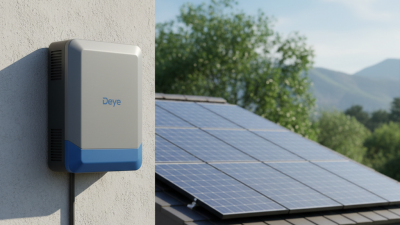
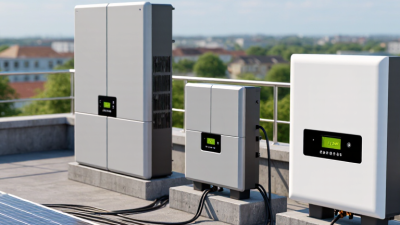
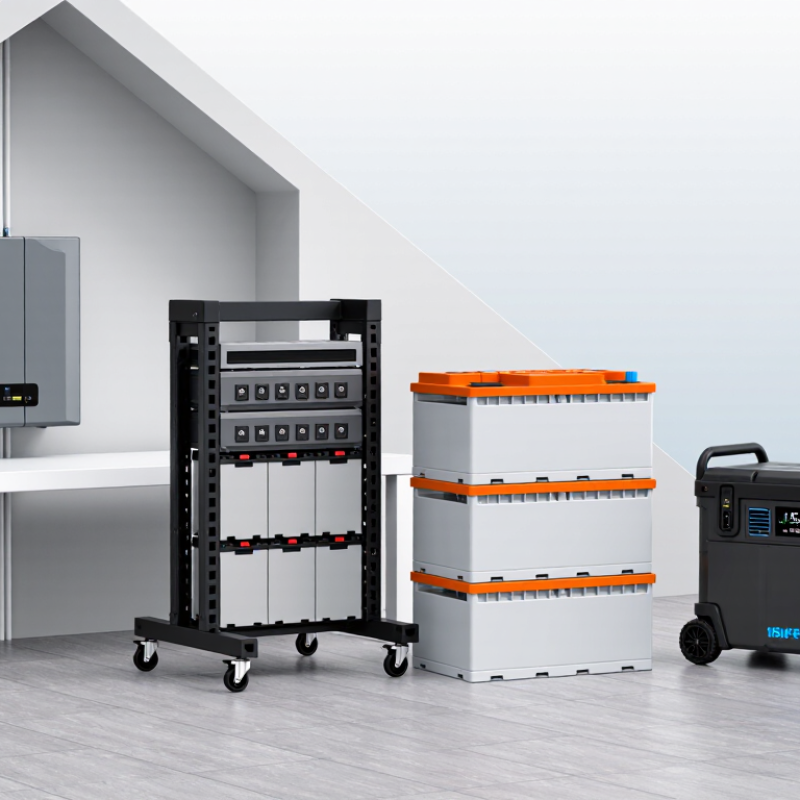
The leading types include wall-mounted batteries, rack-mounted modules, stackable units, and portable power systems. Wall-mounted models suit clean residential installations with limited floor space. Rack-mounted batteries offer easier servicing and expansion, especially in solar rooms or small commercial sites. Stackable designs provide flexible growth, although their connectors and communication settings require careful checking. Portable systems prioritize handles, wheels, and rapid setup, but they may sacrifice long-term expandability. Fit matters. Safety matters more.
From practical installation experience, technicians usually examine continuous power, surge capability, cycle life, warranty conditions, and local service support before choosing a model. A battery with impressive capacity can still perform poorly with an undersized inverter or weak thermal management. Look for documented protection against overcharge, overheating, short circuits, and deep discharge. Certifications such as IEC 62619 or UL 1973 can support confidence, but certification details should match the actual model. They should not be assumed.
This guide compares the top Lifepo4 15kwh battery types through performance, installation, maintenance, and value. It also considers a frequently overlooked issue: real household loads change throughout the day. Refrigerators, pumps, and heating equipment create different demands. No single design wins everywhere. A careful choice balances chemistry, architecture, safety evidence, and future energy needs, while accepting that every installation has limitations.
LiFePO4 Battery Chemistry and Its Role in 15kWh Energy Storage
LiFePO4 chemistry is shaping the design of 15kWh energy storage systems. The International Energy Agency reported that LFP batteries reached about 40% of the global electric-vehicle battery market in 2023. Their appeal is practical: strong thermal stability, long cycle life, and reduced reliance on nickel and cobalt.
A 15kWh system can use wall-mounted, rack-mounted, or all-in-one formats. Wall-mounted units suit homes with limited floor space. Rack-mounted batteries offer easier maintenance and future expansion. All-in-one systems combine battery modules, an inverter, and control electronics. That convenience can reduce installation complexity, but it may limit component replacement.
LFP batteries commonly support 4,000 to 6,000 cycles under controlled conditions. Real performance varies. High heat, rapid charging, and frequent full discharges can shorten service life. BloombergNEF reported an average lithium-ion pack price of 115 dollars per kWh in 2024, helping explain the growing interest in larger home storage systems. However, price comparisons can mislead when installation, protection equipment, and usable capacity are excluded.
Tips: Check usable energy, not only the advertised 15kWh rating. A 90% depth-of-discharge limit provides about 13.5kWh per cycle. Keep the battery in a shaded, ventilated area, and review independent safety testing before purchase. Safety labels alone are not enough.
What Are the Top Types of LiFePO4 15kWh Batteries? - LiFePO4 Battery Chemistry and Its Role in 15kWh Energy Storage
| Battery Type |
Typical Electrical Configuration |
Nominal Energy |
Typical Usable Energy* |
Typical Cycle Life** |
Best-Fit Applications |
| Wall-Mounted Residential Battery |
51.2 V × approximately 300 Ah |
15.36 kWh |
Approximately 13.8 kWh at 90% depth of discharge |
About 3,000–6,000 cycles |
Home solar self-consumption, backup power, and time-of-use energy shifting |
| Floor-Standing Modular Battery |
Several 51.2 V modules connected in parallel; total capacity near 15 kWh |
Approximately 14–16 kWh |
Approximately 12.6–14.4 kWh at 90% depth of discharge |
About 3,000–6,000 cycles |
Expandable residential systems and small commercial installations |
| Rack-Mounted Server-Rack Battery |
51.2 V, commonly 100 Ah modules; multiple modules combined |
Approximately 15.36 kWh using three 5.12 kWh modules |
Approximately 13.8 kWh at 90% depth of discharge |
About 4,000–6,000 cycles |
Data rooms, telecommunications backup, microgrids, and organized energy-storage rooms |
| High-Voltage LiFePO4 Battery System |
Multiple 3.2 V cells connected in series to form a higher-voltage battery stack |
Approximately 15 kWh |
Approximately 13.5–14.3 kWh at 90–95% depth of discharge |
About 3,000–6,000 cycles |
Hybrid inverters, larger homes, commercial systems, and applications requiring lower current at the same power level |
| Portable or Mobile Power Battery |
Typically a 12.8 V or 25.6 V battery bank with parallel modules totaling about 15 kWh |
Approximately 15 kWh |
Approximately 12–13.5 kWh, depending on the operating limit |
About 2,500–5,000 cycles |
Recreational vehicles, marine systems, mobile workstations, and off-grid equipment |
| Outdoor-Rated Enclosed Battery |
Low-voltage or high-voltage LiFePO4 pack in a weather-resistant enclosure |
Approximately 15 kWh |
Approximately 13.5–14.3 kWh at 90–95% depth of discharge |
About 3,000–6,000 cycles |
Outdoor solar storage, backup systems, and installations with limited indoor space |
Why LiFePO4 chemistry is widely used: Lithium iron phosphate cells provide strong thermal stability, good safety characteristics, long service life, and stable voltage during discharge. Their nominal cell voltage is approximately 3.2 V, so a 16-cell series pack is commonly rated at approximately 51.2 V.
Important performance factors: Actual usable energy, power output, charging speed, cycle life, and operating temperature depend on the battery management system, inverter, cell quality, cooling design, charge and discharge rates, and permitted depth of discharge.
* Usable-energy figures are illustrative estimates based on the stated depth-of-discharge range and do not include inverter or wiring losses. ** Cycle-life ranges are typical industry values under controlled conditions and are not guaranteed performance ratings.
Main Types of LiFePO4 15kWh Batteries by Form and Design
What Are the Top Types of LiFePO4 15kWh Batteries?
Main Types of LiFePO4 15kWh Batteries by Form and Design
A 15kWh LiFePO4 battery usually appears in four practical designs: wall-mounted, rack-mounted, floor-standing, and stacked modular. Each design uses lithium iron phosphate cells, but the enclosure, cooling method, and installation process can differ greatly. The capacity may also be nominal, not fully usable. Check the usable energy rating before comparing products.
Wall-mounted units suit homes with limited floor space. Their slim cabinets can fit beside an inverter or utility room. However, the wall must support considerable weight. Rack-mounted batteries offer cleaner maintenance access and easier expansion. They work well in equipment rooms, solar cabinets, and small commercial systems. Standard rack dimensions can simplify replacement, but they may require extra wiring and ventilation planning.
Floor-standing systems often include protective cabinets, breakers, monitoring equipment, and space for cable management. Stacked modular designs provide flexibility because installers can add compatible battery modules later. This sounds convenient. Yet, expansion may require matching firmware, voltage ranges, and communication protocols. In field inspections, a tidy installation does not always mean a safe one. Clearances, temperature control, grounding, and certified protection devices still matter. Buyers should compare continuous power, peak output, cycle-life testing, warranty conditions, and local installation requirements. A 15kWh battery can look compact, but its real performance depends on the complete system around it.
Comparing Wall-Mounted, Stackable, Rack-Mounted, and Cabinet Models
A 15kWh LiFePO4 battery can use the same chemistry while offering very different installation experiences. Wall-mounted models suit compact homes with clear wall space. Their slim profile keeps the floor open, but the wall must support substantial weight. Leave room around the enclosure for ventilation, cable bends, and service access. A narrow utility room may look suitable, yet door clearance can become a problem.
Stackable models provide flexible capacity and cleaner expansion. Each module usually locks into a vertical frame, reducing cable clutter. This design works well when energy needs may grow later. However, a tall column needs a stable, level surface. I have seen uneven floors create small alignment issues that become serious during maintenance. Do not assume stacking is automatically simple.
Rack-mounted batteries fit organized energy rooms and larger electrical systems. Standard rack dimensions make replacement and inspection easier. They also allow better airflow when the rack is planned correctly. Cabinet models offer stronger protection, internal wiring, and a more finished appearance. They are useful in garages, workshops, and outdoor-rated installations, depending on the enclosure rating. Cabinets can be heavy and less convenient to relocate. Check temperature limits, protection ratings, breaker access, and usable capacity rather than relying only on the 15kWh label. A practical choice may still require compromise.
Key Differences in Capacity, Voltage, Safety, and Battery Management
What Are the Top Types of LiFePO4 15kWh Batteries?
A 15kWh LiFePO4 battery usually comes in a 48V or 51.2V configuration. A 48V model may use about 300Ah, while a 51.2V model often uses roughly 293Ah. Both can store similar nominal energy, but their inverter compatibility may differ. Always check the inverter’s voltage window. A small mismatch can stop the system from operating.
Battery structure also matters. Rack-mounted units suit utility rooms and expandable systems. Wall-mounted batteries save floor space, but installation surfaces must handle their weight. Floor-standing units can offer easier servicing. Usable capacity is lower than the advertised figure after reserve limits, conversion losses, and temperature effects. A 15kWh label does not guarantee 15kWh delivered to household loads.
Safety depends on more than lithium iron phosphate chemistry. This chemistry is thermally stable, yet it is not risk-free. A reliable battery management system monitors cell voltage, current, temperature, and state of charge. It should balance cells and disconnect the pack during abnormal conditions. In practice, some systems report estimated charge levels imperfectly. That deserves checking during commissioning. The enclosure, wiring, ventilation, fuses, and installation quality also influence safety.
Tips: Match the battery voltage with the inverter before purchase. Ask for continuous and peak current ratings, not capacity alone. Check operating temperatures and the BMS communication protocol. Measure real daily energy use for several days. Oversizing the battery may feel safer, but it can increase cost without improving performance.
What Are the Top Types of LiFePO4 15kWh Batteries?
Key differences in capacity, voltage, safety, and battery management
How to read the chart: These are representative LiFePO4 pack configurations delivering approximately 15.36 kWh nominal energy. Each cell is rated at about 3.2 V, and the estimated current is calculated for a continuous 3 kW load.
- 12.8 V and 25.6 V packs: Suitable for low-voltage backup and mobile applications, but they require higher current and thicker cabling at the same power level.
- 51.2 V packs: A common residential energy-storage class using 16 LiFePO4 cells in series, offering a practical balance between current, efficiency, and installation complexity.
- 153.6 V packs: High-voltage systems reduce current substantially, which can improve power-transfer efficiency, but they require stricter insulation, contactor, and service-safety controls.
- Safety and BMS: LiFePO4 chemistry is known for strong thermal stability. A properly designed battery management system should provide cell balancing, overcharge protection, over-discharge protection, over-current protection, temperature monitoring, and high-voltage isolation where applicable.
- Usable energy: At a conservative 90% depth of discharge, a 15.36 kWh nominal pack provides approximately 13.82 kWh of usable energy before inverter and wiring losses.
How to Choose the Right LiFePO4 15kWh Battery for Your Needs
Choosing a LiFePO4 15kWh battery starts with your daily energy pattern, not its advertised capacity. A home using 8kWh each evening may need only 10–12kWh of usable storage. Reserve the remaining capacity for cloudy days and battery protection. BloombergNEF’s 2024 Battery Price Survey reported an average lithium-ion pack price of $115 per kWh, but installation, inverters, and safety equipment still affect the final cost. Price is only one clue.
Wall-mounted batteries suit compact homes and clean utility rooms. Rack-mounted systems offer easier maintenance and future expansion. All-in-one units can simplify installation, but their integrated inverter may limit later upgrades. Check usable capacity, continuous output, surge power, and operating temperature. A 15kWh battery with a 5kW output cannot comfortably support every 8kW household load. That detail is often missed.
Review the battery’s communication protocol and inverter compatibility before buying. Ask for cycle-life testing, warranty conditions, emergency shutdown features, and independent safety certification. The National Renewable Energy Laboratory’s storage research shows that system cost depends heavily on duration, power rating, and installation design. For outdoor use, confirm enclosure protection and cold-weather charging limits. LiFePO4 chemistry is generally stable, but it is not risk-free. I would also compare real usable capacity after reserve limits, because advertised numbers can feel optimistic. Test the installer’s calculations against your winter consumption, not just a sunny month.