Choosing a reliable Deye Inverter supplier in China requires more than comparing prices on a trading platform. Global buyers need evidence of technical competence, stable stock, export experience, and responsive support. This guide introduces ten suppliers serving international customers and explains the checks behind a credible shortlist. Each company should be assessed through verifiable product data, not polished marketing language. Small details matter. A clear model number can prevent a costly mismatch.
Experienced procurement teams usually request datasheets, user manuals, warranty terms, and recent shipment references before placing an order. They also confirm battery compatibility, grid standards, communication protocols, and protection features for the destination market. A serious supplier can explain installation conditions, lead times, packaging, and replacement procedures in practical terms. Photos of cartons, labels, terminals, and factory testing records can reveal more than a broad promise of quality. Independent certification records should be checked with the issuing body whenever possible. That step is often skipped.
The rankings in this article should be viewed as a starting point, not a permanent verdict. Supplier performance can change with inventory, staffing, regional demand, and after-sales workload. Buyers should compare quotations carefully and test communication before committing to volume. A low price may hide limited support. A higher quote may include better documentation, inspection, or training. We aim for a balanced, evidence-led perspective, while acknowledging that no public list captures every local strength or weakness. Use these findings to ask sharper questions, reduce installation risks, and select a Deye Inverter partner with dependable long-term value.
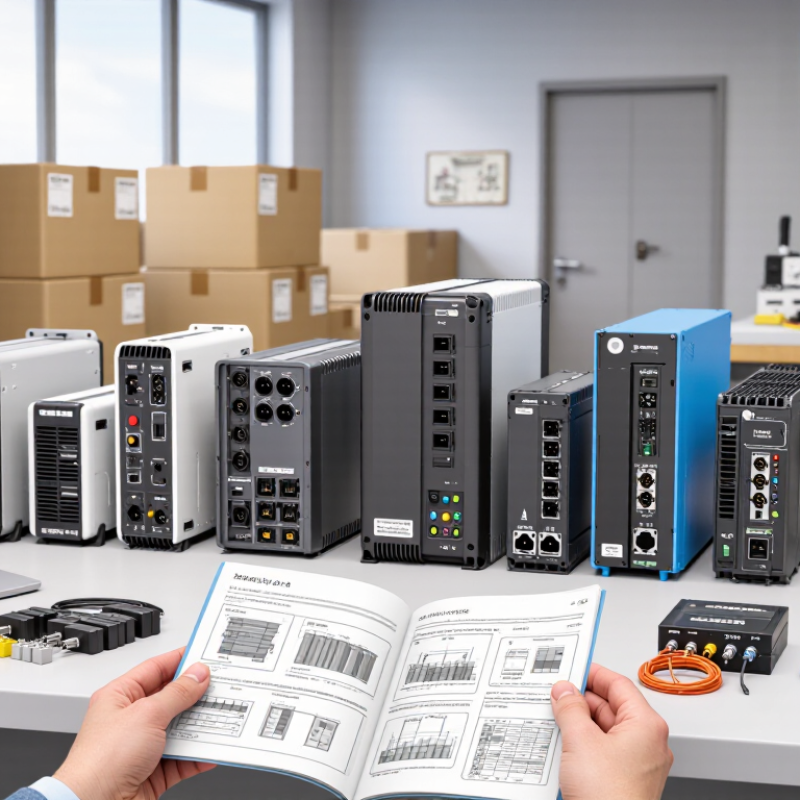
In the global solar market, inverter suppliers do more than move products from factories to buyers. They connect manufacturers, installers, distributors, and project owners across different regions. Their work affects system safety, installation speed, and long-term energy output. A capable supplier can explain grid requirements, recommend suitable power ratings, and provide practical documentation for customs and commissioning.
Details matter. Before placing an order, experienced buyers often review factory audit records, product test reports, warranty terms, and spare-parts policies. They may also ask for serial-number tracking and firmware support. A responsive supplier should answer technical questions clearly, especially when a 5 kW residential unit is compared with a larger commercial system. Small mistakes in voltage selection can delay an entire project.
Communication remains a weak point in some international transactions. No supplier is perfect. A low quotation may hide limited after-sales support, unclear delivery terms, or slow replacement procedures. Buyers should request written specifications, sample testing, and realistic lead times. Suppliers with trained engineers and transparent quality controls can reduce uncertainty, but they cannot remove every field problem. Local installers still need to verify wiring, ventilation, protection devices, and regional compliance requirements before energizing the system.
Global solar photovoltaic capacity expanded from approximately 177 GW in 2014 to about 1,865 GW in 2024. This rapid market growth has increased demand for reliable inverter suppliers, supporting international procurement, grid integration, and distributed-energy projects.
Selecting reliable inverter suppliers requires more than comparing online prices. The IEA PVPS Trends 2024 report records about 456 GW of new solar capacity worldwide in 2023. This growth increases pressure on inverter suppliers to deliver stable equipment, documentation, and after-sales support. Our selection process therefore checks export experience, factory capacity, quality controls, and service coverage in the buyer’s target market.
Technical evidence carries greater weight than promotional claims. Suppliers should provide test reports aligned with relevant IEC standards, traceable serial numbers, clear warranty terms, and documented failure-handling procedures. Independent audits also review component sourcing, production records, aging tests, and inspection checkpoints. Wood Mackenzie’s global inverter research highlights the importance of bankability, service networks, and long-term operating confidence, not only shipment volume.
We also examine delivery history, spare-part access, response times, and installer feedback from different climates. A supplier may pass a factory audit yet perform poorly during peak demand. That risk is real. Financial records and customer references can reveal whether support remains available after payment. Our method is not flawless; online reviews may be incomplete, and reported failure rates are rarely standardized. Still, combining laboratory evidence, shipment records, site experience, and transparent communication creates a more dependable shortlist for global buyers.
China’s top ten inverter suppliers serve different buyer needs, from small rooftop systems to commercial solar projects. Their profiles reveal clear differences in production scale, engineering depth, and export experience. Some operate automated assembly lines with traceable serial numbers. Others rely more heavily on manual inspection.
Several suppliers maintain dedicated testing rooms. Technicians check voltage stability, cooling performance, communication ports, and fault responses before shipment. A few provide sample units for independent evaluation. This is useful for buyers comparing efficiency under changing loads. Factory audits also help confirm whether stated capacity matches real operations. A polished website proves little.
The stronger suppliers usually offer multilingual manuals, wiring diagrams, and remote commissioning support. Their teams can explain grid requirements, battery compatibility, and protection settings in practical terms. Export staff should also understand packaging standards, customs documents, and warranty procedures. One supplier may provide faster responses, while another may offer better technical documentation. Neither advantage matters if replacement parts remain unavailable.
Profiles should include production lead time, minimum order quantity, inspection methods, and after-sales response targets. Buyers should request recent test records and clarify who handles field failures. Some suppliers promise broad support but answer slowly after payment. That weakness deserves attention. Factory visits, video inspections, and third-party verification can reduce uncertainty. The best choice is not always the largest supplier; it is the one whose evidence matches its promises.
Selecting among China’s top ten inverter suppliers requires more than comparing catalog prices. Product fit matters first. Check whether each supplier offers suitable single-phase, three-phase, or hybrid models. A 5 kW household inverter may suit a small rooftop system, while a 10 kW unit supports larger loads. Review MPPT ranges, peak efficiency, battery compatibility, IP ratings, cooling design, and monitoring functions. Ask for test reports, warranty terms, and replacement procedures. Product brochures can look impressive, but field performance deserves greater attention.
Certifications should match the destination market. Request current documents for CE, IEC, EMC, and applicable grid-connection standards. Verify model numbers, issuing bodies, and certificate validity. Pricing should be compared on the same basis, such as EXW, FOB, or CIF. Include firmware, communication dongles, packaging, spare parts, and inspection fees. The cheapest quotation may become expensive after shipping and support costs. Export experience is also important. Reliable suppliers explain lead times, customs documents, pallet protection, and after-sales communication clearly. Still, no comparison is perfect; delivery records and sample testing can reveal weaknesses.
Tips: Order a sample before large-volume purchasing. Test it under realistic loads and unstable weather conditions. Confirm English manuals, remote support hours, and fault-response times. Ask for production photos, serial-number tracking, and references from similar markets. A supplier that answers technical questions precisely usually reduces project risk. However, buyers should record every promise in the contract, because informal assurances are easy to forget.
| Supplier Profile | Main Product Focus | Typical Rated Power | System Compatibility | Common Certifications and Standards | Indicative Export Price | Typical MOQ | Export Services | Best-Fit Buyer | Evaluation |
|---|---|---|---|---|---|---|---|---|---|
| Supplier Profile 01 | Single-phase hybrid inverters with battery charging and backup output | 3–8 kW | Residential photovoltaic systems; lithium battery storage; grid-tied and backup operation | CE; IEC 62109-1/-2; IEC 62116; EMC compliance documentation | US$230–620 per unit | 1–10 units | Commercial invoice, packing list, export carton, sea and air freight coordination, remote commissioning support | Residential distributors and installers | ★★★★☆ |
| Supplier Profile 02 | Three-phase hybrid inverters for small commercial installations | 8–30 kW | Three-phase grid systems; high-voltage battery banks; self-consumption and peak-shaving applications | CE; IEC 62109; IEC 61000 series; EN 50549-1/-2 documentation where applicable | US$720–2,450 per unit | 1–5 units | Technical datasheets, wiring diagrams, pallet packing, container consolidation, installation training materials | Commercial solar wholesalers and EPC contractors | ★★★★☆ |
| Supplier Profile 03 | High-power three-phase grid-connected inverters | 30–60 kW | Commercial rooftop and small ground-mounted photovoltaic projects | CE; IEC 62109-1/-2; IEC 62116; IEC 61727; EMC test reports | US$1,950–4,600 per unit | 1–3 units | Project quotation, export documentation, wooden-case packing, pre-shipment inspection, remote troubleshooting | Regional project developers and engineering firms | ★★★★☆ |
| Supplier Profile 04 | Low-voltage battery-compatible hybrid systems | 3–12 kW | 48 V battery systems; residential backup; off-grid and weak-grid environments | CE; IEC 62109; IEC 62619 compatibility information for supported batteries; EMC documentation | US$260–860 per unit | 1–10 units | Battery compatibility lists, parameter-setting guides, multilingual manuals, sample orders, courier delivery | Off-grid retailers and backup-power installers | ★★★★☆ |
| Supplier Profile 05 | High-voltage hybrid inverter packages with battery integration | 5–20 kW | High-voltage lithium storage; residential and light-commercial backup systems | CE; IEC 62109; IEC 61000 series; battery-system compliance files supplied by configuration | US$520–1,850 per unit | 1–5 units | System matching, firmware coordination, palletized export packing, port-to-port shipping, after-sales ticket handling | Energy-storage distributors and installers | ★★★★★ |
| Supplier Profile 06 | Microgrid and backup-oriented inverter solutions | 5–30 kW | Diesel-generator integration; off-grid microgrids; critical-load backup | CE; IEC 62109; EMC testing; applicable local grid-code documentation | US$680–2,700 per unit | 1–3 units | Application assessment, generator-control guidance, custom parameter files, commissioning assistance, spare-parts planning | Rural electrification and backup-power projects | ★★★★☆ |
| Supplier Profile 07 | Residential inverter and battery starter packages | 3–10 kW | Household photovoltaic systems; battery storage; backup circuits | CE; IEC 62109; EMC documentation; country-specific approval files subject to destination | US$1,050–3,900 per package | 1–5 packages | Bundled quotations, carton labeling, user manuals, sample support, consolidated sea freight, warranty registration assistance | Online retailers and residential installation networks | ★★★★☆ |
| Supplier Profile 08 | Commercial energy-storage retrofit solutions | 10–50 kW inverter capacity | Existing photovoltaic systems; battery retrofit; demand-management applications | CE; IEC 62109; IEC 62116; grid-connection documentation according to market | US$1,200–4,200 per unit | 1–3 units | Retrofit assessment, single-line diagrams, remote system checks, project packaging, export customs support | Commercial solar service companies | ★★★★☆ |
| Supplier Profile 09 | Hybrid inverter solutions for hot, humid, and coastal climates | 5–30 kW | Residential and commercial systems requiring enhanced enclosure and thermal-management considerations | CE; IEC 62109; EMC documentation; IP-rating information stated by model | US$480–2,650 per unit | 1–5 units | Climate-specific model selection, protective-packaging options, inspection photos, sea-freight coordination, replacement-part support | Importers serving tropical and coastal markets | ★★★★☆ |
| Supplier Profile 10 | Private-label and volume-oriented inverter supply | 3–60 kW | Residential, commercial, and distributed energy-storage projects | CE; IEC 62109; IEC 61000 series; destination-market files subject to model and order configuration | US$210–4,500 per unit | 20–100 units | OEM label coordination, carton design, batch inspection, container loading plans, production scheduling, export documentation | Established wholesalers and regional brands | ★★★★☆ |
Note: Prices are indicative China export ranges in USD and vary according to power rating, battery compatibility, order quantity, packaging, destination, Incoterms, and certification requirements. Certification availability must be verified against the exact model, destination market, and current supplier documentation before purchase. Product and export-service details should be confirmed through a current quotation, test reports, warranty terms, and pre-shipment inspection.
Choosing a reliable solar inverter supplier requires more than comparing online prices. Global buyers should verify company registration, export experience, product certifications, and factory traceability. Ask for current test reports, warranty terms, and written confirmation of grid compatibility. A professional supplier should explain voltage ranges, protection functions, communication ports, and installation limits in clear language.
Request evidence from real projects. Photos should show serial labels, packaging, cable connections, and commissioning records. Contact at least two previous customers in markets with similar climate and grid conditions. Check whether the supplier offers pre-shipment inspection, spare parts, remote troubleshooting, and replacement procedures. Response time matters. A technically correct answer arriving three days late can still delay a project.
Look closely at the quotation. It should separate inverter cost, shipping, insurance, taxes, accessories, and after-sales service. Clarify whether the warranty starts at shipment or installation. No supplier is perfect. Even experienced exporters may misunderstand a local certification rule or underestimate port delays. That is why written specifications and sample testing are important. One overlooked detail, such as unsuitable connectors or weak packaging, can create expensive work at the site. A dependable partner accepts questions, documents limitations, and improves the process when problems appear.