Leave Your Message
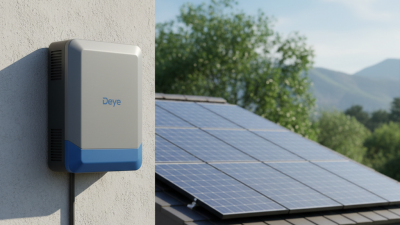
Choosing the right Deye Solar Inverter in 2026 requires more than comparing efficiency figures. Homeowners, installers, and commercial buyers must examine system size, battery storage, local weather, and daily electricity demand. A compact rooftop system may need a single-phase hybrid inverter. A larger commercial site may require three-phase grid-tied units. Off-grid properties need stronger backup control and stable battery communication.
Dr. Martin Green, a respected photovoltaic researcher, has said, “Reliability matters as much as efficiency in real solar systems.” That principle remains useful when comparing Deye inverter types. Laboratory efficiency can look impressive. However, a dusty inverter room, summer heat, unstable voltage, or frequent battery cycling may produce different results. Field performance is less tidy.
This guide examines the leading Deye Solar Inverter categories expected to matter in 2026. It covers hybrid, grid-tied, off-grid, and microinverter solutions. Each type serves a different purpose. Hybrid models suit homes that want solar power and battery backup. Grid-tied units often fit properties focused on reducing daytime electricity costs. Off-grid models support remote buildings where utility power is unavailable. Microinverters may offer flexible panel-level monitoring.
No ranking is perfect. A lower-cost model can become expensive if installation is difficult or support is weak. Battery compatibility also deserves careful checking. Product availability may vary by region, and specifications can change. Readers should verify current datasheets, certifications, warranty terms, and installer guidance before making a purchase.
What Are the Top Solar Inverter Types in 2026?
In 2026, solar inverter selection depends on the site, battery plan, and local grid conditions. Four families dominate current residential and small commercial projects: grid-tied, hybrid, off-grid, and microinverters.
Grid-tied inverters suit homes with stable utility service and no immediate battery requirement. They convert panel output into usable AC power and export surplus energy when permitted. Their design is usually efficient and cost-conscious. However, standard grid-tied systems normally shut down during an outage. That detail is easy to overlook during a sales discussion.
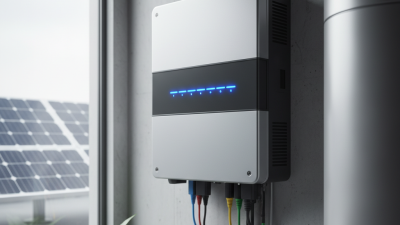
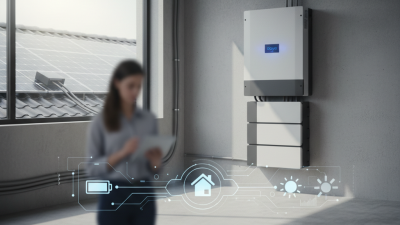
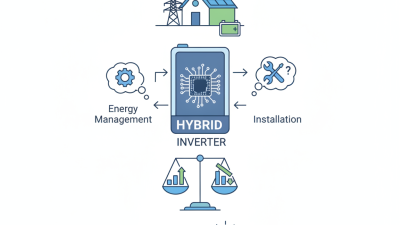
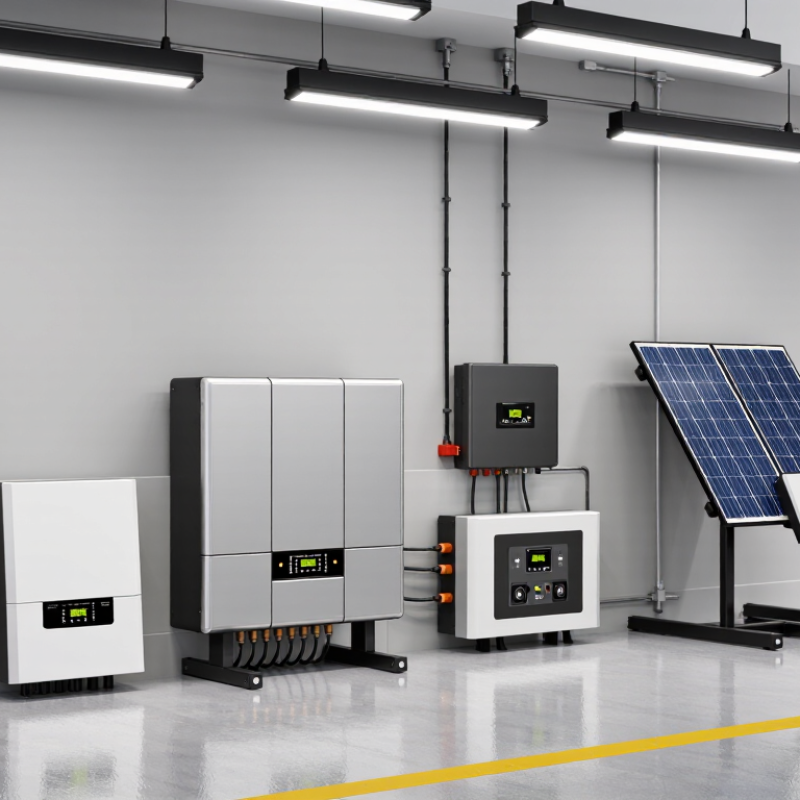
Hybrid inverters connect solar panels, batteries, household circuits, and the utility grid. They can prioritize solar charging, backup loads, or scheduled energy use. A practical installation may reserve a refrigerator, router, and several lights on a protected circuit. Battery voltage, surge capacity, and communication compatibility require careful checking. More features also mean more settings to manage.
Off-grid inverters serve cabins, remote workshops, and properties without dependable utility access. They must coordinate batteries, generators, and changing daytime loads. Correct battery sizing matters greatly during cloudy winter periods. Microinverters attach to individual panels, improving module-level monitoring and reducing the impact of partial shading. They can be useful on roofs with several orientations. Yet, more rooftop electronics may complicate replacement work.
No family is perfect. Panel layout, maintenance access, weather, and future electricity needs should guide the decision more than headline efficiency. A qualified installer should verify load calculations, protection equipment, and commissioning records before operation.
| Inverter Type | Primary Operating Mode | Battery Compatibility | Typical Applications | Backup Capability | Main Advantages | Key Considerations |
|---|---|---|---|---|---|---|
| Grid-Tied Inverter | Converts solar DC power into grid-compatible AC power and synchronizes with the utility grid. | Usually not included; battery storage requires a compatible additional system or a storage-ready design. | Homes, commercial buildings, and facilities focused on reducing electricity purchases. | Normally unavailable during a grid outage because of anti-islanding requirements. | High conversion efficiency, simpler system architecture, and lower upfront cost than most battery-based systems. | Grid dependence, export limits, and local interconnection rules must be considered. |
| Hybrid Inverter | Manages solar generation, household loads, grid exchange, and battery charging or discharging. | Designed to work with compatible battery chemistries and battery-management systems. | Homes and small businesses seeking solar self-consumption, time-of-use savings, and energy resilience. | Can provide backup power when paired with suitable batteries, transfer equipment, and protected-load wiring. | Flexible energy management, improved solar self-consumption, and easier storage integration. | Higher system complexity, battery cost, commissioning requirements, and limited backup output in some configurations. |
| Off-Grid Inverter | Creates a local AC supply without requiring a utility-grid connection. | Essential for most systems because batteries balance solar production and demand. | Remote homes, cabins, telecommunications sites, agricultural facilities, and backup systems without reliable grid access. | Provides standalone power when the battery bank, solar array, and optional generator are correctly sized. | Works independently of the utility grid and supports energy access in remote locations. | System sizing is critical; prolonged low solar conditions may require load management or generator support. |
| Microinverter | Converts DC to AC at or near each individual solar panel. | Typically requires a separate AC-coupled or integrated storage solution for battery backup. | Residential roofs with multiple orientations, partial shading, or modular expansion needs. | Usually requires additional backup equipment and a compatible energy-storage architecture. | Panel-level monitoring, better tolerance of mismatch and shading, and flexible system expansion. | More electronic units are installed on the roof, and maintenance access may be more difficult. |
| String Inverter with Optimizers | Uses a central string inverter while power optimizers manage module-level performance. | Battery compatibility depends on the inverter architecture and the selected storage equipment. | Roofs with moderate shading, multiple roof planes, or a need for module-level monitoring. | Possible when paired with a compatible storage and backup system. | Balances centralized conversion efficiency with improved module-level visibility and design flexibility. | Adds component and installation complexity compared with a standard string-inverter system. |
Selection should be based on local grid requirements, solar-array design, expected loads, battery chemistry, backup priorities, installation conditions, and applicable safety standards.