Leave Your Message

China Top 10 5kW Battery Manufacturers for Global Buyers

China has become a major source of lithium battery systems for residential, commercial, and light industrial applications. Among these products, the 5kw Battery offers a practical balance between usable power, installation size, and daily energy demand. It can support essential household loads, small workshops, backup equipment, and selected renewable energy systems. However, rated power alone does not reveal the complete product value.

This guide examines ten leading Chinese manufacturers serving global buyers. The comparison considers battery chemistry, usable capacity, cycle life, inverter compatibility, thermal management, certifications, warranty terms, and after-sales support. Factory experience also matters. A supplier may present impressive specifications, yet real performance depends on cell quality, battery management software, assembly control, and testing procedures. These details are easy to overlook.

The selected companies are reviewed from a buyer’s perspective. Their production capabilities, export experience, customization options, and communication practices receive careful attention. Documentation should be clear. Safety testing should be traceable. Delivery promises should be realistic. Buyers should also confirm local grid requirements and installation standards before placing an order. Product data can change over time, and some public claims may require independent verification. That limitation deserves attention.

A reliable 5kw Battery should deliver stable output under ordinary operating conditions, not only in a showroom demonstration. Temperature, charging habits, load changes, and maintenance all influence service life. The following overview helps importers, distributors, installers, and project developers narrow their choices with greater confidence. It does not replace technical due diligence. Good decisions still require samples, factory communication, and carefully checked contracts.
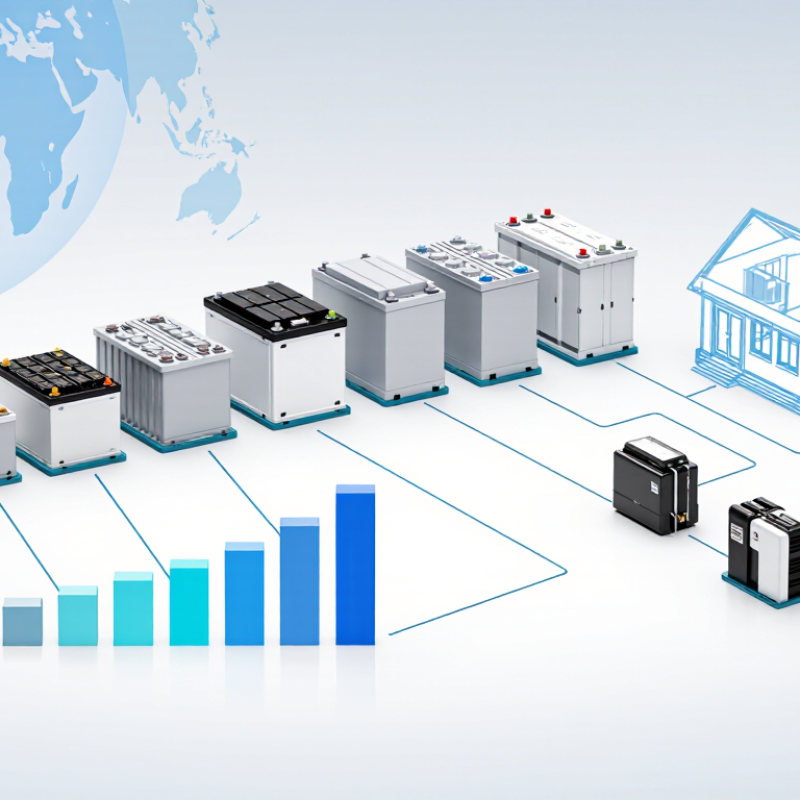
China Top 10 5kW Battery Manufacturers for Global Buyers

5 kW Battery Market Scope: Power, Capacity, Voltage, and Chemistry Definitions

China’s top 10 5 kW battery manufacturers serve homes, small businesses, and backup projects. Yet “5 kW” describes power, not stored energy. Power shows the maximum output at a moment. Capacity is measured in kilowatt-hours and indicates how long the system can operate.

A 5 kW battery delivering 5 kWh may run a 2.5 kW load for about two hours. Real results are lower because of inverter losses, temperature, aging, and discharge limits. Voltage also matters. A 48 V system needs different cables, protection, and inverters than a high-voltage system. Chemistry changes the decision too. Lithium iron phosphate usually offers strong cycle life and thermal stability, while lead-acid systems may require more space and careful maintenance.

Tips: Ask for usable capacity, continuous power, peak power, voltage range, and test conditions. Review warranty terms and safety certifications. Do not compare prices using nominal kWh alone. Check installation space and local grid requirements. A detailed datasheet helps, but it cannot replace a site assessment. Small oversights matter. I have seen buyers select an efficient battery with insufficient peak power for pumps or compressors. That choice looked reasonable on paper, yet failed during startup. Also question unclear cycle-life claims, because testing methods differ between suppliers.
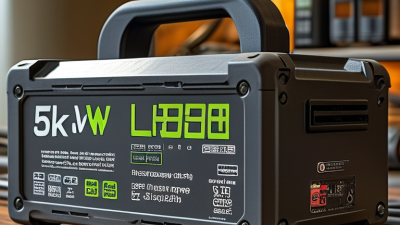
China’s Top 10 5 kW Battery Manufacturers by Safety, Cycle Life, and Certifications

China’s top 10 5 kW battery manufacturers should be assessed through safety, cycle life, and certification evidence, not catalogue claims. BloombergNEF’s 2024 Battery Price Survey reported a global average pack price of $115 per kWh, showing how quickly competition is reducing costs. Lower prices help buyers, but they can also hide compromises in cells, thermal controls, or testing depth.

For a serious shortlist, buyers should request third-party reports covering IEC 62619, IEC 63056, UL 1973, and UL 9540 where applicable. UN 38.3 confirms transport testing, not complete installation safety. That distinction matters. A reliable 5 kW system should show cell traceability, battery-management protection, thermal-event records, and clear warranty conditions. The IEA’s Batteries and Secure Energy Transitions report highlights the growing need for resilient supply chains and stronger battery safety practices.

Cycle life deserves careful comparison. Many lithium iron phosphate systems advertise more than 6,000 cycles, but results depend on depth of discharge, temperature, charging speed, and end-of-life capacity. Ask for test conditions, not only a large number. Field audits should examine cable protection, enclosure sealing, firmware updates, and service response times. Small details count. A neat datasheet is not proof.

A ranking can still be imperfect. Independent laboratory data may cover one battery model, while factories produce several versions. Buyers should therefore compare verified test reports, production consistency, certification scope, and after-sales capability before selecting the final ten.

Comparing LFP and NMC Systems: 3,000–8,000 Cycle Ratings and Energy Density

For global buyers comparing China’s 5kW battery manufacturers, chemistry often matters more than enclosure design. LFP systems commonly advertise 3,000–8,000 cycles, while NMC systems may offer higher energy density but shorter service life. According to the International Energy Agency’s Global EV Outlook 2024, LFP battery costs were about 30% lower than NMC cells in 2023. That price gap can influence storage projects with daily cycling.

Energy density changes the installation picture. Industry testing data commonly places LFP cells around 90–160 Wh/kg, while NMC cells can reach approximately 150–220 Wh/kg. A 10kWh LFP cabinet may therefore require more floor space.

NMC can suit compact rooms, mobile systems, or weight-sensitive applications. LFP usually offers stronger thermal stability and lower material-cost pressure. The test window matters.

Cycle claims need careful examination. Manufacturers may rate 5,000 cycles at 80% depth of discharge, 25°C, and controlled charging. Real sites face heat, partial cycling, and irregular loads. The U.S. Department of Energy notes that battery aging depends heavily on temperature, operating window, and charging conditions. Numbers can mislead. Buyers should request independent test reports, usable energy figures, warranty throughput, and degradation curves. A claimed 8,000-cycle pack may perform differently on a rooftop in Southeast Asia than in a temperature-controlled laboratory. This is where technical review becomes more valuable than a simple specification sheet.

Global Buyer Evaluation: IEC 62619, UL 1973, UN 38.3, and ISO 9001 Compliance

China’s top 10 5kW battery manufacturers should be screened through compliance evidence, not catalog claims. A 5kW rating describes output power, not stored energy. Buyers must verify capacity, chemistry, voltage range, and operating temperature separately.

The International Energy Agency’s Global EV Outlook 2024 reports over 750 GWh of global electric-vehicle battery demand in 2023. Its Batteries and Secure Energy Transitions report also highlights rapid growth in battery deployment and supply-chain pressure. This scale makes factory controls important. Ask for current IEC 62619 test reports covering the exact cell and battery configuration. IEC 62619 addresses safety for industrial lithium batteries, but a laboratory report is not automatically a production certificate.

For international shipping, UN 38.3 testing should match the shipped battery model, packaging design, and transport configuration. UL 1973 evidence is valuable for stationary applications, yet its scope and applicable edition require careful checking. ISO 9001 confirms a quality-management system. It does not prove battery safety by itself. Scope matters.

Request serial-number traceability, change-control records, sample test dates, and factory audit evidence. Compare the certificate holder, manufacturing site, model number, and rated energy. Small mismatches can create large customs delays. Paperwork is not proof. A practical review can still miss hidden cell substitutions or firmware changes. That weakness deserves attention, especially when suppliers provide polished documents but limited raw test data.

Pricing, Warranty, BMS Features, and Export Readiness for 5 kW Battery Systems

For global buyers comparing China’s top 10 5kW battery manufacturers, price should not be judged by inverter power alone. A 5kW system may store 5kWh, 10kWh, or more. BloombergNEF reported an average lithium-ion battery pack price of 115 US dollars per kWh in 2024, but complete export systems cost more after the BMS, enclosure, inverter, testing, packaging, and documentation. Request pricing by usable kWh, not only by nominal capacity.

Warranty language needs careful reading. Strong offers commonly cover five to ten years, with stated capacity retention, cycle limits, and operating temperatures. A promise of “80% capacity” means little without a defined test method. Ask whether replacement shipping is included. That detail can become expensive. The International Energy Agency highlights continued battery cost reductions, yet installation, freight, and compliance still create major regional differences.

A professional BMS should monitor cell voltage, temperature, current, state of charge, and state of health. CAN or RS485 communication, passive or active balancing, event records, and controlled shutdown are practical requirements. Export-ready suppliers should provide UN 38.3 test evidence, safety data, wiring diagrams, firmware information, and traceable serial numbers. IEC 62619 and IEC 63056 references can strengthen technical confidence, while inverter certification remains a separate issue. Real projects are messier. Some datasheets still confuse kW with kWh, so buyers should verify every figure before signing.

China 5 kW Battery Systems: Typical Market Benchmarks for Global Buyers

This benchmark summarizes commonly specified features for export-oriented 5 kW lithium iron phosphate battery systems from China. Typical systems use a 51.2 V, 100 Ah battery pack rated at 5.12 kWh, support approximately 5 kW continuous output, and may provide up to 10 kW short-duration peak output. Warranty terms, cycle-life ratings, BMS communication, and export documentation should be confirmed in the supplier’s technical and commercial offer.