Choosing among China’s top wall battery manufacturers requires more than comparing factory prices. A Wall Battery may look similar online, yet its internal cells, inverter compatibility, and protection system can differ greatly. In practical projects, small details matter. Check the usable capacity, cycle rating, charging temperature range, and communication protocols. Ask for test reports, product drawings, warranty terms, and installation guidance. Do not rely only on attractive catalog images.
A dependable manufacturer should explain its cell sourcing, battery management system, quality controls, and production experience clearly. Factory audits, sample testing, and customer references can reveal more than promotional claims. Inspect the casing, terminals, display, and mounting structure closely. These details often expose manufacturing weaknesses. Certifications should match the destination market and the intended application. Independent laboratory documents are more useful than unsupported badges. Request evidence of capacity testing and safety protection before placing a large order.
There is no perfect supplier.
A low quotation may hide limited after-sales support, changing components, or unclear warranty responsibility. A famous company may still provide an unsuitable model for your project. This is where careful comparison becomes essential. Evaluate response speed, technical communication, spare-part availability, and remote support. Consider how the manufacturer handles failed units, software updates, and replacement timelines. Some public specifications may also be incomplete or difficult to verify. That limitation deserves attention, not dismissal. By combining technical review, factory evidence, and real operating feedback, buyers can choose a China Wall Battery manufacturer with greater confidence and fewer costly surprises.
Wall-mounted batteries are compact energy storage systems designed for homes, offices, and small commercial spaces. They store electricity from solar panels or the grid for later use. Inside, lithium-based cells hold energy as chemical potential. An inverter then converts stored direct current into alternating current for household appliances. This switching happens automatically.
A battery management system monitors voltage, temperature, charging speed, and cell balance. If a cell becomes too hot, the system can reduce output or stop charging. During a power interruption, compatible equipment can provide backup electricity within seconds. A practical installation needs a strong wall, clear airflow, and correctly sized cables. Moisture and direct sunlight can shorten service life. Keep that in mind.
When comparing wall battery manufacturers in China, examine usable capacity rather than the advertised capacity alone. Check the depth of discharge, round-trip efficiency, operating temperature, warranty terms, and service response. Ask for safety certifications and independent test records. The inverter must also match the battery’s voltage and communication protocol. Real homes are unpredictable. A battery may support lights and a refrigerator, but not several heating appliances together. Oversizing can waste money, while undersizing causes frequent cycling. Some product specifications look impressive, yet field performance may change with heat, cold, installation quality, and daily charging habits.
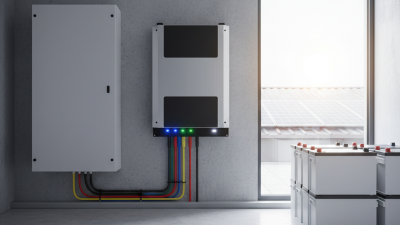
Wall-mounted batteries are compact energy-storage systems installed on a wall and connected to solar panels, the utility grid, or household loads. They store electricity in battery cells and release it through an inverter when power is needed.
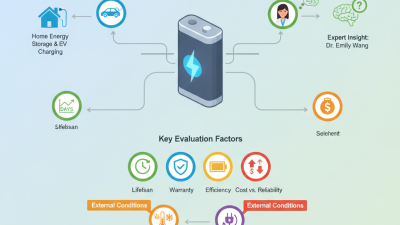
How to read the chart: Lithium iron phosphate (LFP) batteries generally offer high usable capacity and long cycle life, while NMC batteries provide high efficiency with a shorter typical cycle life. Lead-acid batteries usually have a lower recommended depth of discharge and shorter service life. Actual performance depends on temperature, operating conditions, system design, and manufacturer specifications.
When comparing wall batteries, start with usable capacity, not the advertised storage figure. A 10 kWh battery may provide less after reserve limits and depth-of-discharge settings. Check the battery’s nominal voltage and compatibility with the inverter. A mismatch can reduce performance or prevent installation. Continuous output power matters for daily loads. Peak output matters when pumps, refrigerators, or tools start.
Look closely at cycle-life claims. Ask how many cycles were tested, at what temperature, and at which discharge depth. Round-trip efficiency also deserves attention, because energy is lost during charging and conversion. A reliable battery should include a battery management system with cell balancing, temperature monitoring, and overcurrent protection. Communication protocols must match the energy management system. Otherwise, useful data may not appear correctly.
I have seen impressive specification sheets hide unclear testing conditions. That deserves caution. Check operating temperatures, enclosure protection, noise, mounting limits, and emergency shutdown access. Indoor and outdoor installations need different protection levels. Review independent safety certifications and local installation requirements. Warranty terms should state retained capacity, cycle limits, service response, and replacement conditions. A longer warranty is not automatically better. Read the exclusions. Real installation experience also matters, because cable routing, wall strength, and ventilation can affect safety and performance.
A brand-neutral technical comparison checklist for selecting residential wall-mounted energy storage batteries
| Technical Specification | Common Residential Reference Range | Why It Matters When Comparing Wall Batteries | What to Verify in the Datasheet or Contract |
|---|---|---|---|
| Battery Chemistry | Lithium iron phosphate (LFP) is widely used for residential energy storage. | LFP generally offers good thermal stability, long cycle life and a lower risk of thermal runaway than many nickel-based lithium chemistries. | Confirm the exact chemistry, cell format, cell manufacturer, safety test results and whether the stated performance applies to the complete battery system. |
| Nominal Voltage | Approximately 48 V for low-voltage systems; high-voltage systems may operate at several hundred volts. | Voltage determines inverter compatibility, current requirements, cable sizing and whether batteries can be connected in series. | Check the inverter's supported battery-voltage window, minimum and maximum battery voltage, and permitted battery quantity. |
| Usable Energy Capacity | Common wall-mounted units are often around 5–15 kWh per battery module. | Usable capacity indicates how much stored energy can actually be delivered to household loads, rather than only the nominal nameplate capacity. | Compare usable kWh at the stated discharge conditions, not only nominal kWh. Confirm whether reserve capacity is included. |
| Depth of Discharge (DoD) | Typically 80%–100%, depending on the battery model and warranty conditions. | A higher permitted DoD can provide more usable energy from the same nominal capacity, but operating limits may affect service life. | Confirm the warranted DoD, minimum state of charge, emergency reserve setting and whether the DoD value changes with temperature or operating power. |
| Continuous Charge and Discharge Power | Often approximately 2.5–5 kW for a 5–10 kWh residential battery, but the value varies considerably. | Power rating determines whether the battery can support high-demand appliances, backup circuits and solar output without frequent power limiting. | Review continuous power, peak power, peak duration, charge power and discharge power separately. Do not rely only on a short-term peak rating. |
| Round-Trip Efficiency | Approximately 85%–95% for the battery system, depending on test conditions and whether inverter losses are included. | Higher efficiency reduces energy losses during charging and discharging and can improve the economic return of daily energy shifting. | Identify whether the figure is DC-to-DC or full-system AC-to-AC efficiency, and check the test load, temperature and charge/discharge rate. |
| Cycle Life | Many LFP products specify several thousand cycles, commonly around 4,000–8,000 cycles under defined test conditions. | Cycle life helps estimate long-term durability, but a cycle count alone does not describe the remaining capacity at the end of life. | Confirm the end-of-life capacity, DoD, temperature, charge rate, discharge rate and whether the cycle figure is tested or estimated. |
| Calendar Life | Often designed for approximately 10–15 years of service, subject to temperature, usage and warranty terms. | A battery can age even when it is not being cycled. Calendar life is important for systems used mainly for backup or seasonal storage. | Review the stated service life, capacity-retention warranty, storage conditions and any annual throughput limitation. |
| Battery Management System (BMS) | Protection for overcharge, over-discharge, overcurrent, short circuit and abnormal temperature should be included. | The BMS monitors cells and controls safe operation, balancing, alarms and communication with the inverter. | Verify cell-level monitoring, balancing method, fault logging, firmware-update capability, emergency shutdown and communication protocol. |
| Operating Temperature | A common discharge range is approximately -20°C to 50°C; charging below 0°C may require heating or may be restricted. | Temperature affects available power, charging safety, capacity and battery aging. | Check separate charge and discharge temperature limits, heating function, derating conditions and whether outdoor installation requires thermal protection. |
| Ingress Protection Rating | IP55 or higher is commonly considered for protected outdoor installations; the required rating depends on the site. | The IP rating indicates resistance to dust and water ingress, but it does not replace correct installation and weather protection. | Confirm the tested IP rating for the complete assembled product, installation orientation, drainage requirements and permitted indoor or outdoor locations. |
| Safety and Transport Compliance | Relevant lithium-battery safety, EMC and transport documentation should be available for the target market. | Compliance supports safe installation, legal transport, insurance acceptance and grid or building approval. | Request applicable reports or certificates, such as IEC 62619, UN 38.3, IEC 63056, EMC test reports and local grid or electrical approvals where required. |
| Inverter and Communication Compatibility | CAN or RS485 communication is common; compatibility depends on the exact inverter firmware and battery protocol. | A physically compatible battery may still fail to operate correctly if the inverter cannot interpret its state of charge, limits or protection signals. | Confirm the approved inverter list, communication protocol, pinout, firmware versions, parallel-operation rules and commissioning procedure. |
| Scalability and Parallel Connection | Many systems support multiple battery modules, but the maximum number varies by model and inverter. | Scalability allows storage capacity and power to grow with household demand or solar generation. | Verify the maximum parallel units, identical-model requirements, installation spacing, master-slave configuration and whether later expansion is permitted. |
| Backup and Off-Grid Capability | Some systems provide backup through a compatible hybrid inverter and automatic transfer equipment. | Backup performance depends on the complete system, including transfer time, surge capability, supported loads and islanding control. | Confirm backup output power, transfer time, motor-starting capability, black-start function, neutral switching and the circuits supported during an outage. |
| Warranty Terms | Residential warranties commonly specify a calendar period, minimum retained capacity and sometimes an energy-throughput limit. | Warranty conditions provide a more meaningful comparison than headline cycle life alone. | Compare warranty duration, end-of-warranty capacity, throughput limit, exclusions, labor coverage, replacement policy and claim-response process. |
| Installation and Maintenance Requirements | Wall strength, clearance, ventilation, cable protection and qualified electrical installation are required. | Correct installation affects safety, noise, cooling, service life and warranty validity. | Review mounting load, wall material, minimum clearances, cable lengths, connector type, maintenance access and installer qualification requirements. |
| Total Cost of Ownership | Compare installed cost per usable kWh, expected throughput, efficiency, warranty coverage and replacement expenses. | The lowest purchase price does not necessarily provide the lowest lifetime energy-storage cost. | Calculate cost per usable kWh, expected annual cycles, efficiency losses, installation cost, monitoring fees, shipping and end-of-life handling. |

Important: The ranges above are general residential reference values, not specifications for a particular manufacturer or product. Always compare values measured under the same conditions and confirm the complete battery-inverter system requirements before purchase.
China Top Wall Battery Manufacturers: How to Choose?
Evaluating China’s top wall battery manufacturers requires more than comparing online prices. Start with the battery chemistry, usable capacity, cycle life, and continuous output. Ask whether test results come from an independent laboratory. Request the exact model number, not a general product catalogue. Look beyond brochures. A reliable supplier should provide clear datasheets, safety certifications, and documented quality procedures.
Visit the factory when possible, or arrange a live video inspection. Check cell storage, welding equipment, aging-test rooms, and final inspection records. Ask how the manufacturer tracks cells from delivery to finished assembly. Review protection against overcharging, overheating, short circuits, and deep discharge. Confirm compliance with relevant IEC standards, UN38.3 transport testing, and local installation rules. Certifications alone are not enough.
Supplier support often reveals operational maturity. Examine warranty terms, response times, spare-part access, software updates, and installer training. Request several samples and test them under realistic household loads. Measure noise, temperature rise, charging speed, and performance during power interruptions. A polished factory tour can still show only a prepared route. I would treat it as one piece of evidence, not proof. Low prices may reflect efficient production, but they may also hide weaker cells or limited service. Ask difficult questions, record every answer, and compare written commitments with actual test data. Small details matter.
When comparing wall battery manufacturers in China, check certifications before studying appearance or price. A certificate is not proof of everything. Ask whether the document covers the exact battery model, capacity, and factory location. For lithium batteries, IEC 62619 or IEC 63056 reports can indicate industrial safety testing. UL 1973 may matter for North American projects. Transported batteries should also meet UN 38.3 requirements. CE or UKCA marking may apply to specific markets, but marking alone does not replace technical evidence.
Look for an ISO 9001 quality management system and clear production records. Request test reports for overcharge, short circuit, thermal protection, insulation, vibration, and cycle performance. The battery management system should show protection thresholds and fault responses. Ask how cells are matched before assembly. Uneven cells can reduce usable capacity and service life. Check the enclosure rating, such as IP65, against your installation environment. A dusty garage and a damp utility room need different protection.
Reliable suppliers provide serial-number traceability, warranty terms, installation limits, and maintenance instructions. Their datasheets should state test conditions, not only attractive cycle numbers. Review sample results carefully. Some claims may use shallow discharge cycles at controlled temperatures. That is not the same as daily household use. An independent laboratory report is more useful than a polished brochure. Still, documents can become outdated. Confirm issue dates, accreditation, and model consistency before placing an order.
Choosing a wall battery manufacturer requires more than comparing quoted prices. Evaluate the supplier’s engineering experience, production controls, and after-sales support. Ask for battery chemistry details, usable capacity, cycle-life test conditions, and battery management system protections. Reliable manufacturers should provide clear reports, traceable specifications, and practical installation guidance. Factory audits can reveal testing equipment, worker training, and quality inspection steps. Photos alone are not enough. I once overlooked communication speed during supplier evaluation, and later revisions became unnecessarily slow. That experience changed my checklist.
Tips: Ask for a sample unit before placing a large order. Check its dimensions, connector quality, display accuracy, and noise during charging. Request references from similar projects, not only general testimonials. Review warranty exclusions carefully, especially for temperature, storage, and installation conditions. Confirm whether remote monitoring works with your existing inverter. Ask how defective units are diagnosed and replaced. Small details matter.
Compare suppliers using the same written requirements. Include capacity, voltage range, protection functions, enclosure rating, certifications, delivery schedule, and service response times. A lower price may hide weaker cells, limited testing, or expensive maintenance. However, higher pricing does not automatically prove better quality. Require evidence. Discuss customization carefully, because unusual requests may affect safety testing and delivery reliability. Leave room for doubt. Recheck technical claims with an independent engineer when the project is large or difficult to modify.