How to Choose the Best 51.2v 100ah Battery for Your Needs?
Choosing the right battery can be daunting. The market offers various options, especially when it comes to the powerful 51.2v 100ah battery. This battery size is widely recognized for its efficiency and longevity in energy storage applications. In recent years, the demand for reliable batteries has surged due to the growth of renewable energy systems, electric vehicles, and portable power solutions.
Industry reports indicate that the global battery market will reach $100 billion by 2025. This rising trend highlights the importance of selecting the right battery type to meet your specific needs. A 51.2v 100ah battery can provide significant power support, making it suitable for various applications. However, not all batteries are created equal. The quality of the components, design, and manufacturing processes can vary substantially among brands.
It’s crucial to understand how these factors impact performance and durability. Many users overlook the importance of brand reputation and warranty terms. Investing in a lower-quality battery might save money initially but can lead to higher costs down the road. A well-reviewed 51.2v 100ah battery can offer reliable power and peace of mind for your energy needs. Always consider expert reviews and customer feedback before making a final decision.
Understanding the Basics of 51.2v 100ah Battery Specifications
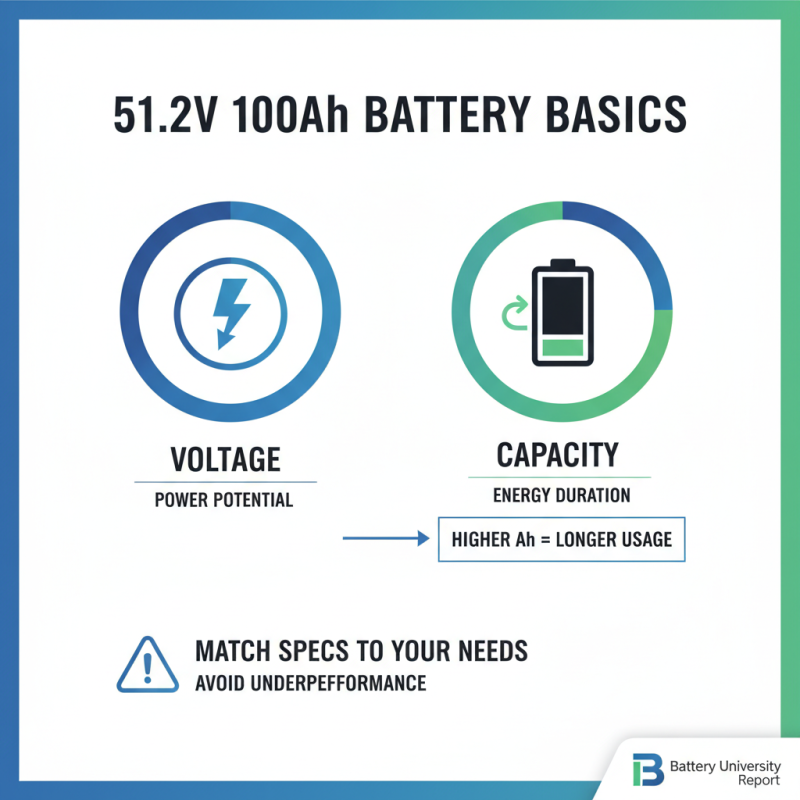
When selecting a 51.2v 100ah battery, understanding its specifications is crucial. The voltage (51.2v) indicates the power potential of the battery system. The amp-hour rating (100ah) measures the battery's capacity, dictating how long it can provide energy. A report by the Battery University highlights that a higher amp-hour capacity allows for a longer usage time. However, mismatching your usage needs with these specifications can lead to underperformance.
Consider the application of your battery. For electric vehicles (EVs), a higher discharge rate may be essential. In other scenarios, like solar energy storage, a steady discharge with lower peak requirements can suffice. Research indicates that cylindrical cells can yield a higher energy density compared to prismatic cells, making them ideal for limited spaces. Each choice affects overall efficiency and lifespan.
Tips: Check the manufacturer’s cycle life rating. Higher cycles usually mean a longer lifespan. Always consider the temperature range of your battery. Extreme temperatures can degrade performance. It’s important to reflect on your specific power application and recharge habits to select the most suitable battery. Balancing these factors ensures optimal performance and reliability of your energy system.
Key Factors to Consider When Selecting a 51.2v 100ah Battery
When selecting a 51.2v 100ah battery, key factors must be considered to ensure it meets your needs.
Battery chemistry is crucial.
Lithium-ion batteries dominate the market due to their energy density and efficiency.
According to industry reports, they provide up to 90% depth of discharge, outperforming lead-acid options, which only offer about 50%.
This difference translates to longer usage and fewer maintenance requirements.
Evaluating cycle life is essential as well. Many lithium-ion batteries can last over 3,000 cycles, while lead-acid batteries typically endure around 500 cycles.
This can significantly impact both performance and replacement costs. Considering the intended application helps too.
Solar energy storage or electric vehicles may require different specifications, such as discharge rates.
Safety features are also vital. Quality batteries include built-in protections against overcharge and short circuits.
However, not all products on the market offer these certifications.
Empty slots in data reporting can lead to misconceptions about performance.
Be cautious to verify manufacturers' claims, as inconsistencies prevail in many reviews.
An informed choice rests on careful consideration of these factors, ensuring the selected battery aligns with your energy needs.
Comparing Battery Chemistries: Lithium-ion vs. Lead Acid
When it comes to battery selection, the choice between lithium-ion and lead acid is crucial. Lithium-ion batteries are lighter and more efficient. They offer higher energy density and longer lifespans. On the other hand, lead acid batteries have been around for decades. They are more affordable and robust, making them a common choice for many applications.
Tips: Consider your weight limitations. If portability matters, lithium-ion is preferred. Check your budget too. Lead acid may save you money upfront, but it could cost more over time due to their shorter lifespan.
Both battery types have their pros and cons. Lithium-ion batteries excel in performance but usually come at a higher price. Lead acid, while cheaper, is heavier and less efficient, which may not suit all needs. Evaluate how you'll use the battery. Regular maintenance for lead acid is necessary, whereas lithium-ion requires minimal upkeep.
Tips: Think about your application environment. If temperatures vary, lithium-ion offers better reliability. Assessing your energy needs helps too. Are you looking for efficiency, or do you need a budget-friendly solution? Your priorities will guide your decision.
Evaluating Cycle Life and Efficiency Ratings of 51.2v Batteries
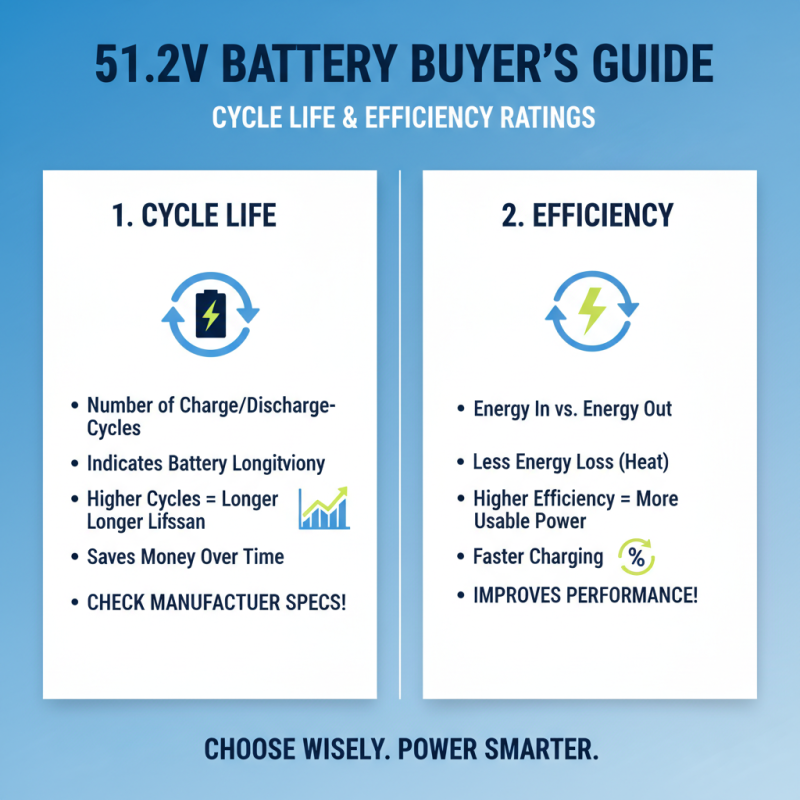
When selecting a 51.2v 100ah battery, evaluating cycle life and efficiency ratings is essential. Cycle life refers to how many charge and discharge cycles the battery can handle before performance degrades. A battery with higher cycle life can last longer and save you money over its lifespan. Take note of the manufacturer's specifications. They provide insights into expected longevity.
Efficiency ratings indicate how well a battery converts stored energy into usable power. A battery with high efficiency will utilize more of its capacity, reducing waste. Check the round-trip efficiency percentage. A good threshold is above 90%. Lower efficiency means less usable energy and more frequent recharging.
While these metrics are critical, they are not the only factors to consider. Environmental conditions, such as temperature and humidity, can affect battery performance. Additionally, over time, any changing usage patterns may demand higher efficiency. Reflect on your unique needs carefully. Choosing the right battery involves balancing these elements to ensure you make the best decision for your energy requirements.
Analyzing Cost vs. Performance Metrics in 51.2v Battery Choices
When selecting a 51.2v 100ah battery, understanding cost versus performance is crucial. The price of batteries can vary greatly. A cheaper battery may save you upfront costs. However, consider its lifespan and efficiency. Lower-quality options often lead to more frequent replacements. This can result in higher long-term costs.
Performance metrics include discharge rates and cycle stability. A high-capacity battery can deliver consistent power for longer periods. Assess your energy needs. If your application requires high output, investing in a premium option might be wise. On the contrary, for light usage, a more economical choice could suffice.
Keep in mind, not all specifications are clear-cut. Some batteries may be marketed with impressive numbers, but real-world performance can differ. Buyer reviews often highlight such discrepancies. Having proper information is vital. Weighing these factors helps in making informed choices that align closely with your unique requirements.