Leave Your Message
China has become a major source of energy storage products, including batteries designed for residential, commercial, and utility-scale solar systems. This guide introduces ten Chinese manufacturers associated with high-capacity storage and explains what buyers should examine beyond headline figures. High Capacity Solar Batteries can store surplus daytime generation for evening use, backup power, or shifting energy demand. Their real value depends on how well the complete system performs.
A battery’s stated capacity is only one part of the decision. Buyers should compare usable energy, continuous and peak power, chemistry, cycle-life test conditions, warranty terms, and battery-management features. Check whether the manufacturer provides clear technical documents, local support, and compatibility information for inverters and monitoring systems. A specification sheet can look polished. Installation details matter more. For example, a system in a warm equipment room may face different operating conditions from one installed in a cool, ventilated space.
The manufacturers discussed here should be treated as a research starting point, not as a universal ranking. Product ranges, service networks, and certifications can change, while performance depends on system design and use. Ask suppliers for current datasheets and written warranty terms, then verify that the proposed configuration suits your site. A low price may be attractive, but replacement access and technical support deserve equal attention. Even careful comparisons leave uncertainty; published cycle-life figures do not predict every installation’s results. That is worth remembering.
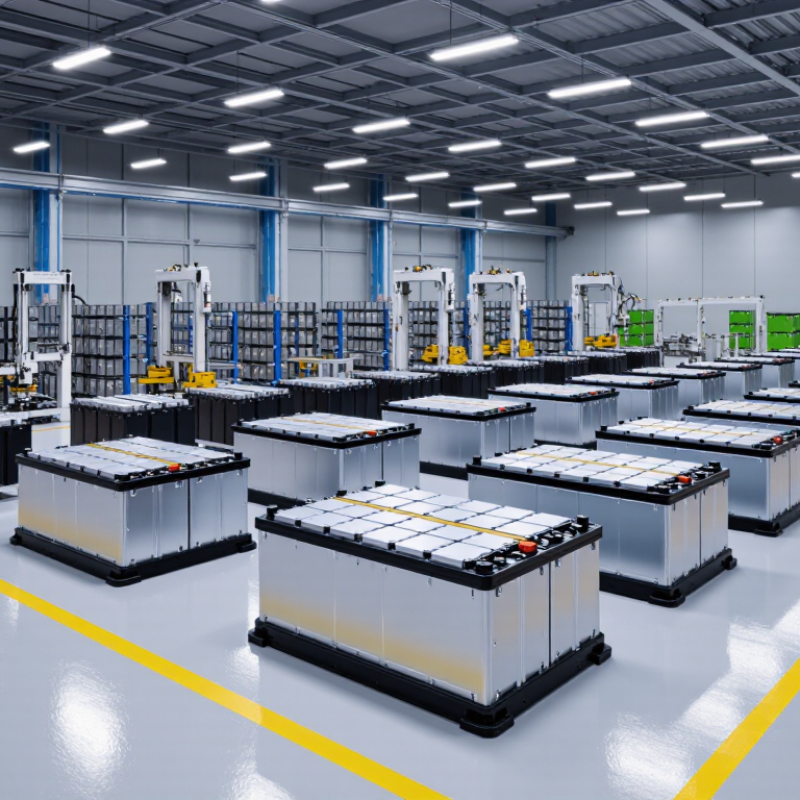
A high-capacity solar battery manufacturer is defined by more than a large nameplate figure. It must deliver usable energy, stable power, and predictable performance across repeated charge cycles. For installers, the practical test is whether a system stores midday surplus and supplies evening loads without excessive losses. Safety matters daily. Credible manufacturers publish cell- and system-level capacity, usable depth of discharge, and round-trip efficiency. They also disclose temperature limits and cycle-life test conditions, not just headline figures.
The IEA’s 2024 Batteries and Secure Energy Transitions report records 130% growth in power-sector battery capacity during 2023. It added 42 GW. This rapid scale-up raises the bar for quality control, cell matching, thermal management, and after-sales support. IRENA’s Renewable Power Generation Costs in 2023 reports utility-scale battery storage costs of $273 per kWh in 2023, an 89% drop from 2010. Lower prices help adoption, but they do not prove durability.
A capable manufacturer provides independent test evidence, batch traceability, clear warranty exclusions, and realistic service response times. I would still question claims without accessible failure data; public specifications can hide real-world variation. This detail is easy to overlook.
The table below summarizes practical evaluation criteria and commonly encountered reference ranges for stationary solar-storage batteries. Values vary by product, application, and test conditions; they are not rankings or claims about specific manufacturers.
| Evaluation Dimension | Useful Reference Data | What to Verify |
|---|---|---|
| System energy capacity | Residential systems commonly range from about 5–20 kWh per installation; commercial and utility projects can be configured from tens of kWh to multiple MWh. | Confirm usable energy, system configuration, and whether the quoted figure is for one battery unit or the complete installation. |
| Cell capacity and scalability | Stationary lithium iron phosphate (LFP) products commonly use large-format cells; cell capacity is product-specific and should be checked against the cell datasheet. | Review cell model, series/parallel configuration, batch traceability, and evidence that parallel expansion is supported. |
| Battery chemistry | LFP and nickel manganese cobalt (NMC) are established lithium-ion chemistries used in energy storage; their energy density, thermal behavior, and operating characteristics differ. | Check the exact chemistry, cell supplier documentation, and suitability for the intended installation and operating environment. |
| Cycle-life evidence | Cycle-life figures are test-condition dependent; depth of discharge, temperature, charge/discharge rate, and end-of-life definition affect results. | Request the test protocol and warranty terms, including remaining-capacity threshold, operating limits, and throughput allowance. |
| Power and energy rating | Energy is expressed in kWh or MWh; power is expressed in kW or MW. A high energy rating alone does not establish high output power. | Compare continuous and peak power, discharge duration, and the battery’s permitted charge and discharge rates. |
| Battery management and protection | A battery management system typically monitors cell voltage and temperature and manages limits such as overcharge and over-discharge protection. | Check monitoring coverage, alarms, fault response, communications, and integration with the inverter or energy-management system. |
| Product safety standards | IEC 62619 covers safety requirements for secondary lithium cells and batteries used in industrial applications; IEC 63056 addresses safety requirements for lithium batteries used in electrical energy storage systems. | Verify current, applicable test reports or certificates for the exact battery model and intended market. |
| Transport compliance | Lithium batteries offered for transport are subject to applicable UN Manual of Tests and Criteria, subsection 38.3 requirements. | Request the UN 38.3 test summary for the shipped battery type and confirm packaging and transport documentation requirements. |
| Manufacturing quality and traceability | ISO 9001 specifies requirements for a quality management system; certification applies to a defined organization and scope, not automatically to every product claim. | Check certificate validity and scope, production records, incoming-cell inspection, end-of-line testing, and serial-number traceability. |
| Warranty and service capability | Warranty duration and coverage are manufacturer- and product-specific; published terms may include calendar time, energy throughput, or both. | Review exclusions, performance guarantees, service response process, spare-parts availability, and responsibility for installation and commissioning. |
Reference note: Standards and certification requirements depend on product design, destination market, and project application. Confirm the latest applicable requirements with the relevant certification body and local authorities.