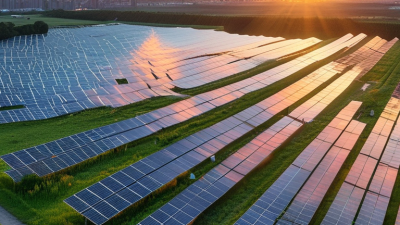
China is a major sourcing market for High Capacity Solar Batteries, but wholesale buyers need more than an attractive price. They need dependable capacity, clear technical documents, and a supplier that can explain how its batteries perform in real systems. A specification sheet may look polished. The details still matter.
Elon Musk, a leading figure in the battery and energy-storage industry, has said, “The future is going to be about sustainable energy. It’s inevitable.” That direction is clear. Choosing the right product is less simple. Buyers should compare usable capacity, chemistry, cycle-life test conditions, power output, and compatibility with inverters. They should also ask how the manufacturer handles quality checks and warranty claims. Ask for evidence, not just confident promises.
Small details count. A warehouse sample, a serial-number label, and a consistent test report can reveal more than a sales presentation. For larger orders, confirm production lead times, packaging, and after-sales support before committing. A low quotation can hide gaps in documentation or service. Yet a high price alone does not prove better performance.
This guide examines how to evaluate Chinese suppliers, compare battery specifications, and reduce avoidable sourcing risks. It cannot make every purchase risk-free. That is worth admitting. Careful questions and independent verification remain essential when selecting High Capacity Solar Batteries for wholesale.
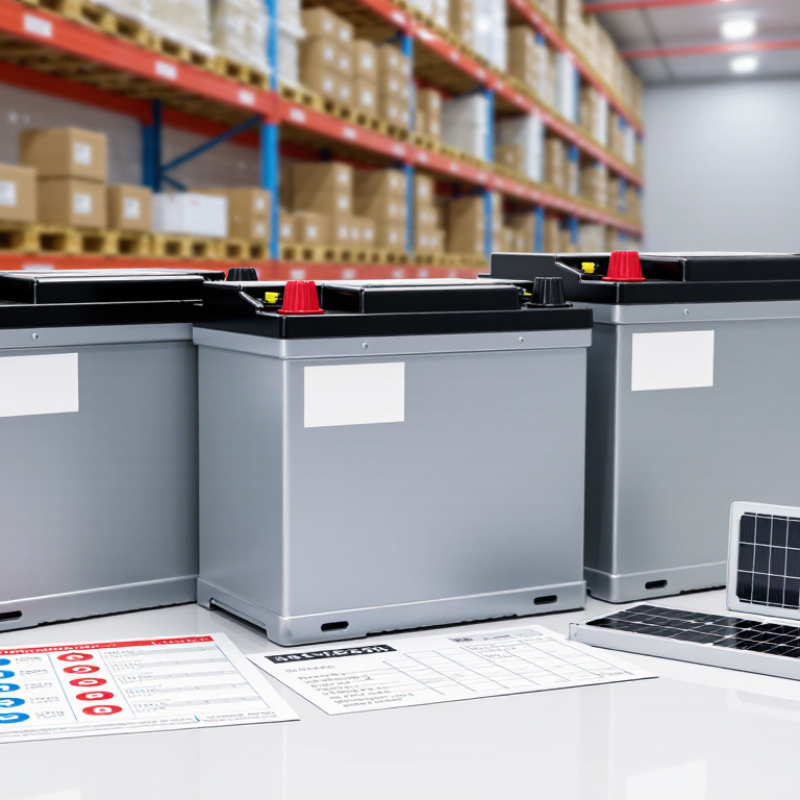
A high-capacity solar battery is not defined by a large kilowatt-hour figure alone. Rated capacity describes stored energy; usable capacity shows how much energy a site can actually draw after reserve limits. Power output, measured in kilowatts, determines whether the battery can run a pump, refrigerator, and lights simultaneously. Numbers need context.
For wholesale comparisons, check usable kWh, continuous output, charging rate, round-trip efficiency, cycle life, and warranty conditions. NREL’s 2024 Annual Technology Baseline models a representative utility-scale battery with four-hour duration and 85% round-trip efficiency. This is a reference point, not a universal pass mark: site loads, sunlight, temperature, and inverter limits affect actual performance. A 20-kWh unit with only 10 kWh usable may disappoint a workshop after dusk. Specifications can look neat on paper; real operating conditions are messier.
Tips: Ask suppliers to state usable capacity at the proposed discharge rate and temperature. Compare the same test conditions across quotes. Then check whether the system can expand as demand grows.
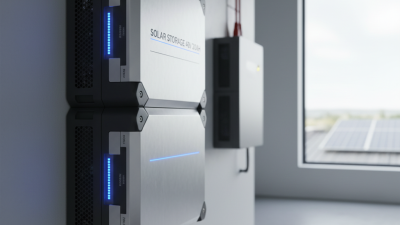
Battery energy capacity is commonly estimated as nominal voltage × amp-hour capacity ÷ 1,000. The configurations shown are illustrative examples: for instance, 48 V × 200 Ah equals 9.6 kWh of nominal energy. Usable energy is lower and depends on the battery’s permitted depth of discharge, operating conditions, and system losses. “High capacity” has no single universal threshold; the right size depends on daily energy use and backup needs.
China’s solar-storage market is built mainly around lithium-ion batteries, with lithium iron phosphate (LFP) widely used for stationary systems. China Energy Storage Alliance’s 2024 report estimates that operating new-type storage reached 31.39 GW and 66.87 GWh by the end of 2023; lithium-ion made up about 97.4% of installed power capacity. The scale is clear. For wholesale buyers, chemistry alone is not enough: check usable capacity, cycle-life test conditions, cooling design, and battery-management protections.
LFP suits many sites because it offers long cycle life and comparatively stable thermal behavior. Nickel manganese cobalt (NMC) cells can provide higher energy density, which may help where floor space is tight. But thermal controls matter. Sodium-ion is gaining attention because its material supply differs from lithium-ion, though its lower energy density can mean larger cabinets for the same storage duration. Vanadium flow batteries separate energy capacity from power output, making longer discharge periods possible; their tanks and pumps need more site space.
The IEA’s Batteries and Secure Energy Transitions report recorded 42 GW of global battery-storage additions in 2023, underscoring the market’s rapid expansion. Yet headline figures do not guarantee project performance. Ask suppliers for independently tested round-trip efficiency, temperature limits, and degradation assumptions. One detail is often missed: a battery’s rated capacity may not equal its usable energy after reserve settings and conversion losses. That comparison is imperfect, but useful.
When comparing high-capacity solar batteries for wholesale, start with usable energy, not just the headline capacity. A 10 kWh rating may describe nominal storage, while the usable amount depends on the permitted depth of discharge. Check both figures. Also compare continuous output and short-duration peak power; a battery may store ample energy but struggle with simultaneous appliance loads.
Cycle life needs context. Ask how many cycles are rated, at what discharge depth, and under which temperature conditions. Round numbers can hide assumptions. A capacity table can look impressive, yet lose meaning without the test conditions. Compare round-trip efficiency, operating temperature range, and warranty coverage as well. Read the warranty’s capacity-retention terms, not only its stated years.
For wholesale orders, confirm nominal voltage, inverter compatibility, communication protocols, and battery-management protections. Request technical datasheets and test documentation for the exact model and configuration. Check carton dimensions, shipping weight, pallet quantities, and whether sample units match production batches. Small details matter. A lower unit price may not offset extra freight or integration work. One detail is easy to miss: supplier specifications may use different test methods, so compare like with like before placing a large order.
| Battery Format | Typical Nominal Capacity | Nominal Voltage | Typical Usable Depth of Discharge | Typical Cycle-Life Range | Typical Round-Trip Efficiency | Common Applications | Wholesale Comparison Checks |
|---|---|---|---|---|---|---|---|
| 48 V rack-mounted lithium iron phosphate (LFP) module | 5.1–10.2 kWh per module | 51.2 V nominal | 80–90% | About 4,000–8,000 cycles, depending on cell, temperature, and test conditions | About 90–96% | Residential storage, small commercial systems, telecom backup | Verify continuous charge and discharge current, BMS communication protocols, rack dimensions, and approved parallel-module limits. |
| 48 V wall-mounted or floor-standing LFP battery | 5–15 kWh per unit | 51.2 V nominal | 80–90% | About 4,000–8,000 cycles, depending on operating conditions | About 90–96% | Homes and small businesses with hybrid inverters | Compare enclosure protection rating, usable energy, inverter compatibility, installation clearances, and parallel expansion capability. |
| High-voltage residential LFP battery stack | 10–30 kWh per stack | Typically about 150–600 V DC, depending on stack configuration | 80–90% | About 4,000–8,000 cycles, depending on cell and operating conditions | About 90–96% | Residential hybrid-inverter systems and larger homes | Check the permitted voltage window, battery-management controller, inverter matching list, and whether capacity can be expanded after installation. |
| Commercial and industrial cabinet battery | About 100–500 kWh per cabinet or system block | Commonly 400–1,500 V DC, depending on system design | Typically 80–90% | About 4,000–8,000 cycles; warranty throughput may be specified separately | About 88–95% at system level | Peak shaving, demand management, commercial solar self-consumption | Compare usable AC energy, power rating, thermal management, fire-safety design, commissioning scope, and warranty energy throughput. |
| Containerized utility-scale battery energy storage system | Commonly about 1–5 MWh per container or system block | Battery DC voltage varies by system architecture | Typically 80–90% | Often specified by cycle count and/or lifetime energy throughput; confirm the warranted operating profile | About 85–92% at system level, depending on configuration and measurement boundary | Grid-scale storage, renewable-energy shifting, and large industrial projects | Request the complete AC system specification, power-conversion equipment details, auxiliary-load assumptions, safety documentation, and project references. |
| Note: Values are indicative market ranges, not guaranteed specifications for a particular product. Cycle life and efficiency depend on cell chemistry, discharge rate, temperature, depth of discharge, system design, and test method. Compare quotations using the same usable-energy basis, warranty terms, delivery scope, and applicable certifications. | |||||||
A large factory is not proof of a dependable supplier. The IEA’s Batteries and Secure Energy Transitions report (2024) found that battery storage additions in the power sector reached about 42 GW in 2023, more than 130% above 2022. That growth makes careful sourcing more important. Ask manufacturers for cell traceability, production records, and test results tied to the exact model—not just a general product brochure. Check whether the quoted capacity is nominal or usable, and request discharge curves at your expected temperature and load. Small details matter.
Review the battery management system, warranty exclusions, cycle-life test conditions, and quality-control process. A cycle-life figure means little without its depth of discharge, temperature, and end-of-life capacity threshold. Request an independent test report and compare its model number with the units offered for wholesale. Inspect sample packaging, terminal protection, labels, and shipping documents; these reveal practical care, though they do not prove long-term performance. The IEA’s Global Supply Chains of EV Batteries (2022) also documents China’s major role in battery-cell manufacturing. Scale can support availability, but it cannot replace supplier audits, sample testing, or clear after-sales terms. Some paperwork may look excellent. Verify it anyway.
Wholesale pricing depends on more than battery capacity. BloombergNEF’s 2024 Battery Price Survey reported an average lithium-ion pack price of $115 per kilowatt-hour, down 20% from 2023. That is a market benchmark, not a landed wholesale quote; enclosures, battery management systems, testing, warranty terms, and freight add costs. Request a line-item quotation and clarify the delivery term, order quantity, and warranty coverage. Small print matters.
Check certification requirements for the destination market before placing a bulk order. IEC 62619 is relevant to industrial lithium batteries, while other markets may require additional product or system testing. Ask for current certificates and test reports tied to the exact battery model. For transport, UN 38.3 testing is a key requirement; request the test summary and confirm packaging and carrier documents with the shipper. Ocean transit can add weeks, and port handling or customs delays may affect delivery dates. A low quote can still become an expensive shipment.
Tips: Compare quotes on landed cost per usable kilowatt-hour, not nameplate capacity alone. Ask for a sample document pack before deposit; paperwork gaps are easy to overlook, even by experienced buyers.