Leave Your Message

7 Best Battery Storage Containers for Global Buyers in 2026

Choosing a Battery Storage Container in 2026 is not just a matter of comparing price or capacity. Buyers need to consider how the system will operate at its actual site. A container beside a solar farm faces different conditions from one supporting a factory or remote project. Heat, dust, humidity, access roads, and available service support can all affect long-term performance.

Details matter. A useful comparison should examine usable energy capacity, power output, battery chemistry, thermal management, fire detection, and monitoring features. It should also look at the enclosure, maintenance access, warranty terms, and the supplier’s record of commissioning similar systems. These points help buyers distinguish a well-integrated solution from a container that only looks competitive on paper. Specifications are important, but they do not tell the whole story.

This guide reviews seven options for global buyers, focusing on practical selection factors rather than treating one product as suitable for every project. Buyers should confirm that published ratings match their operating conditions and request documentation for safety systems and testing. They should also clarify what installation, service, and spare-parts support is available in their region. A small gap in local support can become a large problem later. No shortlist can replace project-specific engineering, and product details may change. That deserves a second look. The aim is to help readers ask sharper questions, compare suppliers fairly, and identify a Battery Storage Container that fits the site, budget, and operating plan.
7 Best Battery Storage Containers for Global Buyers in 2026

Battery Storage Containers: Definition, Components, and Core Functions

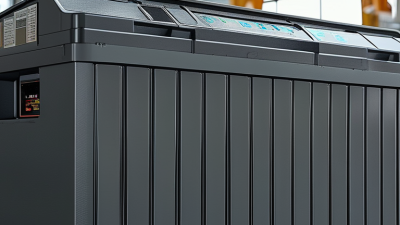
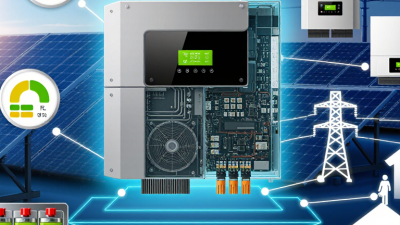
For global buyers in 2026, a battery storage container is more than a weatherproof steel enclosure. It houses battery racks and the systems needed to store and deliver electricity. Inside, cells are grouped into modules, then arranged in racks. A battery management system monitors voltage, temperature, and state of charge. Power conversion equipment changes direct current into usable alternating current. The exact layout depends on capacity, site conditions, and the intended application.

Thermal management helps keep batteries within their operating temperature range. It may use air conditioning, liquid cooling, or a combination. Sensors, alarms, and fire-safety equipment can detect abnormal conditions and support a controlled response. A supervisory controller coordinates charging, discharging, and communication with other site equipment. These parts work together, but they do not remove every risk. Heat, dust, installation quality, and maintenance still matter. No configuration is perfect; buyers should check how components perform as one system, not just compare capacity figures.

Tips: Ask for clear diagrams, usable energy ratings, operating-temperature limits, and maintenance requirements. Check access around racks and cooling equipment. A neat specification can still hide awkward service access. Request evidence for stated performance, and confirm that the container suits the site’s climate and power connection.
Battery Storage Containers: Typical Discharge-Duration Ranges

Illustrative planning ranges for common grid-scale battery storage applications in 2026

Frequency response typically calls for shorter bursts, while shifting renewable energy to later hours generally requires longer discharge durations. Containerized systems combine battery modules with a battery management system, power conversion equipment, thermal management, fire protection, and an energy management system. Actual sizing varies with project requirements, usable state-of-charge limits, and operating strategy.

How Containerized Battery Systems Are Evaluated for Global Markets

For global buyers, a container is more than a battery enclosure. It is a site-specific power system. The IEA’s Batteries and Secure Energy Transitions (2024) says power-sector battery capacity needs to reach 1,200 GW by 2030 in its net-zero pathway, about six times today’s level. That growth makes comparable testing essential. Check usable energy at the point of connection, round-trip efficiency, discharge duration, and auxiliary consumption. A strong headline efficiency can look weaker once cooling loads are included.

Evaluate the whole operating environment. Ask how the system handles high ambient temperatures, salt air, dust, heavy rain, and difficult maintenance access. Inspect thermal monitoring, fire detection, isolation, and documented propagation testing. Confirm grid controls, communication protocols, spare-parts access, and warranty assumptions. Details matter. A container tested in mild conditions may perform differently on a hot, humid site. IEC test reports and independently verified performance data help, but they do not replace site-specific engineering. Compare degradation assumptions at the same temperature and duty cycle; otherwise, projected lifetime costs can mislead. Some datasheets still leave gaps. Flag them before procurement.

Seven Battery Storage Container Options for Global Buyers in 2026

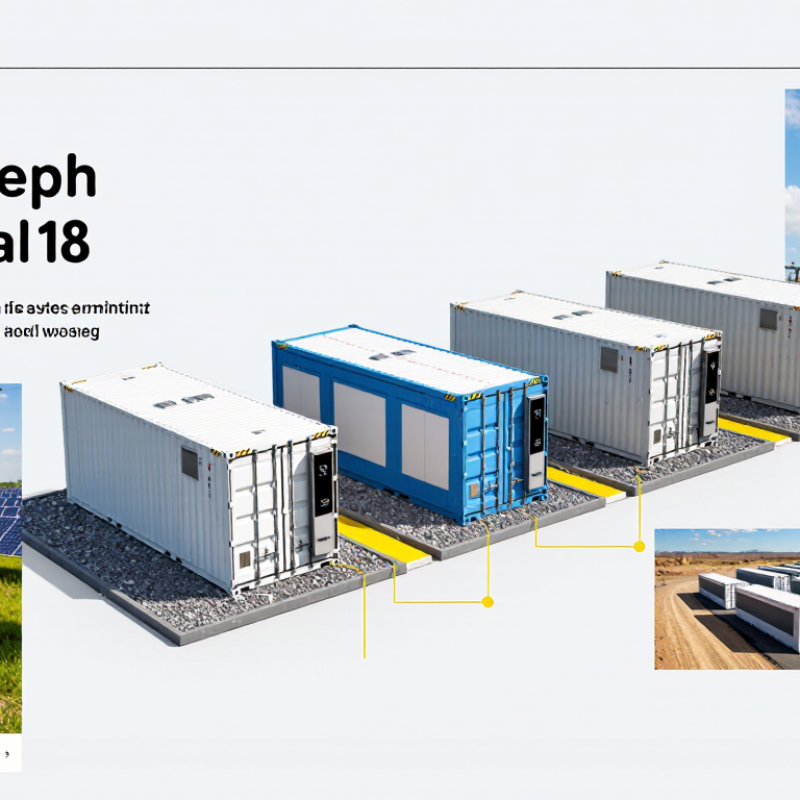
Global buyers in 2026 can compare seven battery storage container profiles. These are selection lenses, not rigid product categories. Compare a standard 20-foot LFP unit, a high-capacity 40-foot unit, and a modular multi-container block. Other profiles include air-cooled and liquid-cooled systems, hot-climate packages, and DC-coupled solar-storage containers. No profile wins everywhere. A compact unit may simplify transport, while a larger system can reduce the number of enclosures on site.

The International Energy Agency’s Batteries and Secure Energy Transitions (2024) reports that 42 GW of battery storage was added in 2023, more than twice the previous year. The report says global battery storage capacity must expand sixfold to 2030 under its net-zero pathway. That growth makes careful specification essential. Check usable energy, continuous output, cooling design, auxiliary power draw, and maintenance access—not just the advertised capacity. Small details matter. Ask for performance data at the site’s expected temperature, plus clear alarm and shutdown procedures. Container categories also overlap; a liquid-cooled unit may be designed for hot climates and paired with solar. That makes simple ranking tables convenient, but not always reliable.

Comparing Capacity, Safety, Certifications, and Deployment Requirements

7 Best Battery Storage Containers for Global Buyers in 2026

Choosing among seven battery storage container designs means comparing more than advertised capacity. Check rated energy in megawatt-hours alongside power output, usable capacity, and discharge duration. A container rated for four hours may not deliver that duration at full power under every temperature or operating condition.

Ask suppliers for performance curves, auxiliary-load estimates, and degradation assumptions. Small print matters.

The International Energy Agency’s Batteries and Secure Energy Transitions report says battery storage deployment in the power sector grew by more than 130% in 2023, adding 42 GW. That rapid growth makes consistent, verifiable specifications essential.

Safety and certification claims need careful checking. Review cell-level protections, battery management, gas and smoke detection, fire suppression, and emergency shutdown procedures.

IEC 62619 addresses safety requirements for industrial lithium batteries; UL 9540 and UL 9540A are also relevant in some markets. Certification does not replace site-specific fire reviews or local authority approval.

Ask for test reports that match the supplied system, not just similar components.

One uncomfortable lesson: paperwork can look complete while leaving installation details unclear.

Deployment requirements can change the real cost and schedule. Confirm container dimensions, shipping weight, lifting points, foundation loads, operating temperature limits, and required clearance.

Then check grid interconnection, ventilation, communications, and maintenance access at the actual site. A compact layout may save land but complicate emergency access.

Request drawings and commissioning requirements early. A few missing details can delay a project.

How to Select a Supplier for Your Project and Region

Choosing a battery storage container supplier starts with the project site, not a product brochure. A coastal installation may need stronger corrosion protection, while an inland site can face wide temperature swings and dust. Ask for the operating temperature range, humidity limits, and environmental test records. Specific evidence matters.

Check whether the supplier can document the container’s safety systems, thermal management, fire detection, and emergency procedures. Requirements differ by region, so have a qualified local engineer review the proposed configuration and applicable standards. Do not assume one certificate covers every market. Request drawings, test reports, and a clear list of what the supplier has verified.

Then examine the support behind the equipment. Ask who handles commissioning, spare parts, software updates, and urgent service in your region. Get response times and warranty exclusions in writing. Confirm that shipping dimensions, lifting points, and site access match your installation plan. A low quoted price can conceal costly gaps. A spreadsheet can hide them, too. Compare suppliers using the same technical questions, and speak with operators of similar projects when possible. No supplier is perfect; vague answers about service or operating limits deserve another conversation.

7 Best Battery Storage Containers for Global Buyers in 2026 - How to Select a Supplier for Your Project and Region

Solution Type Typical Configuration Best Project Fit Key Supplier Checks Regional Selection Considerations Relevant Standards to Review
1. Modular 20-foot LFP system Lithium iron phosphate (LFP) battery racks in a containerized enclosure; multiple units can be deployed in stages. Commercial and industrial sites, renewable-energy projects, and grid installations that benefit from phased expansion. Confirm usable energy and power at the point of interconnection, warranted operating conditions, fire-safety design, and expansion compatibility. Check local transport limits, site access, fire-service requirements, and the utility’s interconnection rules before fixing the container layout. Review IEC 62619 and IEC 62933-5-2 where applicable; confirm local installation and fire-code requirements.
2. 40-foot high-energy system A larger containerized arrangement designed to accommodate more battery equipment per enclosure; actual capacity depends on system design. Utility-scale storage and large renewable-energy sites where site planning supports larger equipment and service access. Request the complete layout, shipping and lifting weights, maintenance clearances, auxiliary-load figures, and fire-compartment details. Verify road, port, crane, foundation, and setback constraints for the project location; container length alone does not determine permitted transport dimensions. Review the applicable grid-scale storage and fire-safety requirements, including IEC 62933-5-2 or local equivalents.
3. High-power, short-duration system Battery, power-conversion equipment, and thermal management configured for frequent or high-rate charging and discharging. Frequency response, ramp-rate support, demand management, and other applications where power delivery is a primary requirement. Compare continuous and short-term power ratings, response time, cycling limits, efficiency, and degradation assumptions under the intended duty cycle. Check market rules for ancillary services, grid-code response requirements, and whether the project’s connection agreement permits the planned operating profile. Review the applicable grid-interconnection rules and system-level safety standards; confirm test scope with the local authority.
4. Cold-climate package Containerized storage with temperature monitoring and a specified heating and thermal-management strategy for low ambient temperatures. Projects exposed to freezing conditions, large seasonal temperature changes, or extended periods of low ambient temperature. Obtain charge and discharge limits by temperature, heater power consumption, cold-start behavior, insulation details, and the warranted ambient range. Assess snow and ice loading, wind exposure, drainage, winter access, and the effect of auxiliary heating loads on usable energy. Verify the declared environmental operating range and applicable electrical, structural, and fire codes for the installation site.
5. Hot and humid climate package Enclosure and cooling system designed for the specified high ambient temperature and humidity conditions. Sites in hot regions, humid climates, or locations with high solar exposure and limited access to maintenance. Check cooling capacity, temperature derating, condensation control, filter maintenance, auxiliary consumption, and performance at the site’s design conditions. Use site-specific temperature and humidity data; review flood exposure, storm protection, air intake placement, and availability of local service support. Review enclosure protection ratings under IEC 60529 where specified, alongside local electrical and environmental requirements.
6. Coastal or corrosive-environment package Container and electrical components specified for the project’s exposure to salt air, airborne contaminants, or corrosive conditions. Coastal installations, ports, and industrial sites where corrosion can affect enclosures, connectors, and supporting structures. Request coating and corrosion-protection specifications, material details, sealing design, inspection intervals, and maintenance guidance. Define exposure conditions from the actual site survey; assess wind, salt spray, flood risk, drainage, and access for inspections. Confirm enclosure protection and corrosion requirements with the project specification and the relevant local codes.
7. Grid-integration-ready system A coordinated storage package with battery controls, power-conversion equipment, protection, monitoring, and defined interface responsibilities. Projects that need clear division of responsibilities between the storage supplier, EPC contractor, utility, and site operator. Check single-line diagrams, control interfaces, protection settings, communications protocols, commissioning scope, and grid-compliance evidence. Identify the authority having jurisdiction, utility interconnection process, applicable fire code, certification pathway, and local commissioning requirements. Depending on the market, review UL 9540, UL 9540A test information, NFPA 855, IEC 62933-5-2, and applicable local requirements. These documents have different scopes and are not interchangeable.

Selection note: These are solution categories, not a ranking of suppliers. Battery capacity, power, efficiency, operating limits, and certifications vary by system design. Confirm project-specific performance, warranty terms, transport requirements, and approvals before procurement.