Leave Your Message
A 5kW solar battery can keep essential circuits running, but its power rating tells only part of the story. Capacity, inverter compatibility, usable depth of discharge, and warranty terms matter just as much. A battery rated at 5kW may deliver that power, yet its stored energy is measured in kilowatt-hours. The distinction is easy to miss.
Battery researcher Dr. Martin Winter’s work underscores the importance of evaluating battery chemistry and the complete energy-storage system together. To avoid misattribution, the following is an editorial summary, not a verbatim quote: “A battery’s real value depends on how well it works within the system around it.” That principle guides this look at the Lithium Battery 5kw options available for solar in 2026.
This guide compares seven candidates through practical details, not headline claims alone. We look at continuous output, usable capacity, cycle-life conditions, monitoring, installation needs, and support. Where specifications vary by model or region, buyers should confirm the current datasheet and warranty. That extra check can prevent a frustrating mismatch with an existing inverter.
Small details matter. A narrow utility-room doorway, limited wall space, or a cold garage can change which unit makes sense. No single battery fits every home, and product specifications do not guarantee identical real-world results. Some comparisons remain imperfect because brands publish data in different formats. Still, these choices offer a useful starting point for matching storage to solar production, backup priorities, and household loads.
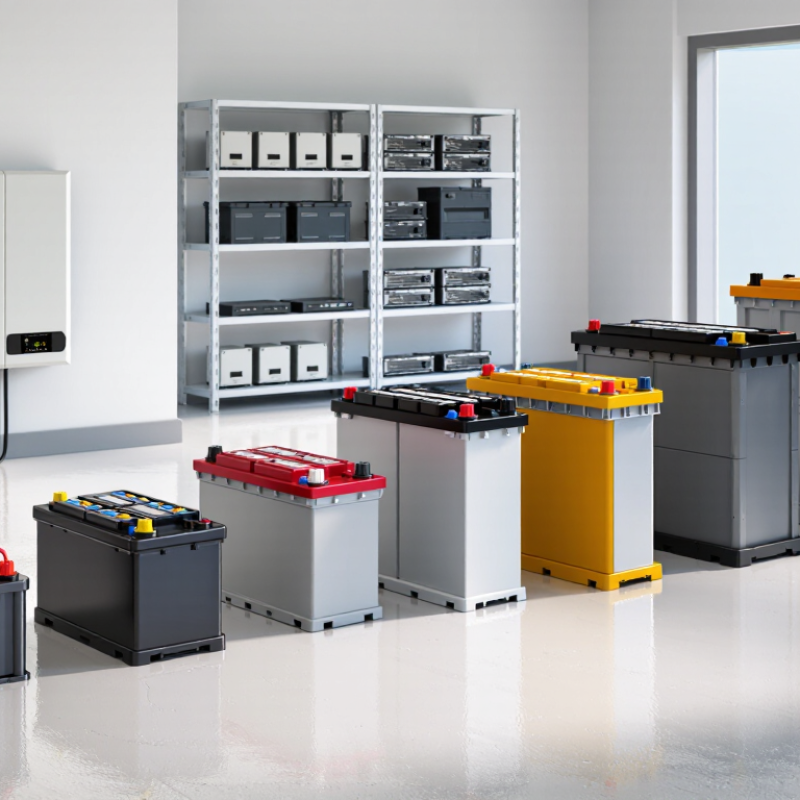
A 5 kW battery rating describes power: how much electricity the system can deliver at one moment. Kilowatt-hours measure stored energy. That distinction is easy to miss. A battery rated at 5 kW with 10 kWh of usable capacity could theoretically supply 5 kW for two hours. In real installations, conversion losses, reserve settings, and temperature can shorten that time.
The U.S. Energy Information Administration reported average residential electricity use of about 10,791 kWh per customer in 2022, or roughly 30 kWh per day. That figure is a broad benchmark, not a sizing prescription: evening demand, heating, and appliance loads vary widely. The National Renewable Energy Laboratory’s Annual Technology Baseline models utility-scale battery storage using a four-hour duration, illustrating how power and energy capacity are often specified together. A 5 kW system with 20 kWh, for example, has four hours of nominal output at full power.
Check both numbers before comparing 5 kW lithium batteries for solar. Also ask whether the stated capacity is nominal or usable, and whether the inverter can sustain the loads you plan to run. A kettle and a pump may briefly exceed the system’s output limit, even when plenty of energy remains. Real usage can be messier than a clean calculation.
| Selection | Battery configuration | Nominal energy | Typical usable energy | Indicative continuous output | Chemistry and voltage | Best suited to | Key check before purchase |
|---|---|---|---|---|---|---|---|
| 1. Compact daily-cycling option | About 51.2 V × 100 Ah | About 5.12 kWh | About 4.6–5.1 kWh, depending on the permitted depth of discharge | Often about 2.5–5 kW; limited by the battery’s BMS and inverter | LFP; low-voltage, nominally 48–51.2 V | Small homes or systems focused on evening self-consumption | A 5 kWh capacity does not guarantee 5 kW output. Check the continuous discharge rating. |
| 2. Longer-runtime home option | About 51.2 V × 200 Ah | About 10.24 kWh | About 9.2–10.2 kWh | Commonly configured for roughly 5 kW, subject to the BMS and inverter limits | LFP; low-voltage, nominally 48–51.2 V | Homes that need more overnight energy or a larger solar reserve | Confirm both continuous and peak output; peak power is usually available only for a limited time. |
| 3. Modular expandable option | One or more roughly 5 kWh LFP modules | About 5–20 kWh or more, depending on the supported stack | Typically around 90–100% of nominal capacity, subject to settings | Varies with module count, parallel limits, BMS, and inverter | Usually LFP; low-voltage or high-voltage system | Households planning to add storage as their needs grow | Check approved module combinations, maximum stack size, and whether expansion requires matching modules. |
| 4. High-voltage hybrid-system option | Battery stack designed for a compatible hybrid inverter | Commonly about 5–10 kWh per configured stack | Often around 90–100% of nominal capacity, depending on the operating reserve | Roughly 3–5 kW for some configurations; inverter and battery limits apply | Usually LFP; high-voltage DC architecture | New solar installations using a compatible hybrid inverter | Verify inverter compatibility, battery operating-voltage range, and approved communication protocol. |
| 5. Compact NMC option | Integrated battery pack, commonly around 5–7 kWh | About 5–7 kWh | Depends on the manufacturer’s reserve and operating limits | Often in the approximate 3–5 kW range for residential systems | NMC; voltage varies by system design | Installations where a compact integrated unit is a priority | Compare the specified usable capacity, warranty terms, and permitted installation conditions with LFP alternatives. |
| 6. Outdoor-installation option | Weather-rated, enclosed battery system; commonly around 5–10 kWh | About 5–10 kWh | Set by the battery’s usable-capacity specification and reserve settings | Approximately 2.5–5 kW in many residential configurations | Often LFP; system voltage varies | Installations with limited indoor space or an approved outdoor location | Check the enclosure’s IP rating, allowed temperature range, ventilation instructions, and local installation rules. |
| 7. Backup-focused larger option | About 10 kWh of storage paired with an inverter capable of the required loads | About 10 kWh | Often about 9–10 kWh, before accounting for backup reserve and conversion losses | A system may deliver around 5 kW continuously if both battery and inverter support it | Typically LFP; low- or high-voltage system | Backup for essential household loads over a longer outage | Check surge power, transfer capability, backup-circuit design, and whether the inverter can start motor loads. |
How to read the ratings: kW measures instantaneous power—the rate at which a battery can deliver or accept energy. kWh measures stored energy. A 5 kWh battery delivering 5 kW would provide about one hour of energy at that rate in ideal conditions; real runtime is affected by usable-capacity limits, conversion losses, and load variation. Values above are representative configuration ranges, not specifications for a particular product. Confirm exact ratings and compatibility in the current product datasheet.