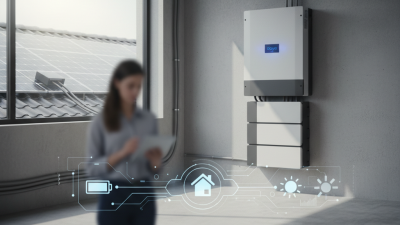
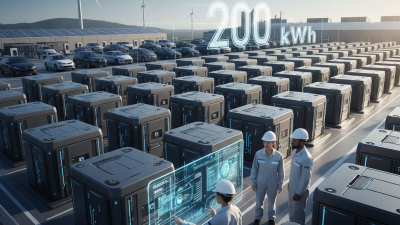
Global buyers comparing 2026 battery storage options face a practical question: which enclosure fits the site, climate, and duty cycle? A Battery Storage Container may house lithium-ion modules, power conversion equipment, thermal controls, and safety systems. Yet the container alone does not guarantee reliable operation. Layout, service access, and heat management matter every day.
This guide compares air-cooled, liquid-cooled, modular, and high-capacity container types. It looks at usable energy, power output, footprint, temperature control, and maintenance needs. A system beside a solar farm in a hot, dusty region may need different cooling and filtration from one serving a temperate industrial site. Small details count. A blocked service aisle can slow routine work. A poorly matched cooling design can waste energy.
Energy-storage researcher Dr. Imre Gyuk has emphasized storage’s role in supporting a more flexible electric grid. The following line is an editorial summary, not a verbatim quotation: “Choose storage for the grid service and operating conditions it must reliably support.” That distinction matters. Buyers should verify product specifications, test documentation, warranty terms, and local service arrangements with suppliers. Brochures rarely show the full operating picture. This guide offers a structured comparison, but no single container type suits every project. Some trade-offs remain uncomfortable, and buyers should question assumptions before committing.
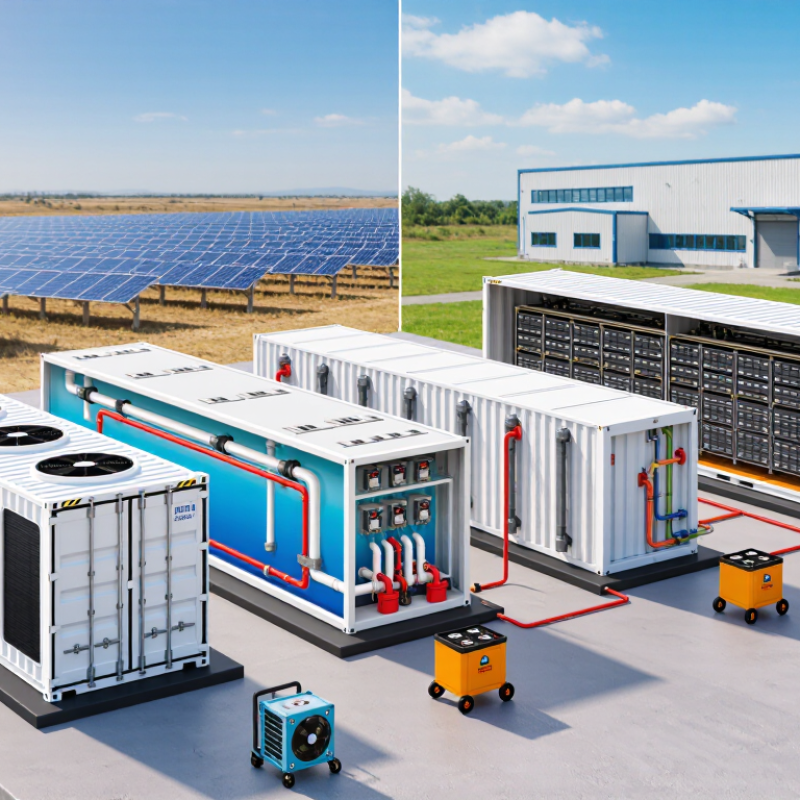
A battery storage container is a weather-resistant enclosure holding battery racks and the equipment needed to store and deliver electricity. Picture a steel enclosure scaled to room size, with rows of modules, cable trays, sensors, and service aisles. It is not magic.
During charging, power conversion equipment changes incoming electricity into a form the batteries can store. A battery management system monitors cell voltage, temperature, and current, then limits operation when readings move outside set ranges. When demand rises, stored energy passes through the converter and feeds a building, microgrid, or the wider grid. Cooling equipment moves heat away from the racks, while alarms and protective systems respond to abnormal conditions. Layouts vary with capacity, battery chemistry, climate, and site design.
In practice, placement matters as much as the container itself. A level foundation, clear maintenance access, and space around ventilation openings can affect reliability. Operators review temperature readings and alerts rather than assuming the enclosure runs unattended. A neat diagram can hide practical issues, such as awkward cable routes or difficult filter access. Those details deserve a second look. Storage containers can support renewable power and backup supply, but performance depends on installation, operating conditions, and regular inspection.
Battery storage containers vary by cell chemistry and physical design. Lithium iron phosphate (LFP) is widely used for stationary storage because it offers a long cycle life and comparatively stable thermal behavior. Nickel manganese cobalt (NMC) cells can provide higher energy density, which may suit space-limited sites. Sodium-ion systems are another option, though availability and project experience can differ by market. No chemistry wins every project. That trade-off matters.
Container design shapes installation and maintenance. Common formats include 20-foot and 40-foot enclosures, with capacity depending on the system layout. Air cooling can be simpler, while liquid cooling may support more consistent temperature control in demanding conditions. Integrated containers combine batteries and power-conversion equipment; split designs place some equipment separately for easier access or site planning. Check the usable capacity, temperature range, monitoring features, and service clearances against the actual site. Drawings can look neat. Real sites rarely do.
Tips: Compare complete system specifications, not chemistry labels alone. Ask how cooling, fire detection, access, and replacement procedures fit your climate and operating plan. A little extra service space can prevent awkward maintenance later.
| Battery chemistry | Common container design | Typical discharge duration | Key strengths | Key considerations | Common applications | Buyer checks |
|---|---|---|---|---|---|---|
| Lithium iron phosphate (LFP) | Modular battery racks or cabinets in a 20- or 40-foot enclosure; commonly paired with liquid or forced-air thermal management and a separate or integrated power conversion system (PCS). | Commonly configured for about 1–4 hours; longer-duration systems are also possible depending on cell capacity and project design. | Widely used in stationary storage; good cycle life and thermal stability relative to many other lithium-ion chemistries. | Thermal runaway and fire risk are not eliminated. System design still needs appropriate detection, isolation, thermal management and emergency-response provisions. | Grid-scale storage, renewable-energy shifting, commercial and industrial peak management, and backup power. | Check usable energy, warranted operating conditions, degradation assumptions, fire-protection design, local code compliance and service access. |
| Nickel manganese cobalt (NMC) | High-energy-density battery modules or racks in a container, typically integrated with a battery management system, thermal management and PCS. | Often designed for approximately 1–4 hours; actual duration depends on the power-to-energy ratio selected. | Higher cell-level energy density than many stationary battery alternatives, which can help where space or weight is constrained. | Thermal management and fire-risk controls are important; project economics should account for the specific cell design, operating limits and replacement strategy. | Space-constrained installations, fast-response services and applications requiring a compact energy-storage footprint. | Compare independently documented safety testing, operating temperature limits, usable capacity, warranty terms and site-level fire-safety requirements. |
| Sodium-ion | Modular cells assembled into racks or cabinets within a container; system layout and thermal management vary with cell design. | Usually targeted at short- to medium-duration applications; project duration is design-specific and should be confirmed from the system rating. | Uses sodium-based chemistry and can reduce reliance on some lithium-ion supply-chain materials. Some cell designs offer good low-temperature performance. | Stationary deployments and supply-chain maturity are less established than for LFP in many markets. Performance, cycle life and product availability vary by design. | Emerging grid and commercial storage projects where procurement teams are evaluating alternatives to established lithium-ion systems. | Request field-performance evidence, independent test results, bankability information, warranty coverage and confirmation of local service capability. |
| Vanadium redox flow | Electrolyte tanks and pumps are paired with cell stacks, controls and power equipment; components may be arranged in one or several containerized units. | Often suited to roughly 4–12 hours or more. Energy capacity can be increased by adding electrolyte storage, while power is primarily determined by stack capacity. | Power and energy capacity can be sized separately. The electrolyte is not consumed in the same way as a conventional battery’s active electrode materials during normal cycling. | Requires pumps, plumbing and more space than many containerized lithium-ion systems; electrolyte handling, operating costs and project-specific efficiency need review. | Long-duration renewable-energy shifting, grid support and applications with frequent cycling. | Review round-trip efficiency at the system boundary, electrolyte and stack warranties, auxiliary loads, maintenance plan and total installed footprint. |
| Zinc-bromine flow or hybrid flow | Containerized electrolyte tanks and electrochemical stacks or cells, with pumps, controls and power conversion equipment arranged to suit the system design. | Commonly considered for multi-hour storage; achievable duration depends on the specific architecture and energy-tank sizing. | Can provide multi-hour energy storage and may be designed for repeated cycling; some designs support deep discharge. | Bromine-containing electrolyte requires suitable containment and handling measures. Operating characteristics and commercial maturity differ among system designs. | Renewable-energy shifting and commercial or grid applications requiring several hours of storage. | Verify electrolyte containment, applicable hazardous-material rules, maintenance requirements, efficiency, cycle-life evidence and supplier support arrangements. |
| Sodium-sulfur (NaS) | Insulated, thermally managed battery modules in a containerized system; the battery operates at elevated temperature. | Typically associated with long-duration applications, often around 6–8 hours, depending on system configuration. | Established high-temperature stationary-storage chemistry with experience in grid and renewable-energy applications. | Cells operate at approximately 300–350°C. High-temperature operation, thermal insulation and specific safety procedures add design and operating requirements. | Grid-scale load leveling, renewable-energy integration and other applications suited to sustained discharge. | Assess hot-standby energy use, thermal management, emergency procedures, installation requirements and local operating support. |
| Lead-acid | Vented or valve-regulated lead-acid batteries arranged in racks inside a ventilated container or equipment enclosure. | Often used for short-duration backup; duration varies significantly with discharge rate, temperature and battery sizing. | Mature technology with established recycling pathways in many regions and broad familiarity among service providers. | Lower energy density and generally shorter cycle life than modern lithium-ion options in many cycling applications. Vented designs may require ventilation and maintenance. | Backup power, telecom and other applications where standby service or established recycling infrastructure is a priority. | Check ventilation, maintenance access, temperature limits, replacement frequency, recycling arrangements and lifecycle cost for the intended duty. |

Note: Discharge durations are indicative application ranges, not guaranteed product specifications. Container capacity, usable energy, power rating, safety provisions and operating performance vary by system design, site conditions, local standards and project requirements. Confirm all figures and certifications with project-specific technical documentation.
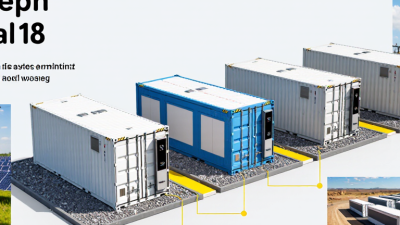
Battery storage containers differ less by their steel shells than by the equipment inside. A standard 20-foot unit can suit constrained sites, while 40-foot formats may reduce connection and service points per megawatt-hour. However, transport access, crane reach, and maintenance clearance can erase that advantage. Space matters.
Air-cooled systems use fans and ducts to move heat across battery racks. They are simpler to inspect, but temperatures can vary between modules. Liquid cooling circulates coolant through cold plates, often supporting tighter temperature control and higher power density. It also adds pumps, plumbing, leak monitoring, and service checks. Not always.
Every format depends on coordinated battery management, power conversion, ventilation, and fire detection and suppression equipment. The battery management system tracks cell voltage and temperature, while the container controller coordinates alarms and shutdowns. Integrated layouts can simplify installation; separate power-conversion equipment may allow easier replacement. A data sheet rarely shows how filters clog in dusty locations or how cooling performs through repeated hot afternoons. Ask for measured operating ranges, service clearances, and test conditions, not just nominal capacity. Often overlooked.
Global buyers often compare battery containers by usable energy, not headline capacity alone. A 20-foot enclosure may suit a constrained site, while larger systems can reduce the number of separate units. Yet capacity depends on battery chemistry, operating limits, and the energy reserved for safe operation. Ask for both rated and usable capacity under your expected conditions. Air-cooled designs may be simpler to service, while liquid cooling can help manage heat in dense installations. Neither option is automatically best. That matters.
Safety comparisons should cover more than alarms. Review the container’s thermal management, gas detection, fire response provisions, and procedures for isolating a unit. Ask how these features work together, and request clear technical documents rather than relying on a brochure. Site requirements can change the choice quickly: check container weight, foundation loading, crane access, cable routes, drainage, and space for maintenance. Measure twice. A layout that fits on paper may leave too little room for technicians or emergency access.
Climate also matters. Dust, salt air, heavy rain, and temperature swings can affect enclosure requirements and maintenance plans. Buyers should confirm the system’s operating range and environmental protection with the supplier. One detail is easy to overlook: quoted capacity may not reflect performance at the local site’s temperatures. Compare assumptions, not just numbers. A careful review may still miss something, so involve the people who will install and maintain the equipment before finalizing the design.
Battery storage containers must fit the project’s standards, transport route, and site conditions. Buyers should verify applicable electrical and fire-safety requirements with qualified engineers and local authorities. IEC 62619 may be relevant to industrial lithium battery safety, while transport documentation may include evidence of UN 38.3 testing. Requirements vary by destination and shipping method. Details matter.
For international shipping, confirm the battery’s classification, packaging, labels, and documents with the carrier before booking. Sea freight may involve the current IMDG Code, while road and air transport follow their own rules. A container that clears one port may need extra paperwork at another. Check early.
At the site, assess temperature, humidity, drainage, wind exposure, and access for lifting equipment. A narrow service lane can complicate replacement work, even when the container fits on the drawing. Confirm foundations, cable routes, ventilation, fire detection, and emergency access during design review. Commissioning plans should define inspections, testing, and operator training. Paper compliance alone is not enough; real site conditions can still expose gaps.