2025 Top Benefits of 48V500Ah (25kWh) Lithium Battery for Renewable Energy Solutions
In recent years, the transition towards renewable energy solutions has gained significant momentum, driven by the urgent need to combat climate change and reduce dependency on fossil fuels. Central to this shift is the adoption of advanced energy storage technologies, which play a vital role in stabilizing energy supply from intermittent renewable sources such as solar and wind. Among these technologies, the **48V500Ah (25kWh) Lithium Battery** stands out as a highly efficient and versatile solution that caters to a wide range of applications, from residential energy systems to commercial electricity storage.
The **48V500Ah (25kWh) Lithium Battery** offers numerous benefits that make it an attractive choice for those looking to optimize their energy consumption and enhance the reliability of their power systems. With its high energy density, long cycle life, and rapid charging capabilities, this battery configuration not only supports the effective utilization of renewable energy but also addresses the common challenges faced by traditional battery systems. As we delve into the top advantages of adopting the **48V500Ah (25kWh) Lithium Battery**, it becomes clear that this innovative solution is poised to revolutionize the way we harness and store energy for a sustainable future.

Overview of 48V500Ah Lithium Battery Characteristics
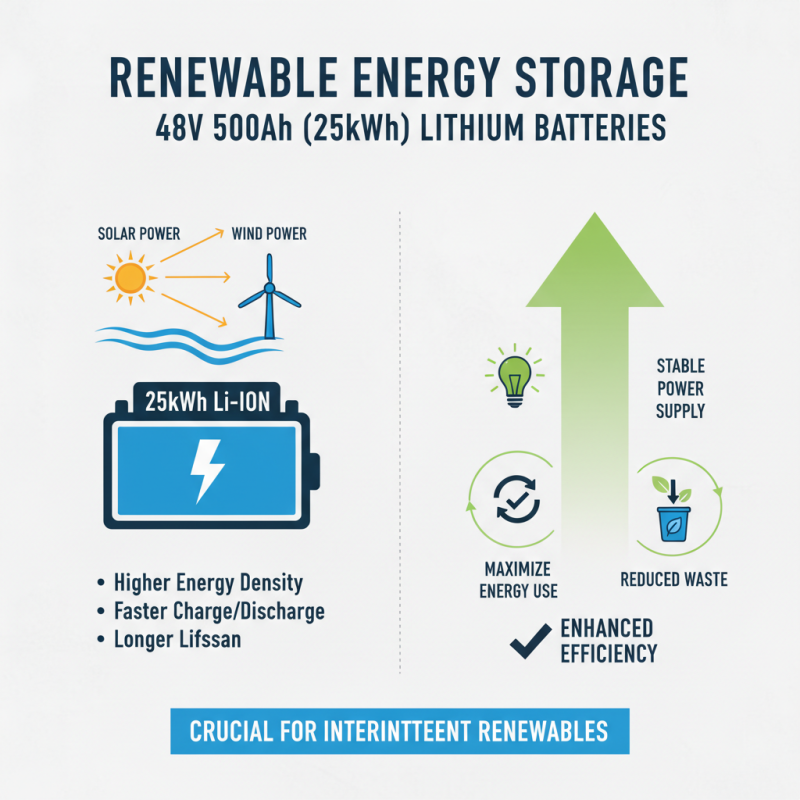
The 48V500Ah lithium battery is becoming a pivotal component in renewable energy solutions, primarily due to its unique characteristics that enhance energy storage and efficiency. One of its defining features is the high capacity of 25kWh, which enables it to store substantial energy, making it ideal for applications ranging from residential solar energy systems to larger off-grid solutions. This capability allows users to harness and store renewable energy effectively, ensuring a steady power supply even during periods of low generation.
Additionally, the lithium chemistry of the battery contributes to its rapid charge and discharge rates, making it highly responsive to energy demands. This characteristic not only supports the integration of renewable sources like solar and wind but also enhances overall energy management. With a longer lifecycle compared to traditional lead-acid batteries, the 48V500Ah lithium battery proves to be a cost-effective solution in the long run, reducing the need for frequent replacements and maintenance. Moreover, its compact design and lighter weight facilitate easier installation and integration into existing systems, driving the adoption of sustainable energy practices across various sectors.
Advantages of 25kWh Capacity in Renewable Energy Systems
The 25kWh capacity of a 48V500Ah lithium battery offers significant advantages for renewable energy systems, primarily due to its optimal energy storage and efficiency. This battery size strikes a balance between sufficient energy capacity and manageable weight, making it ideal for both residential and commercial applications. Its design maximizes discharge rates while minimizing energy loss, enabling renewable energy systems to store and utilize energy from sources such as solar or wind more effectively.
When integrating a 25kWh lithium battery into your renewable energy setup, it’s essential to consider energy management strategies. For instance, using solar panels during peak sun hours can significantly enhance the battery's charging efficiency, allowing for optimal energy harvesting. Additionally, this capacity can provide a significant buffer during energy shortages, ensuring consistent power availability even during less productive periods.
Tips for maximizing the benefits of a 25kWh battery include regular monitoring of your energy consumption and production patterns. Understanding these trends can help you devise strategies to charge and discharge the battery more efficiently, ultimately leading to cost savings and a more sustainable energy model. Furthermore, consider investing in smart energy management systems that can automate these processes, ensuring that your renewable energy resources are utilized to their fullest potential.
2025 Top Benefits of 48V500Ah (25kWh) Lithium Battery for Renewable Energy Solutions
Impact on Energy Storage Efficiency for Solar and Wind Power
The integration of 48V500Ah (25kWh) lithium batteries into renewable energy systems significantly enhances energy storage efficiency for both solar and wind power applications. These batteries are designed to provide a stable and reliable source of energy, which is crucial for managing the intermittent nature of renewable sources. By offering a higher energy density and better charge/discharge cycles compared to traditional lead-acid batteries, lithium batteries can maximize the use of generated energy, reducing waste and improving overall system performance.
Furthermore, the compact size and lightweight design of these lithium batteries facilitate easier installation and scalability. In solar energy systems, they can store excess energy generated during peak sunlight hours, ensuring that it is available during periods of low production. Similarly, for wind power, the consistent energy supply allows for better integration into the grid, supporting continuous electricity flow. This reliability not only contributes to reduced dependence on fossil fuels but also enhances grid stability, paving the way for a more sustainable energy infrastructure.
Comparative Analysis with Traditional Battery Technologies
The integration of 48V500Ah (25kWh) lithium batteries into renewable energy systems marks a significant advancement over conventional battery technologies. One major distinction lies in energy density and weight. Lithium batteries typically offer a higher energy density—often ranging from 150 to 250 Wh/kg—compared to lead-acid alternatives that hover around 30-50 Wh/kg. This means that for the same amount of stored energy, lithium batteries can be considerably lighter and more compact, facilitating easier installation and more flexible design options in solar and wind energy setups.
Furthermore, longevity is a critical factor in the comparative analysis of battery technologies. Lithium batteries can endure upwards of 3,500 charge cycles, significantly outlasting traditional lead-acid batteries, which may only yield about 500-1,000 cycles before capacity diminishes. According to the International Renewable Energy Agency (IRENA), the extensive lifespan of lithium batteries contributes to reduced lifecycle costs, as they are more cost-effective over time despite higher initial investments. Additionally, lithium's ability to operate efficiently at varying temperatures enhances their suitability for diverse environmental conditions, solidifying their role as a superior choice for reliable renewable energy storage solutions.
Future Trends in Lithium Battery Development for Renewables
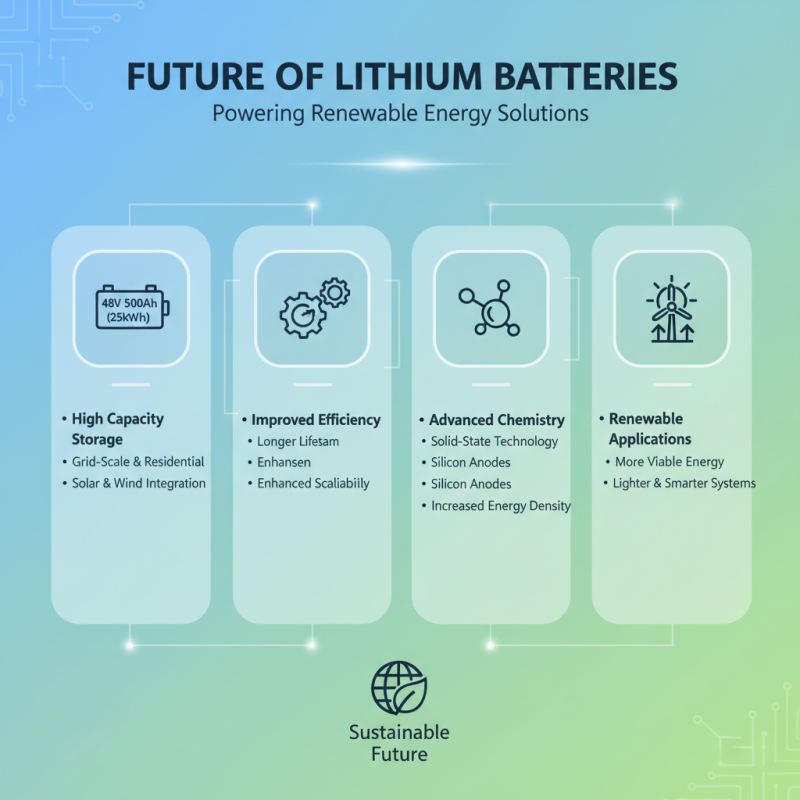
The future of lithium battery development is poised to revolutionize renewable energy solutions, particularly with advances such as the 48V 500Ah (25kWh) lithium battery. As the demand for sustainable energy sources grows, the focus on improving battery efficiency, longevity, and scalability becomes critical. Innovations in battery chemistry, such as solid-state technology and silicon anodes, are anticipated to enhance energy density, leading to lighter and more efficient storage systems. These developments will directly impact renewable energy applications, making it more viable to harness solar, wind, and other renewable sources.
Moreover, the integration of smart technology within lithium batteries is gaining traction. The implementation of artificial intelligence and IoT connectivity can optimize energy management, predict performance metrics, and enhance user interaction. This shift towards smarter battery systems allows for real-time monitoring and improved lifecycle management, ensuring that renewable energy solutions are both effective and reliable. As these technologies evolve, they will position lithium batteries as a cornerstone in the global transition to a more sustainable energy landscape.