Top 5 Tips for Choosing a 20kw Solar Battery for Your Needs
Choosing the right 20kw Solar Battery can significantly impact your energy independence. Industry expert, Dr. Lisa Reynolds, emphasizes, "A well-chosen battery can enhance energy efficiency and resilience.” This quote underlines the importance of making informed decisions in your energy setup.
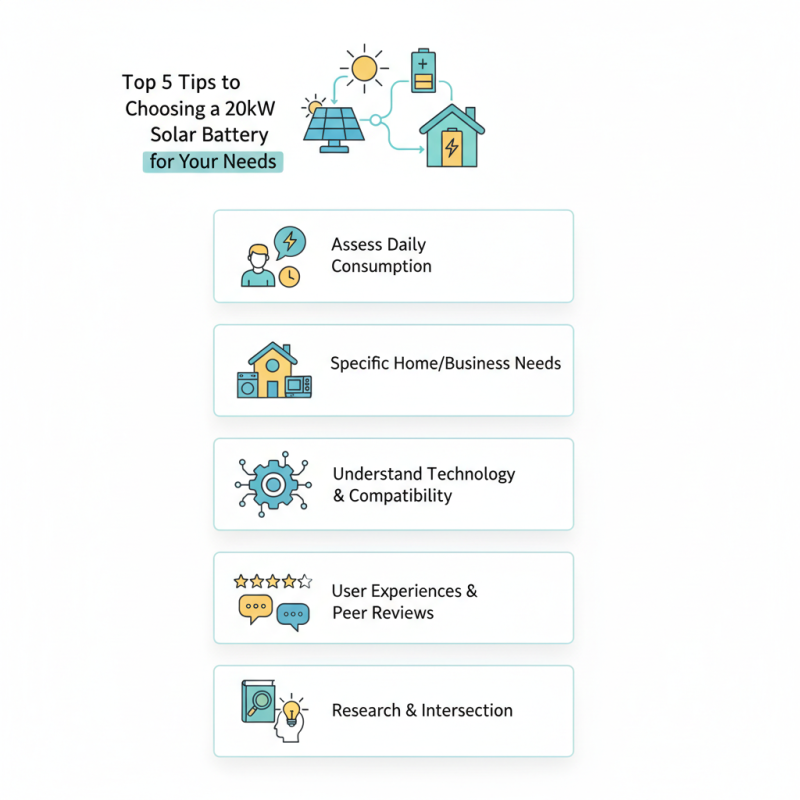
When selecting a 20kw Solar Battery, consider your energy needs. Assess your daily consumption patterns. Are there peak usage times that require more power? Take stock of your home or business's specific requirements. This helps you gauge how much capacity you genuinely need.
Understand the technology involved. Not all batteries are created equal. The lifespan, efficiency, and compatibility with your solar system vary. This can influence your long-term investment. Reflect on user experiences and seek peer reviews. Often, the feedback from existing users reveals essential insights into actual performance versus advertising claims. Making the right choice in a 20kw Solar Battery requires both careful research and a bit of introspection.
Understanding Your Energy Needs for a 20kW Solar Battery
When considering a 20kW solar battery, understanding your energy needs is crucial. Start by evaluating your daily energy consumption. Look at your utility bills from the past year. This data provides insights into how much energy you typically use. Make a note of seasonal fluctuations; these can impact your battery choices.
Consider the number of appliances that run simultaneously. Items like air conditioners and electric heaters can draw significant energy. It’s essential to have a clear picture of peak usage times. This will help you choose a battery that can meet those demands. Also, think about your future energy needs. Will you add more devices or cars that need charging?
Another factor to reflect on is your living habits. Are you home during the day or mostly away? Batteries can store energy for nighttime use but may not always meet daily needs if consumption is high. Remember, overestimating your needs can lead to unnecessary costs. Aim for a balanced approach that meets your current and future requirements without overspending.
Energy Consumption vs. Solar Battery Capacity
Evaluating Battery Types and Technologies for Optimal Performance
When assessing battery types and technologies for a 20kw solar battery, consider the chemistry and performance metrics. Lithium-ion batteries dominate due to their high energy density and efficiency. They also have longer lifespans compared to lead-acid, which is a traditional option. However, lithium batteries may come at a higher initial cost.
Choosing the right type requires evaluating your usage patterns. If your energy needs fluctuate, a hybrid option might suit you better. These systems can integrate various battery types. This flexibility can enhance your battery’s efficiency, allowing for optimal performance depending on your unique requirements.
Consider the environmental impact as well. Some technologies are more sustainable than others, affecting your overall energy footprint. Pay attention to recycling options as well. Not all batteries are easy to dispose of responsibly. Staying informed can guide your decisions effectively. Ultimately, the best choice balances performance, costs, and environmental considerations.
Assessing Storage Capacity and Discharge Rates for Your Lifestyle
When choosing a 20 kW solar battery, understanding storage capacity and discharge rates is crucial. Storage capacity measures how much energy a battery can hold. For households with high energy needs, consider a battery that meets daily requirements. According to the U.S. Department of Energy, an average home uses around 30 kWh per day. A 20 kW battery can store enough energy, but ensure it aligns with your usage patterns.
Discharge rates indicate how quickly energy is delivered. If you have high energy demand during peak hours, a higher discharge rate is essential. Batteries with a lower rate may fail to meet sudden energy spikes. Research by the National Renewable Energy Laboratory shows that consistent discharge rates can maximize efficiency. However, assess how often your energy spikes occur. If infrequent, a lower rate might suffice.
Evaluate your lifestyle to select the right battery. Large appliances and electric vehicles may increase needs. Yet, smaller households may not require intense storage. Understand your habits. This helps avoid purchasing excess capacity that remains unused. Reflect on daily energy usage and balance it with your chosen battery's specs. Making informed decisions leads to greater energy independence.
Considering Installation Requirements and Space Constraints
When choosing a 20kW solar battery, installation requirements and space constraints should be top of mind. Consider the size and weight of the system. Ensure your location can support it. This may mean checking the structural integrity of your home.
Assess where you plan to install the battery. A garage may be ideal, but ensure it has proper ventilation. Alternatively, an outdoor setup could work well in a shaded area. Avoid tight spaces that could restrict airflow. Remember, a battery requires some room for maintenance access.
It’s essential to evaluate the local climate too. Batteries perform differently in extreme temperatures. If you live in a hot area, consider heat-resistant options. Monitor charging cycles closely, as inefficient charging can waste energy. Lastly, explore the noise levels of the unit—silent options are available, enhancing comfort in your home.
Top 5 Tips for Choosing a 20kw Solar Battery for Your Needs
| Tip |
Description |
Considerations |
| Evaluate Energy Needs |
Calculate your daily energy consumption to determine battery capacity requirements. |
Consider peak usage times and seasonal variations in energy needs. |
| Check Compatibility |
Ensure the solar battery is compatible with your solar panels and inverter. |
Look for certifications and specifications that match your system. |
| Consider Depth of Discharge (DoD) |
Choose a battery with a high DoD for better usable capacity. |
Higher DoD often translates to longer lifespan and efficiency. |
| Assess Installation Space |
Measure available space for installation to ensure the battery fits properly. |
Consider ventilation and accessibility when planning installation. |
| Review Warranty and Support |
Look for manufacturers that offer a robust warranty and customer support. |
A longer warranty can indicate confidence in product reliability. |
Analyzing Cost, Warranties, and Maintenance of Solar Batteries
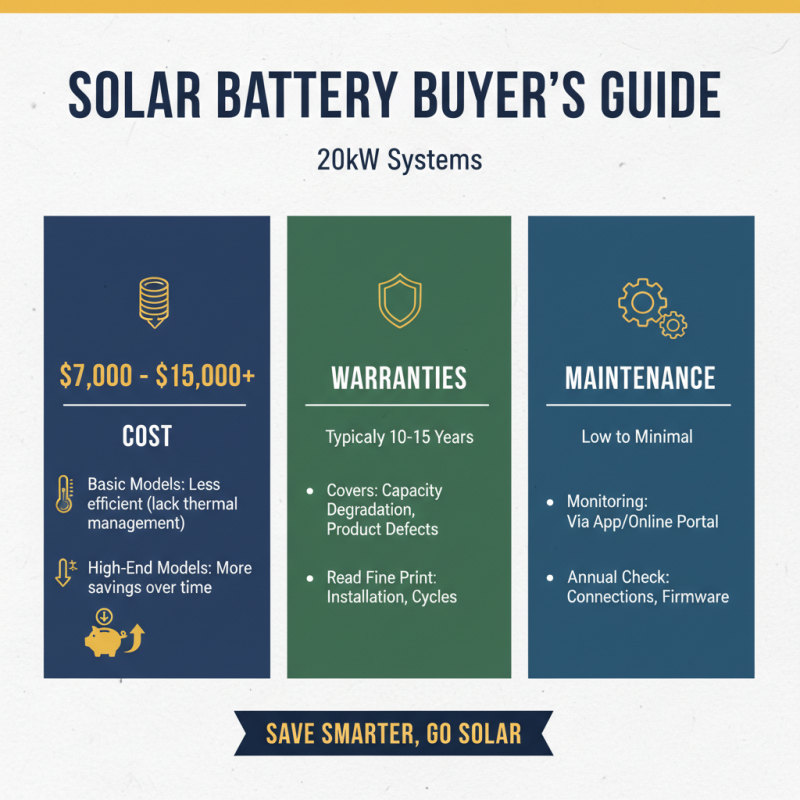
When considering a 20kW solar battery, understanding costs is crucial. A recent industry report indicates that prices can range from $7,000 to $15,000 depending on features. Cheaper models may lack thermal management, which can reduce efficiency. Investing in a higher-end battery can save you on energy bills over time.
Warranties are another key factor. Most solar batteries come with warranties ranging from 5 to 15 years. A report from the Solar Energy Industries Association suggests that longer warranties often indicate better quality. However, consumers should carefully read the terms. Some warranties only cover defects, not performance degradation.
Maintenance is often overlooked. Many believe solar batteries are maintenance-free, but this isn't entirely true. Periodic inspections are necessary to ensure optimal performance. Neglecting maintenance could lead to unexpected costs. In a study by the National Renewable Energy Laboratory, it was shown that regular checks can extend battery life by 20%. It’s essential to factor in potential maintenance when budgeting for your solar battery system.