How to Choose the Best On Grid Inverter for Your Needs?
Choosing the best On Grid Inverter is crucial for optimizing solar energy systems. The global solar inverter market is projected to reach $14.6 billion by 2027, showcasing rapid growth. This emphasizes the importance of selecting an inverter with the right features and reliability.
On Grid Inverters play a vital role in converting solar energy into usable electricity. According to industry reports, efficiency rates can vary dramatically among models, with top performers exceeding 98%. Selecting an inverter with high performance ensures maximum energy utilization. However, many consumers overlook factors such as warranty and customer support, which are essential for long-term satisfaction.
When considering an On Grid Inverter, it's important to assess compatibility with existing systems. Brands often market impressive specifications without addressing potential integration challenges. Reflecting on these details can lead to better decisions. A well-informed choice can enhance both energy savings and system lifespan, ultimately impacting overall investment returns.
Understanding On Grid Inverters and Their Functionality
On-grid inverters play a crucial role in solar energy systems. They convert direct current (DC) from solar panels into alternating current (AC) for home appliances. Understanding their functionality is key to optimizing your energy usage. These devices synchronize with the utility grid, allowing for excess energy to be fed back, which can result in cost savings.
When choosing an on-grid inverter, consider important factors. Efficiency levels are crucial. Higher efficiency means more energy converted and less wasted. Additionally, the inverter's capacity should align with your solar system's output. It's also wise to assess the inverter's durability. A reliable inverter ensures long-term performance, but some models may require frequent repairs, leading to unexpected costs.
Remember that not all installations are perfect. Factors like shading and geographical location can impact energy production. Think about potential issues that could arise. Balancing performance with potential risks is essential in making an informed decision. By prioritizing efficiency and reliability, you can ensure your solar setup meets your energy needs effectively.
Identifying Your Energy Needs and Consumption Patterns
Identifying your energy needs is crucial when selecting an on-grid inverter. Start by examining your household's daily energy consumption. Look at your electricity bills from the past year. This will give you a clear picture of your usage patterns. Consider your peak usage times, too. For example, if you run multiple appliances in the evening, your inverter should accommodate this demand.
Next, think about the appliances that consume the most energy. Refrigerators, air conditioners, and heating systems typically use more power. Understanding these specifics will help you choose an inverter that matches your load requirements. You may realize that your existing inverter falls short during high-demand periods. This recognition can guide you toward a more reliable option.
Keep in mind the importance of future energy needs. If you're planning to add more devices, the inverter must adapt to these changes. Evaluate options that allow for scalability. Moreover, reflect on the inverter’s efficiency rating. Higher efficiency can lead to lower electricity costs over time. Consider these factors carefully to make the best decision.
Key Features to Look for in an On Grid Inverter
When choosing an on-grid inverter, key features play a crucial role in ensuring efficiency and reliability. A top priority is the inverter's efficiency rating. According to the National Renewable Energy Laboratory, high-efficiency inverters can operate at 96% or higher, optimizing power conversion. This efficiency significantly impacts energy production, influencing long-term savings.
Another critical feature is the inverter's monitoring capabilities. Advanced models offer real-time data, allowing users to track performance. This insight helps identify issues early, reducing downtime. In fact, a report from Wood Mackenzie highlights that inverters with robust monitoring can lead to a 20% increase in energy yield. Additionally, compatibility with various solar panel types is necessary to maximize versatility.
Safety features shouldn't be overlooked either. Look for inverters with built-in protections against overloading and system malfunctions. A study by research firm IHS Markit indicates that inverters with strong safety protocols have lower failure rates. However, it’s important to balance these features with cost considerations. Sometimes, the most feature-rich inverter may not be the best choice for every project. Evaluating your specific needs ensures that you invest wisely.
Assessing Efficiency Ratings and Performance Metrics
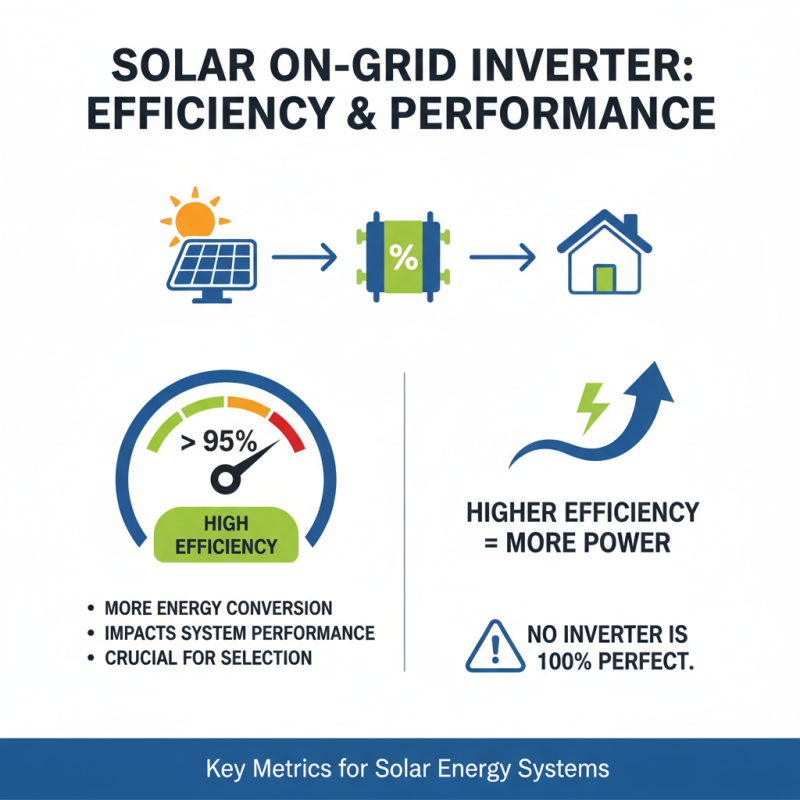
When selecting an on-grid inverter, efficiency ratings and performance metrics are crucial. The right inverter can significantly impact your solar energy system's performance. Look for inverters that offer high efficiency percentages. A higher efficiency means more energy conversion. Typically, inverters with ratings above 95% are considered efficient. However, remember that no inverter is perfect.
Consider the inverter's performance metrics under different conditions. Some models perform better in low-light scenarios, while others excel in high temperatures. Check for specifications like the maximum power point tracking (MPPT) capabilities. Strong MPPT performance ensures that your system captures the most energy throughout the day. Data sheets can be overwhelming. Look for graphs and charts that show real-world performance data.
Pay attention to warranty periods as well. Longer warranties often indicate manufacturer confidence in their product. However, the warranty should cover performance degradation over time. This aspect often gets overlooked. Sometimes, lower initial costs can lead to long-term inefficiencies. Assessing efficiency ratings alongside performance under varying conditions is key to making informed decisions. Take time to research and choose wisely for your unique needs.
Choosing a Reliable Brand and Reviewing Customer Feedback
When selecting an on-grid inverter, understanding the brand's reliability is crucial. A study by Solar Power World revealed that customer feedback significantly influences purchasing decisions. Brands with consistent positive reviews tend to perform better. This suggests that potential buyers should analyze user experiences.
Look for inverters with warranties of at least five years. A prolonged warranty often indicates manufacturer confidence. Additionally, consider in-depth reviews on platforms like consumer forums. Such platforms can reveal potential issues and common malfunctions that may not be highlighted in marketing materials.
Customer feedback can vary widely. Some users report efficiency issues under low sunlight. Others praise the energy yield during peak hours. This reflects the importance of diverse opinions. A balanced view can guide new buyers to make informed choices. Engaging with user communities can provide actionable insights not always captured in product descriptions.
How to Choose the Best On Grid Inverter for Your Needs?
| Inverter Type |
Rated Power (kW) |
Efficiency (%) |
Weight (kg) |
Warranty (Years) |
Customer Rating (Out of 5) |
| String Inverter |
5 |
95 |
15 |
10 |
4.5 |
| Micro Inverter |
1 |
96 |
1.5 |
10 |
4.7 |
| Power Optimizer |
5 |
98 |
1 |
12 |
4.6 |
| Hybrid Inverter |
3 |
94 |
20 |
7 |
4.3 |