How to Choose the Best 100 Kwh Battery for Your Needs?
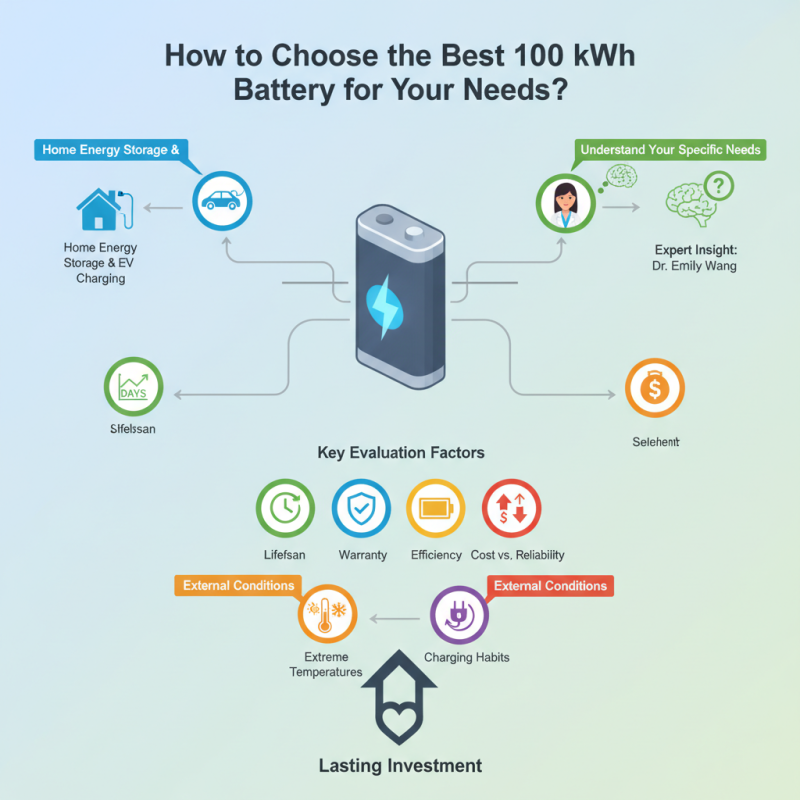
Choosing the right 100 kWh battery is essential for multiple applications, from home energy storage to electric vehicles. According to Dr. Emily Wang, a leading expert in energy storage solutions, "The best battery for your needs depends on your specific requirements and usage patterns." Her insight emphasizes the importance of understanding individual needs before making a purchase.
A 100 kWh battery offers a significant amount of energy. This capacity can power a typical home for several days during an outage. However, many options are available, and they can vary widely in price and performance. It's crucial to evaluate factors such as lifespan, warranty, and efficiency ratings. Sometimes, a less expensive option may turn out to be more reliable than a premium product.
Consider also your charging habits and environmental conditions. Not all batteries perform well in extreme temperatures. Some may deteriorate faster under certain conditions. Exploring all these aspects may seem overwhelming. But it's vital for making a lasting investment. Choose wisely; your energy needs depend on it.
Understanding Your Energy Needs and Usage Patterns
When considering a 100 kWh battery, understanding your energy needs is vital. An analysis from the U.S. Department of Energy indicates that an average American household uses about 30 kWh per day. By assessing your daily energy consumption, you can gauge if a 100 kWh battery meets your requirements. Reflect on your habits. Do you work from home? This could double your energy demands.
Usage patterns also play a crucial role. Some people may use more power during peak hours, leading to higher costs. The U.S. Energy Information Administration reports that peak energy rates can be up to 50% higher than off-peak rates. A well-timed energy usage may allow you to save significantly. Comparing your energy consumption at different times can guide you toward optimal battery usage and potential savings.
Don’t forget seasonal variations. For example, air conditioning in summer months can spike energy use. These insights are essential in identifying your true energy requirements. However, estimating future needs can be tricky. Growth in household members or devices can change your usage. Thus, continuously re-evaluating your energy needs is crucial for long-term efficiency.
Types of 100 Kwh Batteries and Their Applications
When exploring 100 kWh batteries, understanding the different types is essential. Lithium-ion batteries are popular for their efficiency and longevity. They excel in residential and commercial applications, providing reliable energy storage. Another type is lead-acid batteries, which can be cost-effective but have a shorter lifespan. They are often used in backup systems for homes or small businesses.
It's important to consider the specific needs of your application. If you require high performance and quick charging, lithium-ion may be the best choice. However, if you're looking for a budget-friendly option, lead-acid could suffice. Keep in mind, the capacity you need depends on your energy consumption patterns.
**Tips:** Assess your energy goals carefully. Calculate peak and average usage to guide your choice. Don't forget about space and weight; these factors can impact installation. Choosing the right battery is a balance of performance and cost. Reflect on your long-term energy plans before making a decision.
How to Choose the Best 100 Kwh Battery for Your Needs? - Types of 100 Kwh Batteries and Their Applications
| Battery Type |
Chemistry |
Applications |
Cycle Life |
Charging Time |
| Lithium-ion |
Lithium Cobalt Oxide |
Electric Vehicles, Grid Storage |
2000 - 3000 cycles |
1 hour |
| LFP (Lithium Iron Phosphate) |
Lithium Iron Phosphate |
Renewable Energy, Backup Power |
2000 - 5000 cycles |
2 to 4 hours |
| Lead Acid |
Lead Dioxide |
Uninterruptible Power Supply, RVs |
500 - 1000 cycles |
8 to 10 hours |
| Nickel-Metal Hydride |
Nickel and Cobalt |
Hybrid Vehicles, Consumer Electronics |
500 - 1000 cycles |
2 to 3 hours |
| Vanadium Redox Flow |
Vanadium Electrolyte |
Large Scale Energy Storage |
5000 - 10000 cycles |
6 to 8 hours |
Key Specifications to Consider When Selecting a Battery
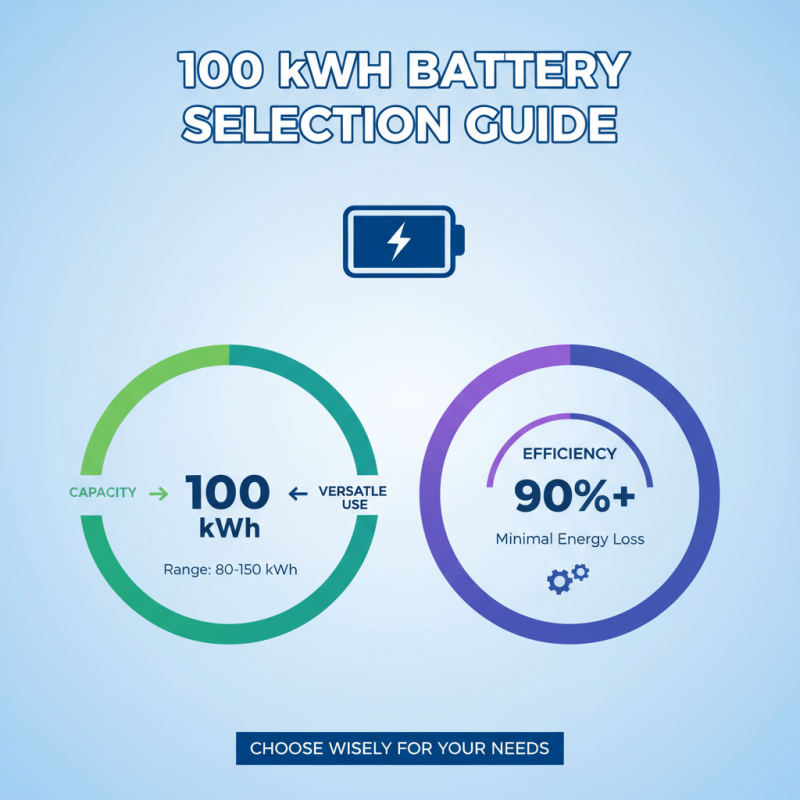
When selecting a 100 kWh battery, consider key specifications that suit your unique needs. Capacity is essential; it determines how much energy the battery can store. Most batteries offer a range from 80 kWh to 150 kWh. A 100 kWh option typically supports a wide variety of applications. Efficiency is also crucial. Look for batteries with high round-trip efficiency, ideally over 90%. This indicates minimal energy loss during the discharge process.
Tips: Evaluate your energy consumption habits before making a decision. If your usage fluctuates, consider how often you’ll fully discharge the battery. This impacts your overall efficiency.
Another specification to watch is the lifespan of the battery. A higher cycle life means the battery lasts longer. Research shows that batteries with over 3,000 cycles are preferable. However, balancing cost with longevity is vital. Lower-priced batteries may require replacement sooner, negating initial savings.
Tips: Don’t forget about installation requirements. A complex setup can lead to additional costs and challenges. Ensure you understand spatial and electrical needs before purchasing. This could save you future headaches.
Comparing Costs and Lifespan of Various 100 Kwh Batteries
When selecting a 100 kWh battery, cost is a major factor. Prices can vary significantly based on technology and manufacturing methods. Typically, lithium-ion Options offer a good balance of performance and price. However, alternative chemistries may provide better value, depending on your specific needs. It’s crucial to evaluate not only the upfront costs but also the long-term expenses, including maintenance.
Lifespan is another critical element. Most batteries have a cycle life, indicating how many charge and discharge cycles they can withstand before performance declines. Some 100 kWh batteries last around 10 years or more with proper care. However, environmental factors like temperature and usage patterns can affect longevity. Monitoring battery health regularly is essential to avoiding premature replacement.
Choosing the right battery can be challenging. Understanding your own energy needs is crucial. Some people might find they need storage for occasional use, while others require continuous power supply. Reflecting on your specific requirements can help avoid overpaying for features you don’t need. Balancing cost with lifespan requires careful thought and consideration.
Evaluating Brand Reputation and Customer Support for Battery Choices
When selecting a 100 kWh battery, brand reputation and customer support play crucial roles. Research shows that 70% of consumers prioritize brand reliability when making decisions. A strong brand usually indicates trustworthiness and quality. Additionally, customer support can significantly impact your experience. Users often experience frustration with poor service and difficult communication.
A study reveals that 60% of users have reported issues with their batteries, ranging from performance drops to charging failures. Adequate customer support is essential here. When problems arise, access to knowledgeable support can alleviate user anxiety. Brands with dedicated support teams tend to receive higher satisfaction ratings. Look for companies that offer extended warranties and responsive service options.
Moreover, reviews and ratings give insight into real-world performance. However, keep in mind that not all reviews reflect actual experiences. Some feedback may be biased or limited. It’s vital to cross-reference data from multiple sources. Trustworthy user forums can provide valuable insights. Yet, remain skeptical. Emphasis on transparent communication and prompt response times from brands should guide your selection process.