Choosing a 15kw Lithium Battery is not simply a matter of selecting the largest capacity available. The right system must match your energy demand, inverter, charging source, and installation environment. A battery may support a home, workshop, small commercial site, or backup system, but its performance depends on daily usage patterns. A realistic assessment matters.
Start with measurable details. Record your appliances, running hours, starting loads, and peak evening demand. Refrigerators, pumps, and air conditioners can draw more power during startup. Check whether the battery’s voltage matches the inverter. Confirm its usable capacity, continuous output, surge rating, and battery management system. These specifications affect both safety and reliability.
Quality matters more than appearance. Look for clear technical documentation, tested protection features, transparent warranty terms, and responsive manufacturer support. Temperature limits also deserve attention, especially in garages, outdoor cabinets, or poorly ventilated utility rooms. Professional installation can prevent loose connections, incorrect settings, and avoidable failures. Small details matter.
Even careful estimates can be imperfect. Future appliances may increase consumption, while seasonal solar production can change charging performance. Oversizing may waste money, but undersizing can cause frequent deep discharge and disappointing backup time. This guide explains how to compare a 15kw Lithium Battery by capacity, power delivery, lifespan, compatibility, safety, and total ownership cost. It also highlights questions buyers often overlook before committing to a system.
How to Choose a 15kW Lithium Battery for Your Needs?
Define Your Power Needs and Battery Use Cases
A 15kW lithium battery usually describes its maximum power output, not its storage capacity. Start by listing every appliance you may run together. Include air conditioners, pumps, refrigerators, computers, and lighting. Record each device’s running wattage and starting surge. Motors can briefly demand two or three times their normal power.
I once underestimated a water pump’s startup load. The battery appeared powerful enough, but the inverter tripped during activation. That small mistake changed the entire design. Add the simultaneous loads, then compare them with the inverter’s continuous and peak ratings. A practical safety margin of 20% is sensible, although local conditions may require more.
Runtime depends on energy capacity, measured in kilowatt-hours. A 5kW load running for four hours needs about 20kWh before losses. Allow for inverter efficiency, usable depth of discharge, temperature, and battery aging. If the system supports daily cycling, check the manufacturer’s tested cycle data and warranty terms. Occasional backup use needs a different design from off-grid living. Consider whether you need short emergency coverage, overnight operation, or several cloudy days without solar input.
Check the installation environment carefully. Heat, dust, moisture, and poor ventilation can reduce performance. The battery management system should provide monitoring and protection. Have a qualified electrician verify cable sizing, ventilation, isolation, and local electrical requirements. I would not choose capacity from appliance labels alone; real usage logs often reveal a very different demand pattern.
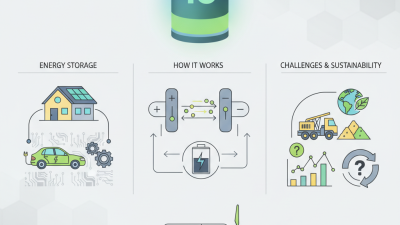
A 15kW rating usually describes maximum power output, not stored energy. Check the battery’s capacity in kilowatt-hours before choosing a system. Measure your daily consumption for at least seven days. Include refrigerators, pumps, heating equipment, and evening lighting. A single meter reading may hide seasonal changes.
For example, a home using 8kWh daily may need about 10kWh of nominal capacity. This estimate allows for charging losses and a 90% usable depth of discharge. Add extra capacity if the battery must provide backup overnight. A two-day reserve could require around 20kWh. Keep the numbers realistic. More capacity is not automatically better.
Power demand matters too. A 15kW system can support heavy loads, but only if the inverter and wiring match that output. A water pump may draw several times its running power during startup. Record these surges before installation. Also check the battery’s continuous output, peak output, temperature range, and permitted discharge level. In practical sizing, leaving a modest reserve is safer than operating at the limit. Still, I would question a large battery for a small daily load. It may cost more, occupy valuable space, and remain underused. Actual usage data should guide the final choice, not a product label alone.
Choosing a 15kW lithium battery system starts with one correction: 15kW describes power, not stored energy. A battery rated at 15kW may deliver that output briefly, while its capacity depends on the kWh rating. For example, a 15kWh battery could theoretically run a 15kW load for one hour, before losses. NREL’s 2024 Annual Technology Baseline models lithium-ion storage at roughly 85% round-trip efficiency. Therefore, usable energy will be lower than the label suggests.
Voltage changes the entire system design. At 48V, a 15kW load requires about 313 amps before conversion losses. That means thicker cables, larger fuses, and more heat. At 400V, the same load needs only about 38 amps. Check the inverter’s acceptable battery-voltage range, continuous current, peak surge rating, and charging limits. The battery management system must also communicate correctly with the inverter. A technically powerful battery may still fail in practice if these settings conflict.
Tips: Measure your largest starting load, not only average consumption. Pumps and compressors can briefly demand several times their running power. Leave operating headroom; using 100% capacity every day may shorten battery life. The U.S. Department of Energy recommends evaluating safety, performance, and lifecycle cost together. I would also question optimistic worksheets. Real temperatures, cable length, aging, and partial charging often change the result. A qualified installer should verify protection devices and system ventilation.
| Evaluation Dimension | Recommended Specification or Range | Why It Matters | Selection and Design Guidance |
|---|---|---|---|
| Power and Energy Rating | Up to 15 kW continuous output; approximately 15 kWh usable energy for a one-hour load at 15 kW | kW describes the maximum power delivered at one time, while kWh describes stored energy and runtime. | Confirm whether “15 kW” refers to battery discharge power or whether the requirement is actually a 15 kWh storage capacity. Size energy according to the expected load profile and backup duration. |
| Battery Chemistry | Lithium iron phosphate (LiFePO4) | LiFePO4 cells are widely used for stationary storage because of their thermal stability and long cycle life. | Check the manufacturer’s tested cycle-life conditions, permitted temperature range, installation requirements, and battery management system protections. |
| Nominal Voltage | 48 V, 51.2 V, 96 V, or a high-voltage configuration, depending on inverter requirements | Voltage affects current, cable size, protection equipment, inverter selection, and system efficiency. | Do not select voltage by power rating alone. Match the battery’s operating-voltage window with the inverter’s specified battery-voltage range. |
| Approximate DC Current at 15 kW | 48 V: about 313 A; 51.2 V: about 293 A; 96 V: about 156 A; 400 V: about 38 A | The approximate current is calculated as power divided by voltage and before considering conversion losses. | Higher-voltage systems generally reduce DC current and may simplify cabling. Final cable and protection sizing must follow local electrical codes and manufacturer instructions. |
| Usable Capacity | Typically 80% to 90% of nominal capacity, subject to the battery’s permitted depth of discharge | Usable energy is lower than nameplate energy because operating limits preserve battery life and maintain safety margins. | For a target of 15 kWh usable energy, a nominal capacity of approximately 16.7 to 18.8 kWh may be required, excluding additional design margins. |
| Inverter Continuous Rating | At least 15 kW continuous output, with additional margin when appropriate | The inverter must supply the intended continuous load without exceeding its thermal or electrical limits. | Allow for design margin and confirm whether the rating applies to continuous output, peak output, or both. Consider motor and compressor starting currents. |
| Inverter Voltage Compatibility | Battery maximum, nominal, and minimum voltages must fall within the inverter’s approved DC input range | A nominal voltage match alone is insufficient because lithium battery voltage changes during charging and discharging. | Compare the complete voltage window, maximum charge voltage, low-voltage cutoff, charge current limit, and discharge current limit before purchase. |
| Battery Discharge Capability | Continuous current rating sufficient for the inverter; peak rating sufficient for short-duration surges | A battery can have adequate energy capacity but still be unable to deliver the current required by a 15 kW inverter. | For low-voltage systems, use parallel battery modules or a higher-voltage architecture if the required current exceeds one module’s continuous rating. |
| BMS Communication | CAN bus or RS485, with an inverter-compatible communication protocol | Communication allows the battery management system to report state of charge, temperature, alarms, and current limits. | Verify protocol compatibility, communication wiring, firmware requirements, termination settings, and whether closed-loop operation is supported. |
| Charging Requirements | Charge voltage and current must remain within the battery’s specified limits | Incorrect charging parameters can reduce service life or trigger protective shutdowns. | Check the inverter’s maximum charging current and coordinate charging from solar, grid, or generator sources with the battery’s limits. |
| Backup Runtime | Runtime in hours = usable battery energy in kWh ÷ average load in kW, adjusted for system losses | A 15 kWh usable battery does not provide the same runtime for a 3 kW load as it does for a 15 kW load. | At a constant 3 kW load, 15 kWh usable energy provides approximately 5 hours before inverter and wiring losses. Actual runtime varies with load and temperature. |
| Scalability | Parallel expansion only when expressly supported by the battery and inverter | Additional modules can increase energy capacity, but parallel operation requires coordinated protection and communication. | Confirm the maximum number of modules, balancing method, commissioning procedure, and whether all modules must be the same model and age. |
| Installation Environment | Clean, dry, ventilated location within the battery’s specified temperature and humidity limits | Temperature extremes, moisture, dust, and inadequate clearances can affect performance, safety, and service life. | Follow local fire, electrical, and building requirements. Provide adequate clearance, protection from flooding, and access for inspection and maintenance. |
| Protection and Safety | Integrated BMS plus correctly rated fuses, disconnects, breakers, and overcurrent protection | Protection devices help isolate faults and prevent excessive current during abnormal operating conditions. | Use a qualified installer to verify short-circuit ratings, DC isolation, grounding, conductor sizing, enclosure requirements, and emergency shutdown procedures. |
| Efficiency and Operating Losses | Evaluate round-trip efficiency, inverter efficiency, standby consumption, and cable losses | Losses reduce the energy available to loads and increase the energy required for charging. | Use measured or guaranteed efficiency data under the expected load range rather than relying only on nominal ratings. |
| Warranty and Service Conditions | Review calendar period, throughput limit, cycle conditions, retained capacity, and operating restrictions | Warranty coverage may depend on depth of discharge, temperature, charge rate, installation, and annual energy throughput. | Compare warranty terms using the same assumptions and keep installation records, commissioning data, and maintenance documentation. |
A 15kW rating describes power, not storage capacity. A four-hour load needs 60kWh of usable energy. With an 80% depth-of-discharge limit, choose roughly 75kWh nominal capacity. This calculation prevents a common mistake: buying enough power, but not enough runtime.
Check continuous output, peak output, inverter compatibility, and charging speed. A battery may advertise 15kW briefly, yet deliver less continuously.
Lithium iron phosphate, or LFP, usually offers stronger thermal stability and longer cycle life. Nickel-manganese-cobalt chemistry provides higher energy density, which saves space.
The International Energy Agency reported that LFP reached almost 40% of the global electric-car battery market in 2023. Typical LFP datasheets show 3,000 to 6,000 cycles, while many NMC systems list fewer cycles.
Actual results depend on temperature, charging limits, and daily depth of discharge. That detail matters more than a glossy specification.
Safety still needs evidence. Look for documented testing under IEC 62619 and UL 9540A, plus cell-level monitoring and temperature sensors. No lithium chemistry is risk-free.
The U.S. Department of Energy identifies degradation, safety, and performance as key storage-selection metrics. BloombergNEF reported average lithium-ion pack prices of 115 dollars per kWh in 2024, down 20% from 2023.
Lower prices help, but they can hide thinner warranties or weaker thermal controls.
My practical caution is simple: compare usable kWh, not advertised capacity. Insist on verified cycle data.
How to Choose a 15kW Lithium Battery for Your Needs?
Check Installation Requirements, Warranty, and Total Cost
A 15kW rating describes power output, not stored energy. Confirm the battery’s usable kWh before comparing prices. A qualified installer should inspect your inverter, cables, distribution board, and mounting surface. Some systems need floor reinforcement. Others require wall clearance and controlled temperatures. Check local permit rules and electrical standards before ordering.
Installation details affect performance and safety. Ask whether the battery includes protection against overcurrent, overheating, and deep discharge. Request a written quotation covering labor, transport, commissioning, monitoring equipment, and future servicing. A low initial price can hide expensive electrical upgrades. That happened in one project I reviewed. The battery fit the room, but the existing inverter did not support its charging profile.
Read the warranty carefully. Look for coverage years, cycle limits, retained capacity, and response times for faults. A ten-year warranty may have conditions tied to temperature, charging speed, or daily usage. Ask who handles warranty work and where replacement parts come from. Also calculate total cost over the expected service life, including electricity savings, maintenance, insurance, and eventual disposal. Payback estimates are useful, but they are not promises. Your demand may change. Seasonal output may disappoint. Leave room for that uncertainty.