Global buyers comparing the Deye Battery 10kw often want one clear number. In practice, a headline price rarely tells the whole story. The final quote can depend on battery capacity, inverter pairing, system configuration, order volume, and delivery destination. A product listing may show equipment only, while a project quote may include accessories or technical support. Those differences matter when comparing suppliers.
This guide explains the main factors that shape the Deye Battery 10kw price for international buyers. It considers what to check in a quotation, including model details, included components, warranty terms, shipping costs, and local installation requirements. Ask suppliers to state the exact configuration and quote validity period. Small details can change the comparison. A low price may exclude items your project needs, while a higher offer may cover more. Still, broader coverage does not automatically mean better value. Request written specifications and compare like for like. Prices and availability can change, so figures should be confirmed directly with the seller before purchase. This is not always convenient. Yet a transparent quote is usually more useful than a single attractive number.
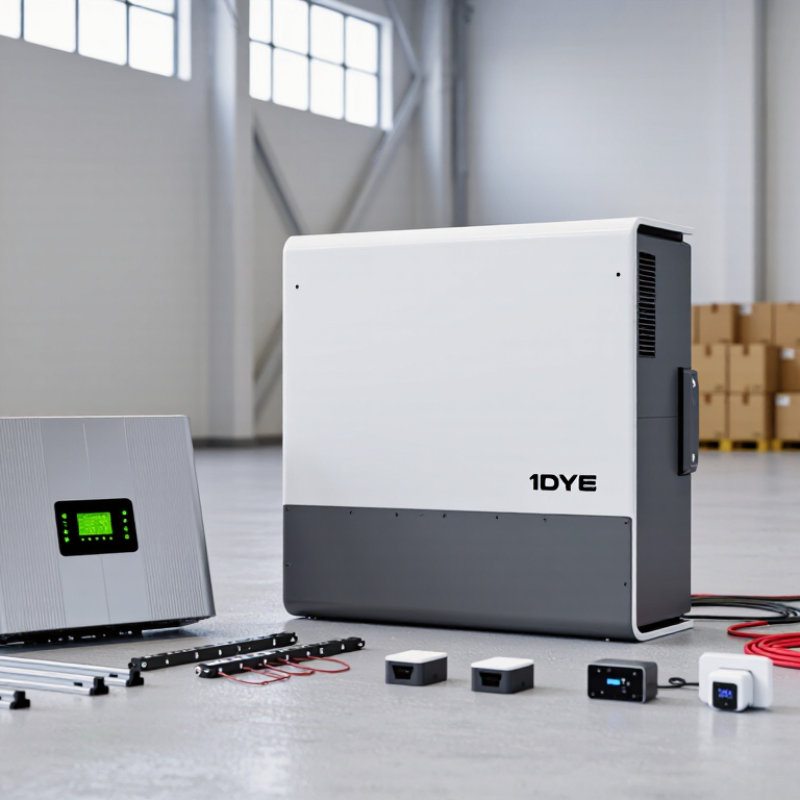
A 10 kW home battery system describes how much power its inverter can deliver at a given moment. It does not tell you how much energy the battery stores. Storage capacity is measured in kilowatt-hours (kWh), while power is measured in kilowatts (kW). The difference matters. A system rated at 10 kW might run several appliances together, but its runtime depends on usable capacity and actual household demand.
A complete system typically combines battery modules, a battery-management system, an inverter, electrical protection, and monitoring controls. It can store surplus solar energy for evening use or provide backup power during an outage, if configured for backup. NREL’s 2024 Annual Technology Baseline models a representative residential storage system at 5 kW and 12.5 kWh. This example shows why both ratings deserve attention; it is not a universal product specification. Real performance also varies with temperature, installation, inverter limits, and battery settings.
Tips: Ask for usable capacity, continuous and peak output, and backup configuration in writing. Check which appliances can run together. A 10 kW rating alone is not enough to estimate outage runtime.
A 10kW label describes inverter output, not battery storage. Buyers should compare usable capacity, such as 10kWh or 20kWh, alongside continuous and peak power. The battery chemistry, cell grade, cooling design, and inverter-battery compatibility all affect the China quotation. Small details matter. A quote with fewer usable kilowatt-hours may look cheaper, but deliver less backup time.
Cell costs also move with raw-material prices and factory utilization. BloombergNEF reported that global lithium-ion battery pack prices fell 20% in 2024, to an average of
$115 per kWh.
This is a market benchmark, not a retail price for a complete home system. That comparison is imperfect. Inverter electronics, battery management systems, casing, testing, warranty coverage, and supplier margins add costs beyond the cells.
Export terms can widen the gap. Freight, insurance, packaging, exchange rates, order size, and destination-specific certification influence the final landed price. Ask whether the offer includes cables, monitoring equipment, commissioning support, and spare parts. Check the warranty’s cycle or energy-throughput limits, not only its years. I would also request the battery’s usable capacity and discharge rating in writing; sales sheets can make unlike systems look comparable. A low quote is not automatically a bargain.
A China-based quote for a 10 kW home storage system should separate equipment from delivery costs. Check whether the price covers the hybrid inverter, battery modules, cables, monitoring hardware, and standard accessories. Also confirm battery capacity in kilowatt-hours: 10 kW describes power, not how long the system can supply it. The quoted figure may exclude export packaging, freight, insurance, customs duties, local taxes, and installation. A tidy price can still leave gaps.
For context, BloombergNEF reported an average lithium-ion battery pack price of US$115 per kWh in 2024, down 20% from 2023. This is a market benchmark, not a landed price for a complete residential system. Battery chemistry, usable capacity, warranty terms, order size, and shipping route all affect the final cost. Ask for each charge as a line item, plus the quote’s currency, validity period, and delivery term. Small omissions matter.
Tips: Request a sample packing list and a written breakdown of battery, inverter, freight, insurance, and taxes. Check whether commissioning is included. One detail is easy to miss: compare usable capacity, not just the headline number.
A quoted price for a 10 kW storage system rarely tells the full story. Freight depends on destination, shipment size, route, and whether delivery is port-to-port or door-to-door. Battery cargo may require approved packaging and handling, which can raise transport costs. Ask for the shipping method and insurance amount in writing. Small charges add up.
Import duties are not universal. Customs authorities may classify equipment differently based on its components, origin, and declared value. Check the applicable rate with a licensed customs broker or official tariff information for the destination country. Taxes such as VAT or GST may include freight, insurance, and duty in their calculation, depending on local rules. Don’t assume tax applies only to the factory price.
Also budget for terminal handling, customs clearance, storage, and inland trucking. A crate delayed at a port can incur fees, especially when paperwork is incomplete. Request a landed-cost estimate that lists each charge and states who pays it. Estimates can still change with exchange rates, inspections, or route delays. It is not perfectly neat, but pretending otherwise makes comparisons less reliable.
A 10 kW label describes power, not battery capacity. Ask suppliers for the usable capacity in kilowatt-hours, continuous output, peak output, and cell chemistry. Request a dated data sheet that matches the exact quoted configuration. Check whether the battery communicates with your inverter, and ask for the supported protocol in writing. Small details matter. A polished product sheet is useful, but it cannot prove that the offered unit matches the one you will receive.
Verify the supplier’s registered business details, manufacturing address, and export history. Request recent factory photos or a live video walkthrough showing production and testing areas. Ask for sample test reports, warranty terms, serial-number tracking, and references from buyers in your market. Confirm that any certificates apply to the exact model and destination; a logo on a brochure is not enough. A quote can look convincing and still leave room for doubt, so check documents independently where practical.
Compare offers on the same basis: battery capacity, included cables and controls, packaging, shipping terms, lead time, and after-sales support. Separate product price from freight and other charges. Ask who handles troubleshooting and how replacement parts are supplied. If one quote is far lower, request a line-by-line explanation before paying. The cheapest offer may simply exclude essentials. Even careful checks have limits, but written specifications make differences easier to spot.
A 10 kWh nominal battery does not necessarily provide 10 kWh of usable energy. This illustrative calculation assumes 80%, 90%, or 100% depth of discharge (DoD); confirm the permitted DoD and usable capacity in each supplier’s datasheet. For a fair price comparison, divide each quote by its usable kWh and compare the same delivery terms, warranty, certifications, and included equipment.