Leave Your Message

2026 Best Type of 3kW Lithium Battery for Buyers?

Choosing the best 3kw Lithium Battery in 2026 requires more than comparing price and capacity. A 3kW label usually describes output power, not stored energy. For example, a 48V, 100Ah battery stores about 4.8kWh before losses. Its usable energy becomes lower after reserve limits and inverter efficiency.

Current industry evidence supports careful evaluation. BloombergNEF’s 2024 Lithium-Ion Battery Price Survey reported an average pack price of $115 per kWh. However, residential buyers rarely receive this headline price. Installation, battery management systems, certification, shipping, and warranty support can change the final cost. The International Energy Agency’s Batteries and Secure Energy Transitions report also highlights safety, durability, recycling, and supply-chain resilience as key purchasing factors.

Lithium iron phosphate, or LFP, is often the strongest choice for home storage. It offers strong thermal stability and long cycle life. NMC chemistry can provide higher energy density, but it demands stricter thermal controls. Small differences matter. A compact garage battery may face heat, dust, and irregular charging.

Nobel Prize-winning battery scientist Dr. M. Stanley Whittingham stated, “Lithium-ion batteries have revolutionized our lives.” That statement explains the technology’s value, but it does not make every product suitable. Buyers still need verified cycle data, usable capacity, continuous output, surge performance, and local service.

Look beyond the brochure.

A reliable 3kw Lithium Battery should run realistic loads, such as a refrigerator, router, lights, and small pump. Yet, some product specifications remain unclear, especially at high temperatures. That uncertainty deserves attention. The best choice is therefore not the cheapest battery, but the safest, independently tested, and properly matched system for daily demand.
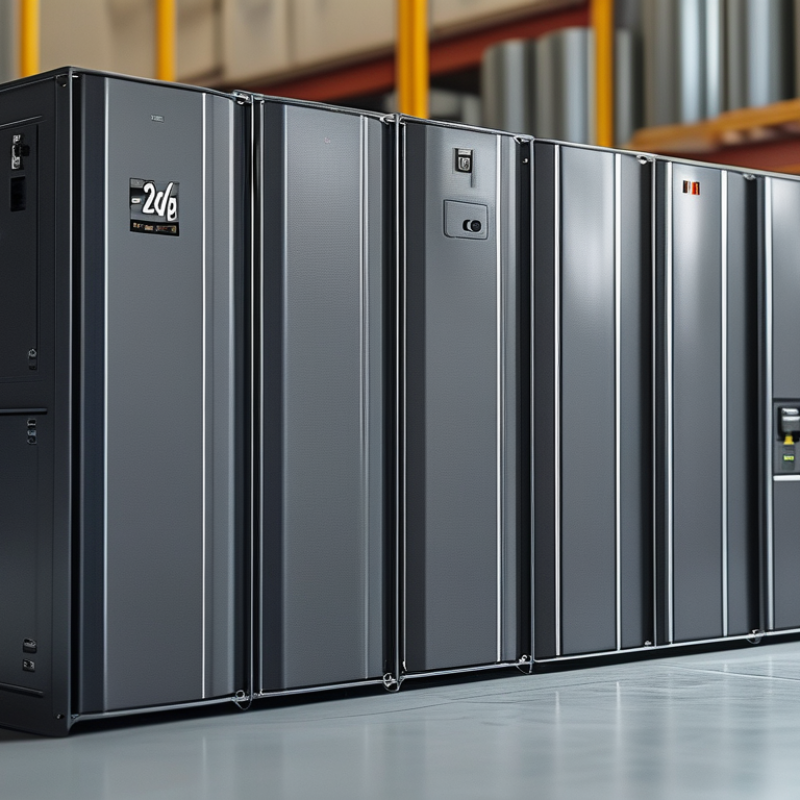
2026 Best Type of 3kW Lithium Battery for Buyers?

What a 3kW Lithium Battery Means and How It Works

A 3kW lithium battery describes its maximum power output, not its stored energy. Power runs appliances; capacity determines how long they operate. A 3kW system can theoretically deliver 3,000 watts continuously. Its inverter, wiring, battery-management system, and cooling must support that load. A short surge rating may be higher, but buyers should not treat it as continuous power.

Consider a 48V, 100Ah battery. Its nominal capacity is about 4.8kWh. At a steady 3kW load, the ideal runtime is roughly 1.6 hours. Realistically, inverter losses, temperature, and reserve limits may reduce this to about 1.2–1.4 hours.

The battery current approaches 63 amps before losses. That detail matters. Undersized cables can create heat and voltage drop. A 24V system would require approximately twice the current.

The International Energy Agency reported that global battery-storage additions reached about 42GW in 2023, more than doubling from the previous year. This growth reflects demand for flexible, responsive electricity storage, but it does not make every 3kW unit suitable for every home. Check continuous output, peak output, usable capacity, cycle-life testing, and protection certifications. Independent testing under recognized standards offers stronger evidence than a sales label. I would also question a claimed “3kW” rating without a stated test duration. Five minutes is not the same as powering a refrigerator, pump, or workshop tool all afternoon.

Key Lithium Battery Types Compared for 3kW Power Systems

For a 3kW power system in 2026, battery chemistry matters as much as rated output. Lithium iron phosphate, or LiFePO4, suits frequent cycling and stationary storage. It offers strong thermal stability, long service life, and useful depth of discharge. Its larger size can matter inside a compact cabinet.

Nickel manganese cobalt lithium batteries provide higher energy density. They can reduce weight and installation space, which helps mobile systems. However, they need careful temperature control and a reliable battery management system. Lithium titanate batteries accept very fast charging and perform well in cold conditions. Their high purchase cost and lower energy density may discourage household buyers. Every option has a compromise.

A 3kW inverter draws about 62.5 amps from a 48V battery before efficiency losses. At 24V, current can exceed 125 amps. That difference affects cable size, heat, fuses, and connector selection. Do not choose capacity from inverter power alone. A 3kWh battery may run a full 3kW load for less than one hour after conversion losses. Real appliances also cycle unpredictably. I have seen designs fail because the battery was large, but the BMS discharge rating was too low. Check continuous current, peak current, operating temperature, cycle data, and warranty terms. A 48V LiFePO4 pack often gives a practical balance, but that judgment changes for lightweight equipment or rapid-charging applications.

Essential Specifications for Choosing a 2026 3kW Battery

Essential Specifications for Choosing a 2026 3kW Battery

A 3kW lithium battery system should deliver 3,000 watts continuously under realistic operating conditions. Check continuous output, peak output, and surge duration before comparing capacity figures. Start with usable energy, not only advertised capacity. A 5kWh battery may provide less after depth-of-discharge limits and conversion losses. For daily use, confirm the nominal voltage, amp-hour rating, and recommended discharge range.

The battery management system is a critical specification.

It should monitor cell voltage, temperature, current, balancing, and short-circuit protection. Look for clear data on cycle life, such as the remaining capacity after a stated number of cycles. Test conditions matter. A cycle-life claim at mild temperatures may not represent a cold garage or a hot utility room. Thermal control and ventilation deserve equal attention.

Compatibility can prevent expensive surprises.

Verify the inverter’s voltage window, communication method, charging current, and peak-load requirements. A 3kW heater, pump, or refrigerator may create different startup demands. Measure the load if possible. Guessing is risky. Safety documentation, enclosure protection, transport compliance, and installation requirements should be available from reliable technical sources. Warranty terms also need careful reading, especially exclusions for temperature, storage, and frequent deep discharge. Bigger capacity is not always better; unused capacity adds weight, cost, and charging time.

I would leave room for imperfect forecasts.

How to Match Battery Chemistry to Different Applications

A 3kW lithium battery system is defined by power output, not stored energy. A 3kW inverter may need 3kW continuously, while motor loads can demand higher starting power. Match the battery’s continuous and peak ratings with the inverter, wiring, and protection devices. Power is not capacity.

For home backup, lithium iron phosphate chemistry is often a practical choice. It offers strong thermal stability, long cycle life, and dependable daily operation. A properly sized LFP pack can support refrigerators, lights, communication equipment, and essential tools. However, its larger size may matter in a compact installation. Measure twice.

Electric vehicles, portable equipment, and space-limited systems may benefit from lithium nickel manganese cobalt chemistry. It usually provides higher energy density, but temperature control and battery management require closer attention. For frequent rapid charging or very cold environments, lithium titanate can be considered. Its cycle performance is impressive, though its cost and lower energy density can limit adoption.

I have seen buyers focus on chemistry while overlooking their load profile. That mistake is common. Record starting surges, daily energy use, charging temperature, and expected backup hours before choosing a cell type. A battery management system should provide overcharge, over-discharge, temperature, and short-circuit protection. Verify independent test data, installation instructions, and local electrical requirements. Real sites vary. Even a well-designed battery may perform poorly when ventilation, cable sizing, or charging limits are ignored.

2026 Best Type of 3kW Lithium Battery for Buyers?

How to match battery chemistry to different applications

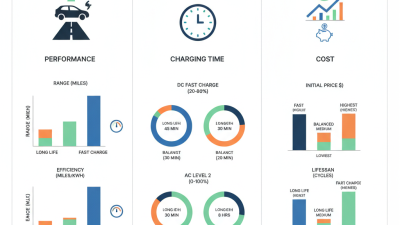
The suitability index is a practical 1–10 screening score based on typical chemistry characteristics. LFP is generally preferred for stationary storage because of its strong thermal stability and long service life. NMC offers higher energy density for mobile applications, while LTO provides exceptional cycle life and fast charging where cost and lower energy density are acceptable.

Safety, Compatibility, Warranty, and Cost Factors for Buyers

Choosing the best 3kW lithium battery starts with one question: what does 3kW describe? It usually indicates continuous power output, not storage capacity. A battery may deliver 3kW briefly but struggle under constant heat or heavy loads. For many home and mobile applications, lithium iron phosphate chemistry offers strong thermal stability, long cycle life, and lower fire risk. It still needs proper installation.

Safety depends on more than chemistry. Look for a reliable battery management system, overcharge protection, temperature monitoring, and short-circuit control. Confirm the battery matches your inverter’s voltage, peak current, communication method, and charging profile. A mismatch can cause shutdowns or shorten service life. I would not choose the cheapest unit without checking these details. The savings may disappear after one replacement.

Tips: Ask for continuous and peak output ratings. Read the warranty exclusions carefully. Check coverage for cycle limits, installation conditions, and capacity loss. A five-year warranty sounds useful, but its real value depends on local support and clear claim procedures. Compare total cost, including cables, chargers, protection devices, installation, and future maintenance. Keep some capacity headroom. Batteries perform better when they are not pushed to their limits every day. Also, published test results are helpful, but real performance can vary with temperature, charging habits, and installation quality. That part is easy to overlook.

2026 Best Type of 3kW Lithium Battery for Buyers? - Safety, Compatibility, Warranty, and Cost Factors for Buyers

Buyer Factor Lithium Iron Phosphate (LFP) Nickel Manganese Cobalt (NMC) Lithium Titanate (LTO) Buyer Recommendation
Typical nominal cell voltage 3.2 V per cell 3.6–3.7 V per cell 2.4 V per cell Confirm that the battery voltage matches the inverter or motor controller.
Common pack voltage for a 3 kW system 25.6 V or 51.2 V 24 V or approximately 48 V 24 V or approximately 48 V A 48 V-class system generally reduces cable current and voltage drop compared with a 12 V system.
Approximate current at 3 kW output About 65 A at 51.2 V, assuming 90% conversion efficiency About 65 A at 51.2 V, assuming 90% conversion efficiency About 65 A at 51.2 V, assuming 90% conversion efficiency Select a battery BMS and cabling rated above the continuous and peak current requirements.
Recommended minimum continuous discharge rating At least 80 A for a 51.2 V, 3 kW inverter; higher if surge loads are present At least 80 A for a 51.2 V, 3 kW inverter; higher if surge loads are present At least 80 A for a 51.2 V, 3 kW inverter; higher if surge loads are present Do not size the battery only by its nominal kWh capacity; check the continuous amperage rating.
Typical usable depth of discharge Up to approximately 80–90% when permitted by the battery manufacturer Approximately 80–90% in many energy-storage applications Often approximately 90–100%, subject to the BMS and system design Use the manufacturer’s stated usable energy rather than the nameplate energy alone.
Typical cycle-life range under controlled conditions Approximately 3,000–7,000 cycles Approximately 1,000–3,000 cycles Approximately 10,000–20,000 cycles Cycle life varies significantly with temperature, charge rate, discharge depth, and end-of-life definition.
Thermal stability and fire risk Very good thermal stability; lower thermal-runaway risk than NMC when correctly designed Higher energy density, but more sensitive to overheating, overcharging, and physical damage Very good thermal stability and strong tolerance of high-rate operation LFP is generally the best balance of safety, cost, and service life for stationary 3 kW storage.
Energy density by mass Typically about 90–160 Wh/kg at cell level Typically about 150– r210 Wh/kg at cell level Typically about 70–100 Wh/kg at cell level Choose NMC when weight and size are critical; choose LFP when longevity and safety matter more.
Low-temperature charging Charging below 0°C generally requires heating or charge restriction Charging below 0°C generally requires heating or charge restriction Better low-temperature performance, but the permitted range still depends on the BMS For outdoor installations, verify the battery’s charge-temperature limits and heating function.
BMS functions to require Overcharge, over-discharge, overcurrent, short-circuit, temperature protection, cell balancing, and low-temperature charge cutoff The same core protections, with additional attention to thermal monitoring and mechanical protection The same core protections, with high-current and temperature monitoring A documented BMS communication protocol is important when the inverter requires closed-loop control.
Compatibility checks Nominal voltage, charge-voltage limit, discharge-current limit, communication protocol, grounding, and breaker or fuse rating Nominal voltage, charge-voltage limit, discharge-current limit, communication protocol, grounding, and breaker or fuse rating Nominal voltage, charge-voltage limit, discharge-current limit, communication protocol, grounding, and breaker or fuse rating Never connect a battery solely because its voltage label appears similar.
Approximate system-level cost indicator Usually low to moderate; approximately US$180–US$400 per usable kWh for many non-premium systems Often moderate to high; approximately US$220–US$500 per usable kWh Usually high; approximately US$400–US$900 per usable kWh Compare total cost of ownership, including installation, protection equipment, heating, and replacement intervals.
Typical warranty expectation Often 5–10 years, commonly with a retained-capacity condition Often 5–10 years, commonly with a retained-capacity condition Often 5–10 years, subject to product-specific terms Check cycle limits, throughput limits, labor coverage, geographic exclusions, and the definition of end of life.
Best use case Home backup, solar self-consumption, small off-grid systems, and stationary energy storage Weight-sensitive mobile systems, compact equipment, and applications requiring high energy density Frequent high-power cycling, rapid charging, cold environments, and applications prioritizing maximum cycle life For most buyers seeking a 3 kW stationary battery in 2026, a 48 V LFP system is the practical default.
Important sizing note: A 3 kW rating describes the required continuous power output, not the battery’s storage capacity. For example, a 51.2 V × 100 Ah battery has approximately 5.12 kWh of nominal energy and may provide about 4.1–4.6 kWh of usable energy when operated within an 80–90% usable range. Actual performance depends on the battery management system, inverter efficiency, temperature, installation method, and applicable electrical codes.
Cost and performance figures: The ranges above are general 2026 market indicators for complete battery systems before local taxes, shipping, installation, permits, and site-specific electrical work. Buyers should verify current quotations, safety certifications, test reports, warranty documents, and compatibility lists before purchase.