Best 20kwh Lithium Battery Options for Your Energy Needs?
As energy demands grow, the importance of efficient battery storage systems becomes clear. The 20kWh Lithium Battery is a primary solution for many. Reports indicate that the renewable energy sector is projected to be worth over $1 trillion by 2025. With such growth, clarity in options is essential for consumers.
"Finding the right 20kWh Lithium Battery can make a significant difference," states Dr. Alice Thompson, an energy storage expert. Her insights reflect the complexity of battery selection amidst various brands and specifications. Many consumers struggle with understanding the differences among products. It's important to carefully compare technical specifications and performance metrics.
While some batteries boast longer lifespans, they may come at a premium price. Others might lead in efficiency but lack adequate safety certifications. The decision-making process can feel overwhelming. However, informed choices can enhance energy management in homes and businesses. Investing in a quality 20kWh Lithium Battery is a proactive step towards sustainability and efficiency.

Choosing the Right 20kWh Lithium Battery for Your Needs
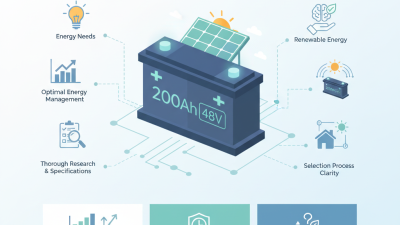
Choosing the right 20kWh lithium battery involves several critical factors. Energy capacity is essential. A 20kWh battery can power your home for a significant duration. On average, households use about 30 kWh daily. This means a 20kWh battery could cover two-thirds of daily energy needs, depending on consumption patterns.
Efficiency is another vital aspect. Many lithium batteries operate at around 90% efficiency. This means that 90% of the stored energy is usable. However, some models fall below this mark. Research indicates that subpar models may drain energy faster or have shorter lifespans. It is prudent to examine warranties and cycle life ratings, usually between 2000 and 5000 cycles.
Cost plays a significant role too. The average price for a good quality 20kWh lithium battery ranges from $4,000 to $7,000. Lower-priced options may seem appealing but could lead to higher costs in the long run. Remember to consider installation costs, typically an additional 10-20% of the battery's price. Each choice has pros and cons, and careful evaluation is necessary to match energy needs with the right battery option.
Key Features to Consider in a 20kWh Lithium Battery
When considering a 20kWh lithium battery, several key features come into play. Capacity is a primary factor. A 20kWh battery can typically power a home for a full day. However, the efficiency of the battery also matters. A report by the International Energy Agency shows that higher efficiency leads to better performance. Look for batteries with an efficiency rating above 90%.
Next, consider the depth of discharge (DoD). A higher DoD allows you to use more of the battery's capacity without causing damage. Many models offer up to 80% DoD. This can affect how long the battery lasts and how frequently it needs to be recharged.
Battery lifespan is another critical feature. Most lithium batteries have a cycle life ranging from 2,000 to 5,000 cycles. This means considering replacement costs and environmental impacts. A study shows that lithium batteries lose around 20% of their capacity after 1,500 cycles. Assessing degradation rates can guide your investment. Performance consistency in varied temperatures is also crucial for reliability in diverse conditions.
Top Brands and Models of 20kWh Lithium Batteries Available
When exploring the best 20kWh lithium battery options, it's essential to consider various brands and models on the market. Many manufacturers prioritize performance, lifespans, and safety features in their designs. Some batteries can last for several thousand charge cycles, making them suitable for both residential and commercial applications. Look for batteries that offer robust thermal management. This feature can prevent overheating during extended use.
A few models stand out for their compact design and lightweight nature. These batteries can fit snugly in tight spaces, allowing for easy installation. Additionally, innovative energy management systems are now integrated into some models. These systems optimize energy consumption, enhancing efficiency. Remember to check compatibility with existing solar or energy systems.
While many options have impressive stats, user experiences may vary. Some customers have noted that certain batteries underperform under high demand. It's crucial to read reviews and conduct proper research before choosing a battery. The decision should not solely rely on specifications but also on real-world performance. Balancing your energy needs with available options requires careful thought and consideration.
Best 20kWh Lithium Battery Options for Your Energy Needs
| Model |
Capacity (kWh) |
Weight (kg) |
Cycle Life |
Warranty (Years) |
Price (USD) |
| Model A |
20 |
120 |
3000 |
10 |
5,500 |
| Model B |
20 |
130 |
3500 |
8 |
5,800 |
| Model C |
20 |
115 |
4000 |
7 |
6,200 |
| Model D |
20 |
140 |
5000 |
12 |
6,000 |
| Model E |
20 |
125 |
3300 |
9 |
5,300 |
Comparative Analysis of Performance and Price
When selecting a 20kWh lithium battery,
performance and price are crucial factors.
Comparing different options reveals significant variations. Some batteries excel in
power output but may be more expensive. Others offer lower pricing but might fall
short on efficiency. It’s essential to weigh these aspects carefully to match your
specific energy needs.
Performance metrics often include discharge rates and cycle life. A higher discharge
rate can be beneficial for larger energy demands. However, this typically comes at a
premium cost. On the other hand, batteries with longer cycle life can
save money over time. It's important to assess how
often you plan to use the battery. Sometimes, cheaper options may require more
frequent replacements.
Another aspect to consider is warranty and support.
Some models come with comprehensive guarantees, which can provide peace of mind.
Yet, cheaper alternatives may lack this reassurance. It’s easy to get caught up in
finding the lowest price. But without strong support, you might face issues later.
Make your choice wisely to ensure long-term satisfaction.