Leave Your Message

2026 Best 10kW Lithium Battery for Global Buyers

The global energy market is moving toward safer, smarter, and more flexible storage. The International Energy Agency reported that battery demand in the energy sector reached about 750 GWh in 2023. It also recorded strong growth in stationary storage. These figures show why the Lithium Battery 10kw category deserves closer technical review before 2026.

A 10kW rating describes output power, not stored energy. A battery may deliver 10kW while offering 10kWh, 20kWh, or more capacity. That difference changes backup time, solar matching, and project cost. For example, a 10kWh system running a 2kW load could theoretically provide five hours. In practice, inverter losses, temperature, and reserve settings reduce that figure. Small details matter.

BloombergNEF reported that average lithium-ion pack prices fell to approximately $115 per kWh in 2024. However, pricing alone cannot identify the best system. Buyers should examine cycle life, usable capacity, thermal management, warranty terms, monitoring software, and service support. LFP chemistry often offers strong safety and cycle-life characteristics, but every installation has different demands. No single model wins every site. Sometimes, the cheapest quotation becomes the most expensive choice.

This guide compares ten promising 10kW lithium battery solutions for global buyers in 2026. It considers practical performance, documented certifications, installation requirements, and supplier credibility. Relevant standards may include IEC 62619, UN 38.3, and regional grid requirements. Certification scope must be verified locally. Manufacturer datasheets also deserve careful checking, because marketing language can hide important limits. The evaluation is evidence-based, yet not flawless; actual results depend on climate, commissioning quality, and daily operating habits.
2026 Best 10kW Lithium Battery for Global Buyers

What Is a 10kW Lithium Battery and How Does It Work?

2026 Best 10kW Lithium Battery for Global Buyers

What Is a 10kW Lithium Battery and How Does It Work?

A 10kW lithium battery usually describes power output, not energy capacity. It can deliver up to 10 kilowatts at one moment. Capacity is measured in kilowatt-hours, or kWh. A 10kW system running for four hours needs 40kWh of usable energy. Allowing for conversion losses and reserve capacity, buyers may need about 50kWh nominal capacity. The label is easy to misunderstand.

Inside the system, lithium cells store direct-current electricity. A battery management system monitors voltage, temperature, current, and cell balance. An inverter then converts DC power into household alternating current. At 51.2 volts, a 10kW output requires nearly 195 amperes. Higher-voltage systems can carry the same power with less current. This affects cable size, heat, installation design, and safety controls. Lithium iron phosphate cells are often selected for stationary storage because of their thermal stability and long cycle potential.

Performance claims should be checked against test conditions. The International Energy Agency reported that battery storage costs fell by roughly 90% between 2010 and 2023. Its Global EV Outlook 2024 also recorded battery demand above 750GWh in 2023, showing the sector’s rapid scale. These figures do not guarantee every system’s quality. A 10kW rating may indicate peak output rather than continuous output. That difference matters when starting pumps, compressors, or workshop tools. Buyers should verify usable capacity, round-trip efficiency, operating temperature, warranty testing, and applicable certification. A tidy spreadsheet can still miss cloudy days, aging cells, or unexpected surges.

Key Specifications for Comparing 10kW Lithium Battery Systems

2026 Best 10kW Lithium Battery for Global Buyers

Key Specifications for Comparing 10kW Lithium Battery Systems

A 10kW rating describes output power, not stored energy. Buyers should compare it with battery capacity, measured in kilowatt-hours. A 10kW load running for four hours may need about 40kWh before losses. Usable capacity matters more than the figure printed on the case. Check the recommended depth of discharge, round-trip efficiency, and reserve setting. These details reveal how much energy reaches appliances in daily operation.

Voltage also deserves close attention. Higher-voltage systems can reduce current and cable heating, but they require suitable inverters and qualified installation. Confirm continuous output, short-term surge power, charging limits, and operating temperature. A reliable battery management system should monitor cell voltage, temperature, current, and abnormal conditions. Thermal control is important in hot climates, while low-temperature charging protection matters in colder regions. Safety testing and grid-compliance documents should match the target market.

Look beyond headline cycle numbers. Ask whether testing used shallow cycles, controlled temperatures, or realistic loads. Warranty terms should explain capacity retention, service response, and replacement procedures. In field evaluations, incomplete load data often creates poor comparisons. I would not treat a long cycle-life claim as final proof. Real sites are messier. Fans start, pumps surge, and seasonal demand changes. Measure the actual load profile, leave sensible reserve capacity, and confirm local installer support before selecting a 10kW lithium battery system.

2026 Best 10kW Lithium Battery for Global Buyers - Key Specifications for Comparing 10kW Lithium Battery Systems

Comparison Item Reference Configuration A
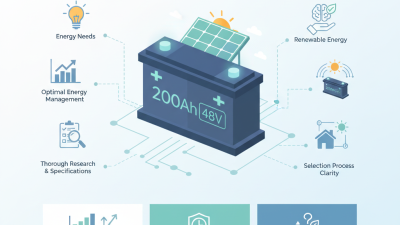
51.2 V / 200 Ah
Reference Configuration B
102.4 V / 100 Ah
Reference Configuration C
204.8 V / 50 Ah
Buyer Comparison Guidance
Typical lithium chemistry Lithium iron phosphate (LFP) Lithium iron phosphate (LFP) Lithium iron phosphate (LFP) LFP is widely selected for stationary storage because of its thermal stability and long service life.
Nominal voltage 51.2 V 102.4 V 204.8 V Confirm that the battery voltage range matches the inverter or power-conversion system.
Nominal capacity 200 Ah 100 Ah 50 Ah Higher voltage reduces the current required for the same 10 kW output.
Nominal energy 10.24 kWh 10.24 kWh 10.24 kWh Calculated as nominal voltage × ampere-hours ÷ 1,000. Actual delivered energy depends on operating limits.
Energy at 80% depth of discharge Approximately 8.19 kWh Approximately 8.19 kWh Approximately 8.19 kWh Usable energy should be compared at the same depth of discharge and temperature.
Current required for 10 kW DC output Approximately 195 A Approximately 98 A Approximately 49 A Values use nominal voltage and do not include inverter losses. The BMS and cables must support peak current.
Recommended continuous discharge rating At least 200 A, subject to design approval At least 100 A, subject to design approval At least 50 A, subject to design approval Select a system with margin above the inverter’s continuous and surge demand.
10 kW operating duration at nominal load About 49 minutes at 80% usable energy, before conversion losses About 49 minutes at 80% usable energy, before conversion losses About 49 minutes at 80% usable energy, before conversion losses Runtime is determined mainly by usable kWh, load profile, efficiency, temperature, and reserve settings.
Battery management system functions Overcharge, over-discharge, overcurrent, short-circuit, temperature protection, cell balancing Overcharge, over-discharge, overcurrent, short-circuit, temperature protection, cell balancing Overcharge, over-discharge, overcurrent, short-circuit, temperature protection, cell balancing Verify alarm, shutdown, state-of-charge, and communication functions under the intended operating conditions.
Communication interfaces to check CAN bus and/or RS-485 CAN bus and/or RS-485 CAN bus and/or RS-485 Protocol compatibility is essential for accurate state-of-charge reporting and coordinated shutdown.
Operating temperature range to verify Typical design target: charging 0–45°C; discharging −20–55°C Typical design target: charging 0–45°C; discharging −20–55°C Typical design target: charging 0–45°C; discharging −20–55°C Actual limits vary by cell, enclosure, and BMS. Charging below 0°C generally requires heating or controlled limits.
Enclosure protection target IP54 for protected indoor areas; IP65 for suitable outdoor enclosures IP54 for protected indoor areas; IP65 for suitable outdoor enclosures IP54 for protected indoor areas; IP65 for suitable outdoor enclosures The required rating depends on dust, water, condensation, salt exposure, and installation location.
Cycle-life benchmark to compare Often specified at 4,000–6,000 cycles under defined test conditions Often specified at 4,000–6,000 cycles under defined test conditions Often specified at 4,000–6,000 cycles under defined test conditions Compare end-of-life capacity, depth of discharge, temperature, charge rate, and test standard—not cycles alone.
System-level efficiency target Typically about 85–95% round-trip, depending on inverter and auxiliaries Typically about 85–95% round-trip, depending on inverter and auxiliaries Typically about 85–95% round-trip, depending on inverter and auxiliaries Request efficiency measured at the intended load, voltage, temperature, and charge/discharge rate.
Common safety and transport documents UN 38.3 test summary; applicable IEC, UL, CE, or regional documentation UN 38.3 test summary; applicable IEC, UL, CE, or regional documentation UN 38.3 test summary; applicable IEC, UL, CE, or regional documentation Certification requirements differ by market, installation type, and whether the system is grid-connected.
Best-fit application Short-cable, low-voltage residential or small off-grid systems Balanced option for moderate-current hybrid systems Lower-current commercial or high-voltage power-conversion systems Choose according to inverter compatibility, installation regulations, cable length, service access, and expansion needs.

Note: The configurations above are engineering reference examples based on standard voltage–capacity calculations. Final specifications must be confirmed against the selected cells, battery management system, inverter, installation environment, applicable safety standards, and manufacturer test conditions.

The Best 10kW Lithium Battery Types for Global Applications

2026 Best 10kW Lithium Battery for Global Buyers

The best 10kW lithium battery depends on application, climate, and installation space. A 10kW rating usually describes inverter output, not stored energy. Buyers should also check usable capacity, measured in kWh. For solar homes, farms, and backup systems, lithium iron phosphate (LFP) remains the practical choice. It offers strong thermal stability and long cycle life. The IEA reported that LFP represented nearly 40% of the global electric-car battery market in 2023. Its lower energy density can require a larger cabinet, however. NMC batteries provide higher energy density for vehicles, telecom rooms, and compact commercial sites. They need stricter thermal management and careful installation.

Battery prices are also changing quickly. BloombergNEF reported an average lithium-ion pack price of 115 USD per kWh in 2024. This figure is not a direct quote for a complete 10kW system. Inverters, protection equipment, installation, and certification add cost. A reliable system should meet relevant safety requirements, including IEC 62619 and UN 38.3 transport testing. Regional grid codes still matter. One overlooked issue is cold-weather charging. LFP performance can fall sharply below freezing without battery heating. That detail may change the best chemistry.

Tips: Match the battery to daily load peaks. Leave reserve capacity for aging. Request cycle-life data at your expected temperature. Do not compare capacity alone. Verify warranty conditions, service access, and replacement procedures before ordering. Another honest point: laboratory cycle figures often exceed real household results. Field conditions are messier.

Safety, Installation, Maintenance, and Compatibility Considerations

A reliable 10kW lithium battery is more than a large energy box. The 10kW figure usually describes inverter output, not storage capacity. Buyers should check usable kilowatt-hours, continuous current, surge rating, and battery chemistry. The International Energy Agency reported that global battery storage additions reached about 42GW in 2023, more than double the previous year. This growth increases choice, but it also demands stricter installation decisions.

Safety starts with certified equipment and correct placement. Look for compliance with IEC 62619, UL 9540, and relevant local fire codes. UL 9540A testing can show how a system behaves during thermal runaway. Installers should provide ventilation, wall clearance, emergency isolation, and protected cable routes. Keep batteries away from flooding, direct sunlight, and combustible storage. A practical concern remains: even a well-tested battery can fail when wiring is undersized or settings are wrong.

Tips: Confirm inverter communication protocols before purchase. Check CAN or RS485 compatibility, voltage windows, and firmware requirements. Schedule visual inspections, terminal checks, and battery health reviews according to the manufacturer’s service plan. Avoid mixing different battery ages or chemistries without written approval. Cold weather can reduce charging performance, while heat accelerates aging. I would also leave expansion space. Many installations look complete on day one, then become awkward six months later.

How to Select a 10kW Lithium Battery for Different Markets

2026 Best 10kW Lithium Battery for Global Buyers

How to Select a 10kW Lithium Battery for Different Markets

A 10kW rating describes output power, not stored energy. A 10kWh battery may run a 5kW load for roughly two hours, before losses. Begin with local demand, solar production, and outage duration. The IEA’s Batteries and Secure Energy Transitions report projects battery demand to grow sixfold by 2035. This supports long-term supply, but does not remove short-term price or shipping risks. BloombergNEF reported an average lithium-ion pack price of 115 US dollars per kWh in 2024, a 20% annual decline. Market quotes can still vary sharply.

In hot markets, select lithium iron phosphate cells, strong thermal monitoring, and an enclosure rated for dust and humidity. In Europe, check grid compatibility, installer requirements, and applicable IEC safety testing. In North America, confirm inverter certification and local electrical-code acceptance before ordering. For remote African or island systems, prioritize high cycle life, simple maintenance, and spare communication parts. A 10kW system often needs 15–30kWh of usable storage, depending on evening loads and backup expectations. Do not size from appliance wattage alone.

Tips: Compare usable kWh, not headline capacity. Check round-trip efficiency, depth of discharge, warranty cycles, operating temperature, and replacement procedures. Ask for independent test documents, transport certification, and a clear battery-management protocol. One practical weakness remains: laboratory cycle figures may not match dusty, overheated sites. Plan conservatively.

How to Select a 10 kW Lithium Battery for Different Markets

This chart compares the approximate single-phase AC current required to deliver 10 kW at common residential nominal voltages. The values are calculated as current = power ÷ voltage, assuming a power factor of 1.0 and excluding inverter losses. Actual product selection should also verify local grid standards, phase configuration, protection requirements, installation rules, and battery capacity in kWh.